
A Russian rocket has launched an Iranian telecommunications satellite into orbit—the fifth such launch since 2022.
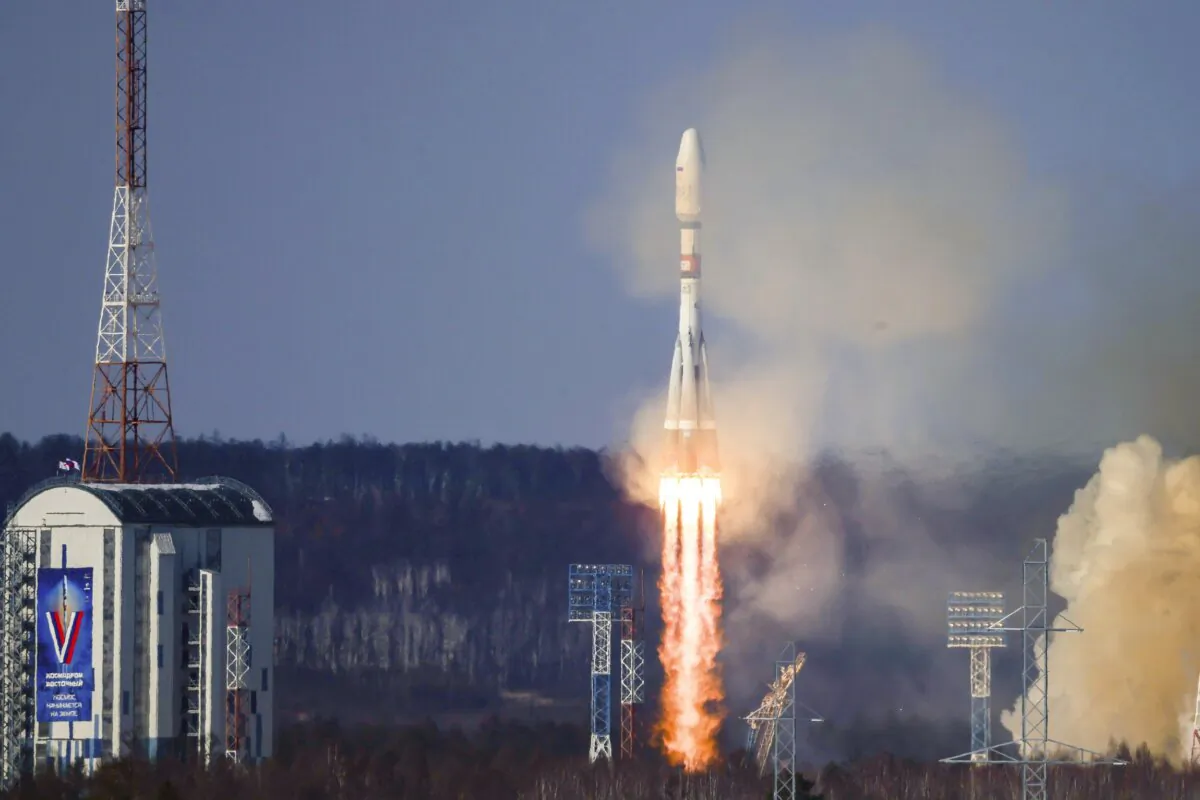
The Soyuz rocket, designed during the Cold War, carried Iran’s Nahid-2 satellite into orbit on July 25, from a commercial launchpad at the Vostochny Cosmodrome in Russia’s eastern Amur province.
The rocket also delivered 19 Russian satellites of various types to their designated orbits.
The Nahid-2 was built in Iran and is designed to provide telecommunications services to Tehran for the next two years. Its launch from Russia follows that of the satellites Kowsar and Hodhod in November 2024, the first Iranian satellites launched by Russia’s private sector.
The successful launches also follow a series of five consecutive failed launches by Iran’s civilian space program in recent years. It could signal an increasing role for Russian state corporation Roscosmos, which operates the Vostochny Cosmodrome, in future Iranian launches.
A separate Iranian space program controlled by the country’s Islamic Revolutionary Guard Corps, a terrorist group, has performed successful launches from a military base during that same time frame, but that facility appears to have been bombed by Israel late last year.
In January, Tehran and Moscow signed into a 20-year “comprehensive strategic partnership treaty” in which the two nations pledged to deepen cooperation on a wide range of issues, including the development of military technology, nuclear energy, and new trade initiatives.
To that end, news of the launch broke as Iranian and European diplomats prepared to meet in Istanbul on Friday in hopes of ending a standoff over Tehran’s nuclear program. European nations have threatened to reimpose sanctions on Iran if the Islamist power does not readmit international nuclear inspectors into the country.
The Russian–Iranian partnership also establishes that the two nations will work together against shared military threats and lays the groundwork for future joint military exercises.
Leadership in Moscow has spent the last several years working with authoritarian powers, including China, Iran, and North Korea, to cultivate arms deals in support of its war in Ukraine and to create alternative supply chains to ease the economic burden of international sanctions levied against it in response to the war.
Aside from Moscow’s strategic partnership with Tehran, the two powers have also sought to create a robust military partnership in recent years, through which Russia has provided Iran with fighter aircraft and other technologies in exchange for drones and munitions.
The Associated Press and Reuters contributed to this report.
 Friends Read Free
Copy
Facebook
Tweet
Friends Read Free
Copy
Facebook
Tweet