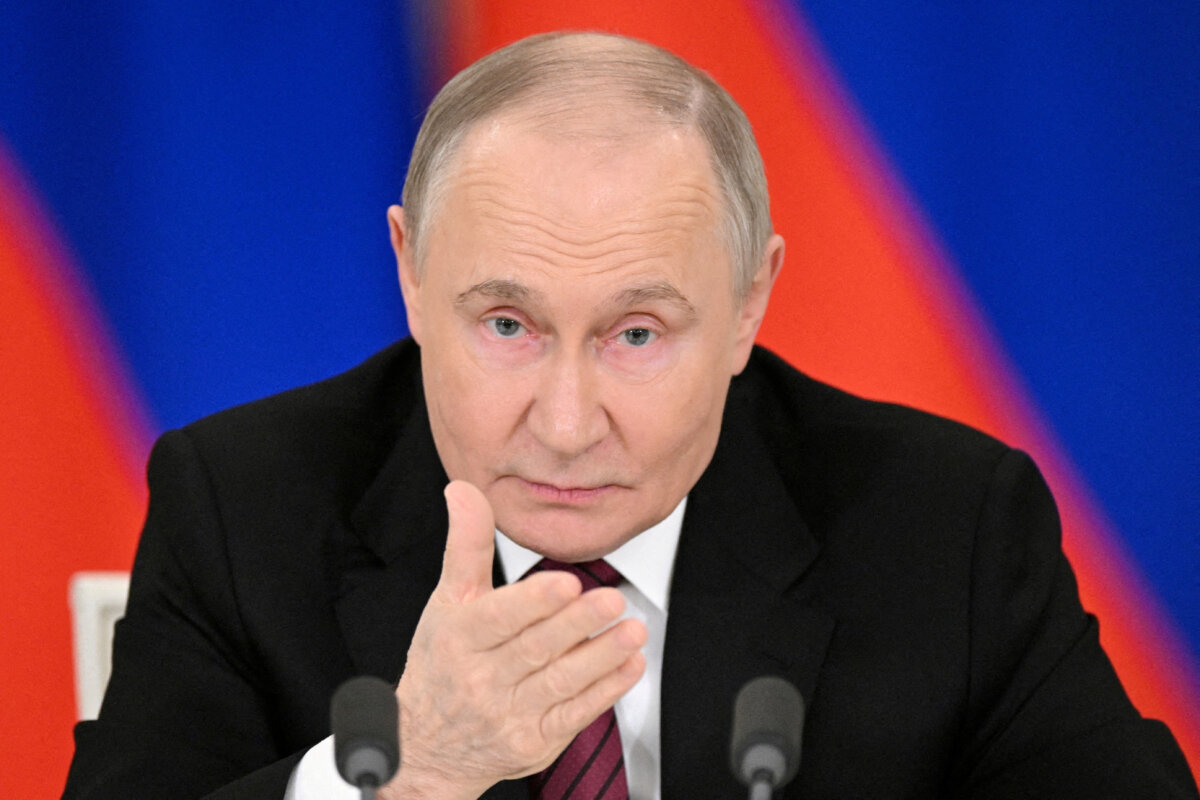

Russian state atomic energy corporation Rosatom stated on Sept. 15 that it plans to build 38 new nuclear reactors across the country.
Rosatom CEO Alexey Likhachev announced the plan during the 69th session of the International Atomic Energy Agency’s (IAEA’s) general conference in Vienna.
The IAEA oversees atomic energy around the world and reports to both the U.N. Security Council and General Assembly.
Likhachev told the conference that Russian President Vladimir Putin had set the goal of bringing “the share of nuclear power in Russia’s energy mix from just under 20 percent today up to 25 percent by 2045.”
“In accordance with the power generation masterplan, we are instructed to build 38 nuclear power units of large, medium, and small capacity in Russia,” he said. “In other words, to double our fleet of reactors.”
According to the IAEA, Russia already has five new nuclear reactors under construction.
These are the Kursk 2-1 and 2-2 reactors being built at the Kursk 2 nuclear power station in western Russia, the Leningrad 2-3 and 2-4 reactors under construction at the Leningrad nuclear power station on the southern shore of the Gulf of Finland, and the BREST-OD-300 reactor, a Generation IV pilot demonstration plant and a lead-cooled fast-neutron reactor, being built in Seversk, Siberia.
“A lot has been accomplished so far, but a lot is yet to be done,” Likhachev said. “In particular, transition to serial construction of nuclear power plants and development of Generation IV nuclear power systems with the closed fuel cycle.”
He said that Rosatom’s special focus is on small nuclear power plants and that the company was “ready to actively engage in working out applicable international norms and regulations” with the IAEA.
During his address to the conference, Likhachev also took the opportunity to chastise some member states of the IAEA for “actively politicizing the issue of the Zaporozhskaya [Nuclear Power Plant] within the Agency.”
Zaporozhskaya is the Russian name for Zaporizhzhia in Ukraine, and the power plant there has been under Moscow’s control since its forces captured the plant in the first weeks of the February 2022 invasion of Ukraine.
Kyiv and Moscow have repeatedly accused each other of attacking the plant, and Likhachev did so again during his speech in Vienna, telling the conference that “the only real threat to the ZNPP and its staff is posed by reckless actions that are taken by the Kiev armed forces that target the infrastructure of the ZNPP and its satellite city of Energodar on an almost daily basis.”
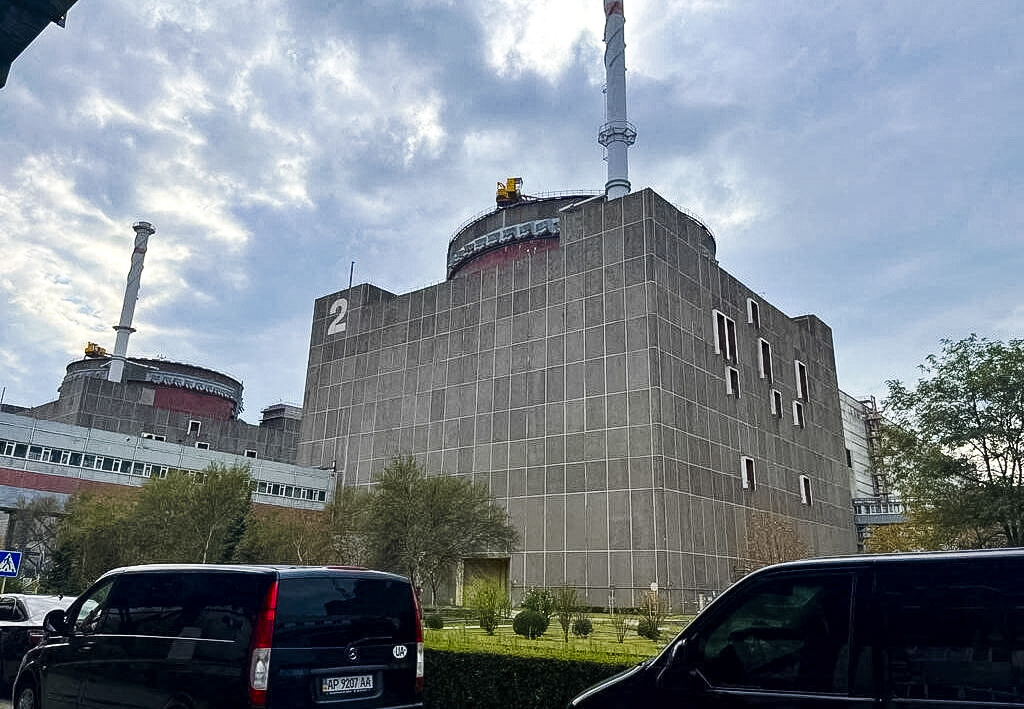
Ukraine’s representative at the conference, Energy Minister Svitlana Grynchuk, said Moscow’s “ongoing occupation” of the plant posed “unprecedented risks to nuclear safety and security.”
“Relentless missile, glide-bomb, and drone attacks have severely damaged Ukraine’s energy system and civilian infrastructure, killing civilians and creating persistent risks for Ukraine, Europe, and the global framework for the peaceful use of nuclear energy,” she said.
Grynchuk said the plant is currently operating under conditions of a threat that went beyond what it was designed to withstand structurally or procedurally.
“Since establishing military control over the Zaporizhzhia NPP, the Russian Federation has allowed systemic and critically dangerous deformations in the technical functioning of this nuclear facility,” she said.
Grynchuk called on IAEA member states to take all possible measures to ensure that “immediate restoration works” could take place, saying that conditions at the moment were already “a direct precursor to a nuclear accident.”
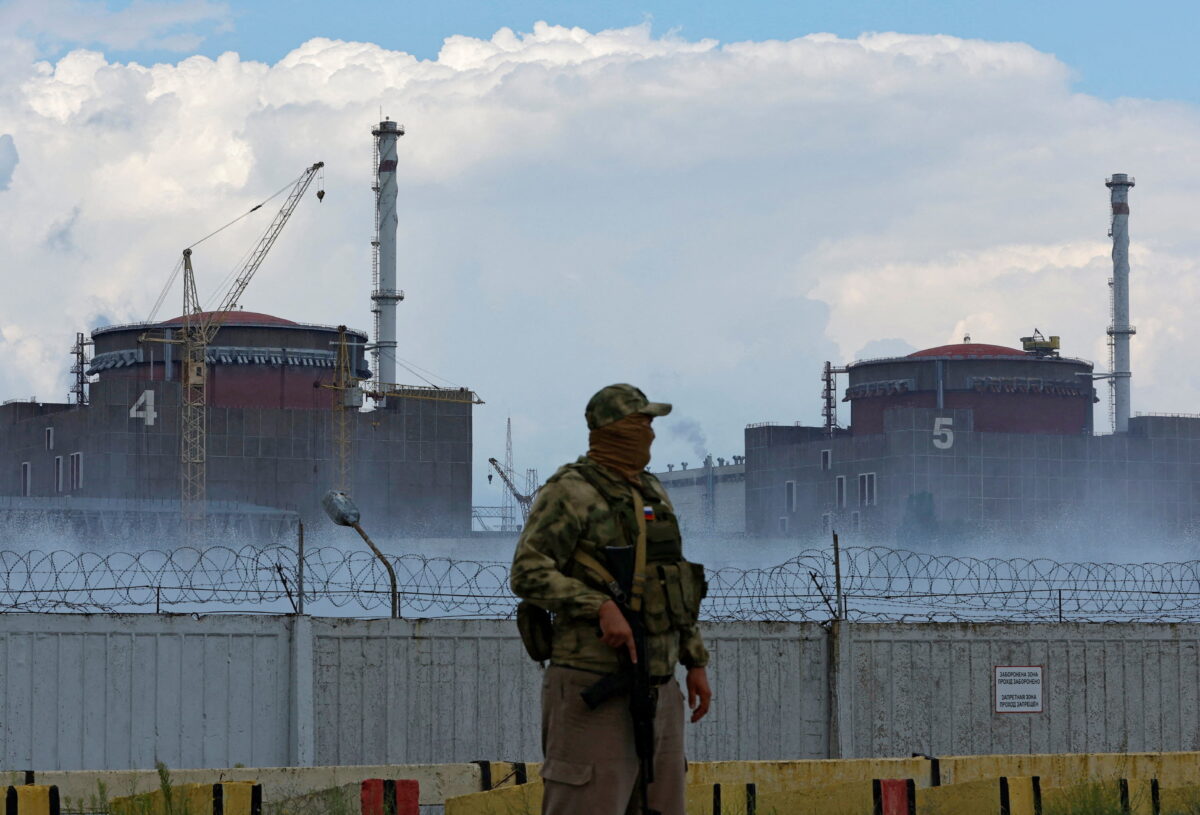
Since the start of the war, the IAEA has been monitoring the situation at the plant, sending more than 200 missions involving nearly 200 staff to nuclear power plants in Ukraine, according to IAEA Director General Rafael Grossi.
The IAEA remains present on the ground at all the sites, Grossi said at the conference.
“Our people are actively supporting operators in looking after the Seven Pillars of nuclear safety and security and the Five Principles for protecting the Zaporizhzhya NPP, and we are keeping the international community updated on the situation at each site,” Grossi said.
 Friends Read Free
Copy
Facebook
Tweet
Friends Read Free
Copy
Facebook
Tweet