
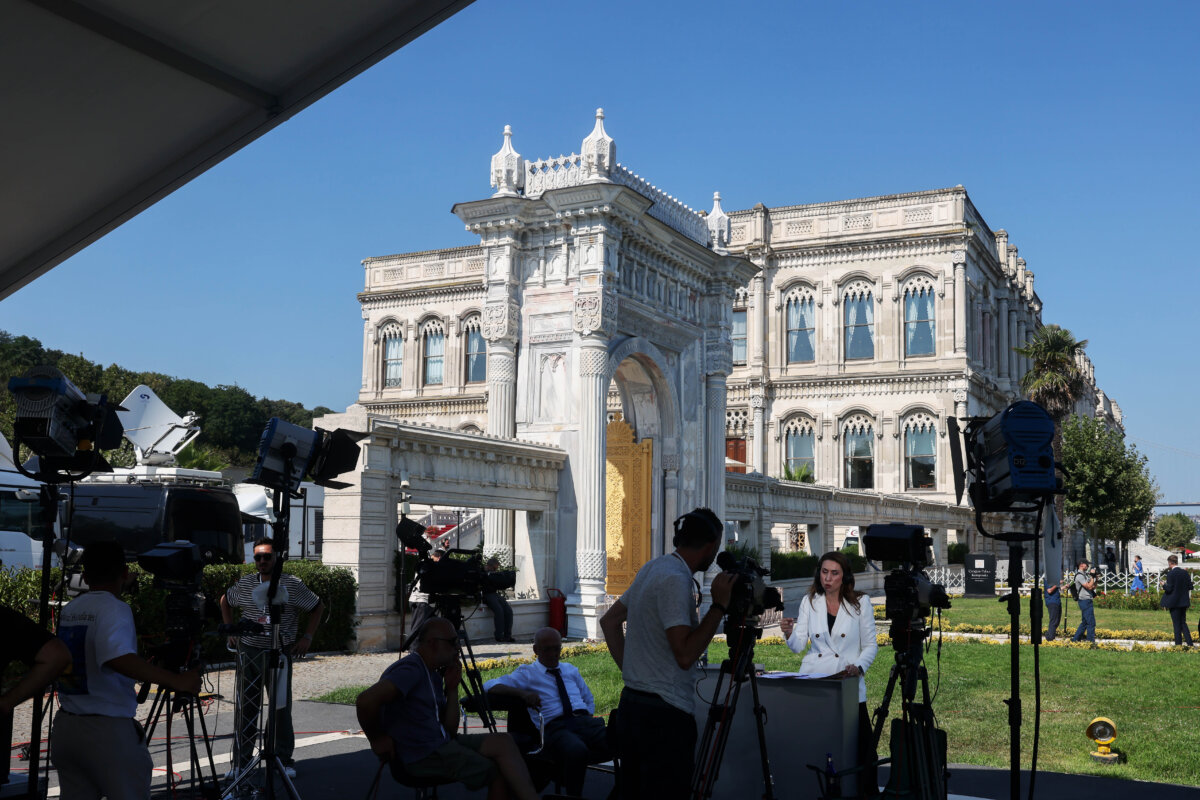
A third round of U.S.-backed cease-fire talks between Russian and Ukrainian officials in Istanbul last week failed to produce any significant breakthroughs.
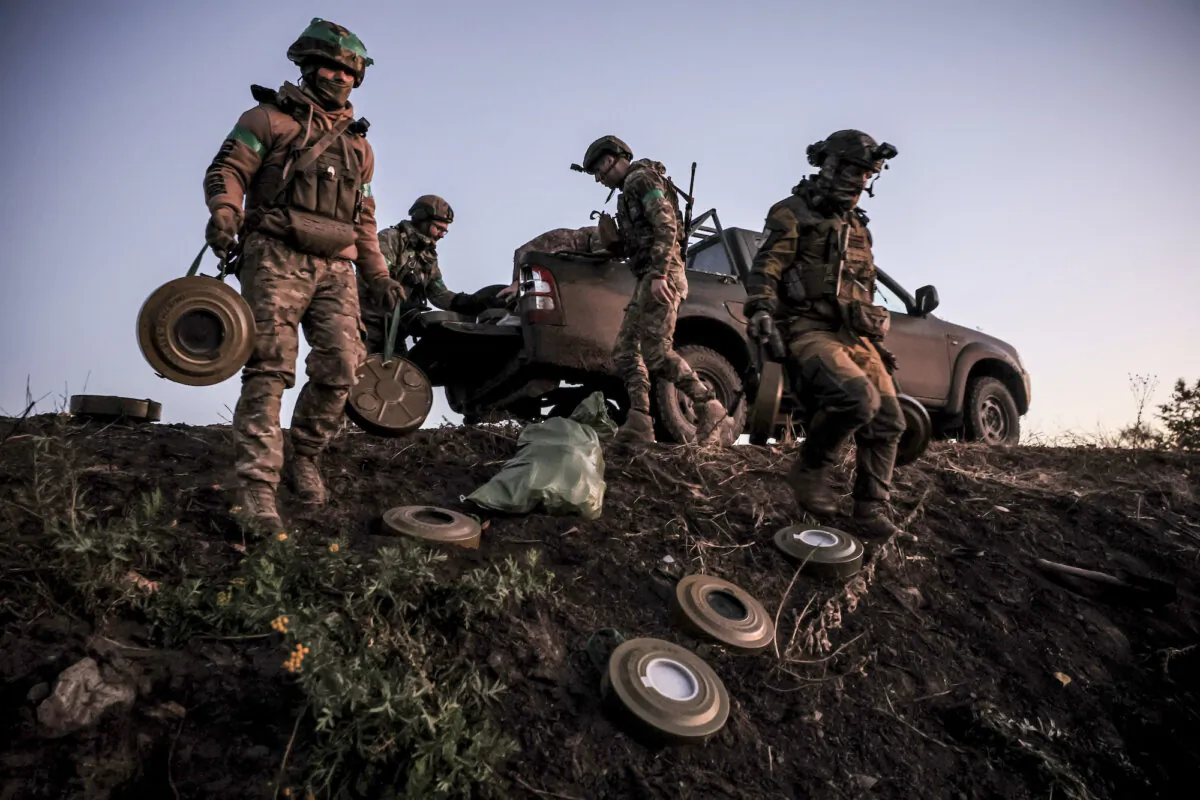
According to experts, the July 23 talks—which lasted only 40 minutes—reflect an ongoing stalemate on the battlefield, where both sides have fought to a relative standstill.
“If you look at the [front] lines, there’s been very little movement over the last three years,” Robert Peters, defense policy analyst at the Washington-based Heritage Foundation, told The Epoch Times.
“I think the Russians have advanced a total of nine miles along the battlefronts in three months. And they’ve expended a lot of manpower to do so.
“Are the Russians making a few small gains? Sure. But at this rate, it will take them the rest of the century to take most of Ukraine.
“What we basically have is a stalemate.”
Andrew Corbett, a lecturer at the Defense Studies Department at King’s College London, expressed a similar view.
He believes the conflict has reached a “similar stage” as that seen in 1916 during the First World War.
“Both sides must keep fighting, though neither is likely to win a clear military victory on the ground, but both sides would lose catastrophically if they were to stop,” Corbett told The Epoch Times in an email.
“In 2025, Ukraine is seeking more substantial military capabilities and assistance from Europe and the USA to change the status quo on the ground.
“And it seems that Russia is holding out for support for Ukraine to wane, especially from the USA.”
No Concessions
Two days before the cease-fire talks were held, a Kremlin spokesman described the two sides’ respective cease-fire terms as “diametrically” opposed.
For one, Moscow demands that Kyiv withdraw all its forces from four regions of Ukraine that Russia partially occupied—and claims to have annexed—in 2022.
It also demands guarantees that Ukraine will never join the Western NATO alliance.
“We insist on what is our legitimate demand, namely … no involvement of Ukraine in NATO,” Russian Foreign Minister Sergey Lavrov said on July 28 in remarks carried by Russia’s TASS news agency.
“And, of course, recognition of the realities that are reflected in our constitution is an absolutely non-negotiable requirement,” Lavrov said, referring to Russia’s territorial claim—now enshrined in its constitution—to Ukraine’s Donetsk, Luhansk, Kherson, and Zaporizhzhia regions.
Kyiv, however, has thus far staunchly rejected these demands, vowing to recover all lost territory by force of arms—despite Russia’s vastly superior troop numbers.
“The Ukrainians have shown no sign that they are ready to throw in the towel,” Peters said.
“They say they’re willing to talk [with the Russian side], but I think this may be a tactical move because it buys them goodwill from the West.”
Peters believes the warring parties will eventually agree to a cease-fire deal in which Russia—after having depleted much of its military resources—“will absorb some parts of Ukraine that it currently occupies.”
But once a cease-fire is in place, he added, “Russia will be faced with a Ukraine that is a very heavily-armed buffer between it and NATO.”
The Fight for Pokrovsk
Over the past month, Russian forces have claimed incremental gains in Donetsk and Luhansk, which together comprise the eastern Donbas region.
Russia has also claimed that its forces have captured positions in Sumy, Kharkiv, and Dnipropetrovsk—regions that Moscow has not laid any claim to.
Kyiv has yet to acknowledge the territorial losses, which The Epoch Times could not independently verify.
Now, all eyes are on the strategic town of Pokrovsk in the Donetsk region, which Russian forces appear to have entered for the first time last week, according to the Washington-based Institute for the Study of War.
On July 25, the institute, which tracks developments along the frontline, said that Russian forces appeared to conduct “limited sabotage and reconnaissance missions into Pokrovsk amid ongoing Russian efforts to envelop the town.”
Moscow has remained tight-lipped about the reported incursions.
But in recent remarks, Ukrainian President Volodymyr Zelenskyy has admitted that fierce fighting is now underway near the flashpoint town, a key Ukrainian transit and logistics hub.
In a July 25 video address, Zelenskyy, citing Ukrainian military commander Oleksandr Syrskyi, said Pokrovsk was now the main focal point of the war.
According to Abdullah Agar, a prominent Turkish military commentator, holding onto Pokrovsk “will be critical to Ukraine’s ability to stabilize the front.”
“If Russian forces capture Pokrovsk, Ukraine’s entire defensive line in western Donetsk will be at risk of collapse,” Agar told The Epoch Times.
“This situation can’t be reversed without some kind of external involvement on the strategic or political level.”
He described Kyiv’s frontline position as “critical.”
“Meanwhile, signals of Western support [for Ukraine] appear highly uncertain and inconsistent,” Agar said.
“This is affecting Ukraine’s political stance and causing internal instability and confusion.”
Trump Presses Kyiv, Moscow
U.S. President Donald Trump returned to office in January on pledges to swiftly end the war, which began with Russia’s invasion of eastern Ukraine in early 2022.
In early March, after a contentious meeting with Zelenskyy at the White House, Trump ordered a pause to U.S. assistance to Ukraine in a seeming bid to push Kyiv into making concessions at the negotiating table.
When Zelenskyy said that a deal to end the war was still “very, very far away,” Trump claimed his Ukrainian counterpart “doesn’t want there to be peace as long as he has America’s backing.”
But in a reversal in mid-July, Trump announced plans to provide Ukraine with “top-of-the-line” military equipment—including U.S.-made Patriot missile batteries—to be paid for by Washington’s NATO allies.
He also threatened to slap hefty tariffs on countries that continue trading with Russia if Moscow failed to agree to a cease-fire deal within the following 50 days.
At the time, Lavrov appeared to downplay the threat, saying the number of Western sanctions imposed on Russia was “already unprecedented.”
“We will cope [with them],” Moscow’s top diplomat said in remarks cited by TASS.
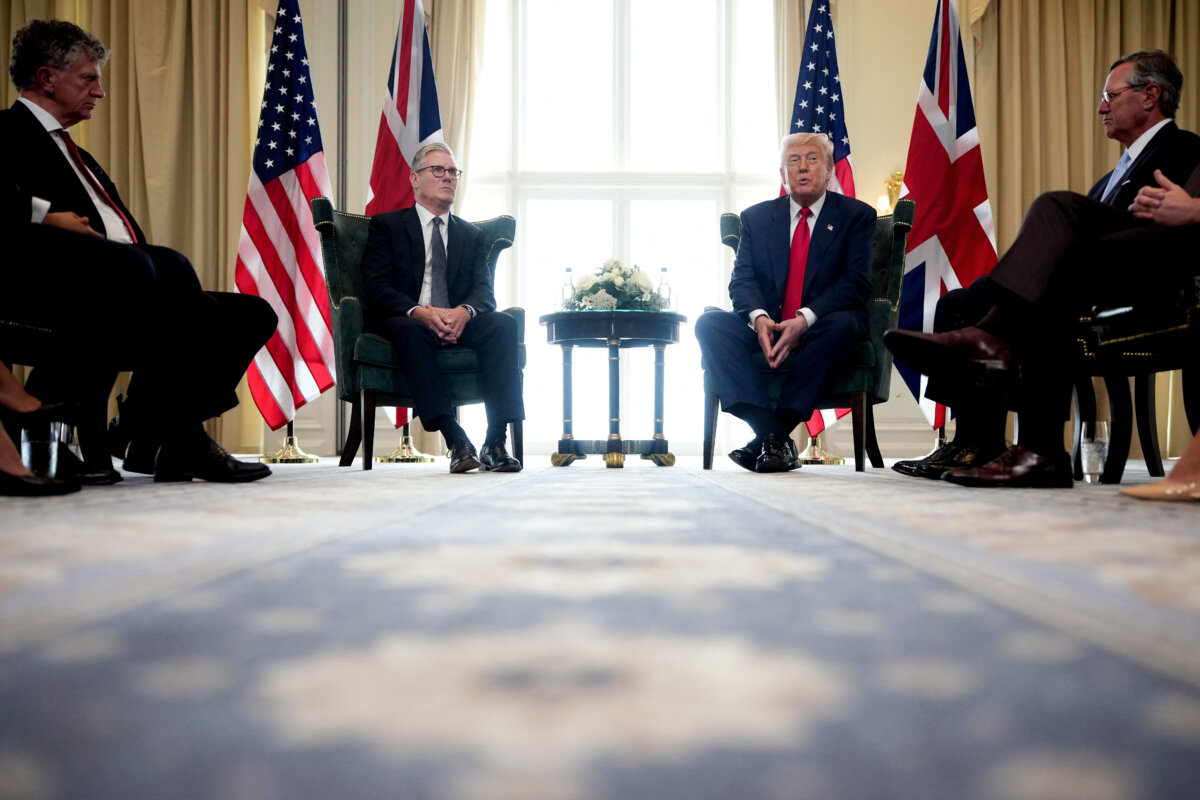
Nevertheless, on July 28, Trump repeated his ultimatum while reducing the deadline for Russian compliance to “about … 10 or 12 days from today.”
“There’s no reason in waiting,” he told reporters in Scotland, where he met with British Prime Minister Keir Starmer. “I want to be generous, but we just don’t see any progress being made.”
According to Corbett, both sides of the conflict are now “looking to external actors to facilitate a victory.”
“So the fighting is likely to continue with periodic fractional gains until the West intervenes decisively—either by supporting Ukraine properly or by allowing support to wane to the point where Russia gains the decisive edge,” he said.
Reuters and The Associated Press contributed to this report.
 Friends Read Free
Copy
Facebook
Tweet
Friends Read Free
Copy
Facebook
Tweet