
The full-scale war in Ukraine entered its fifth year on Feb. 24, marking yet another milestone since Russian forces rolled into the country en masse in 2022.
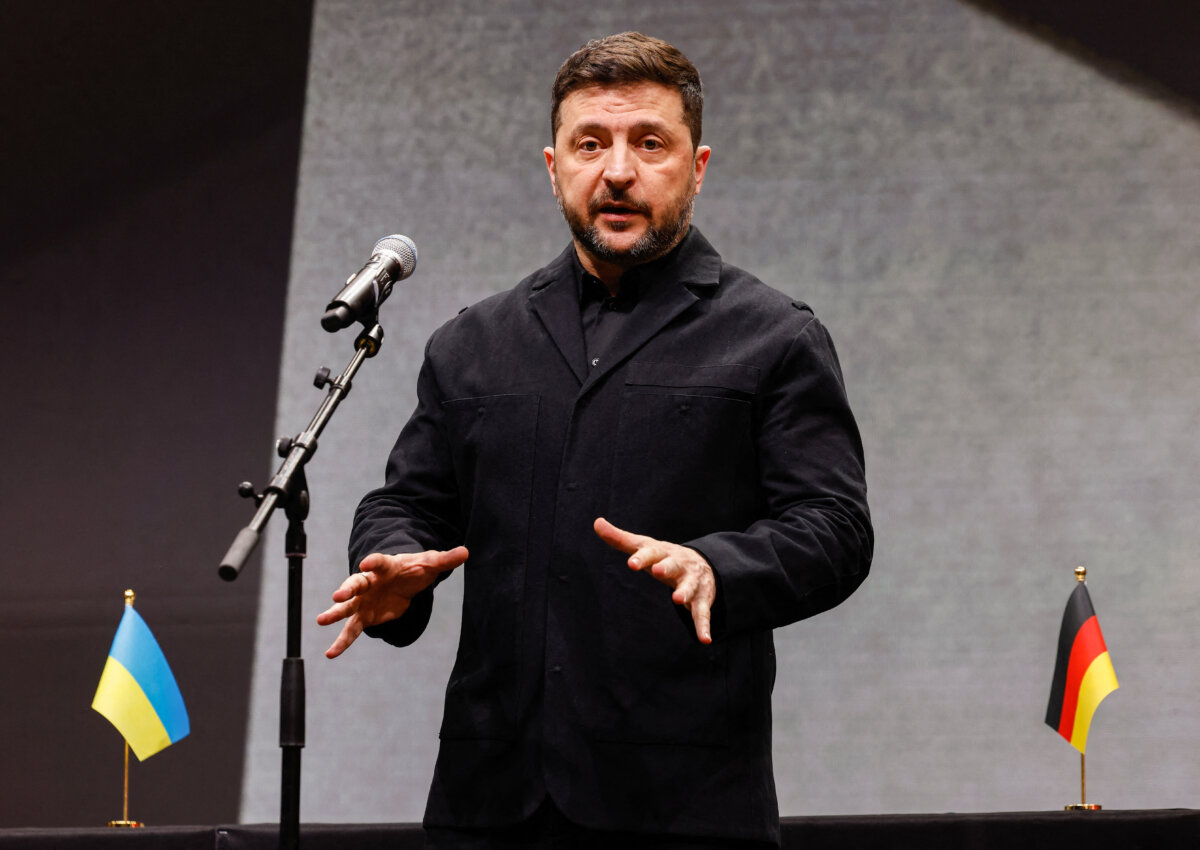
Ukrainian President Volodymyr Zelenskyy acknowledged the anniversary in a Feb. 24 post on X.
“Today marks exactly four years since Putin started his three-day push to take Kyiv. And that says a great deal about our resistance, about how Ukraine has fought all this time,” he said. “Behind those words stand millions of our people, immense courage, incredibly hard work, endurance, and the long path Ukraine has been pursuing since February 24.”
At least thousands of people—both civilians and military personnel—have died during the conflict as global efforts continue to prop up the government in Kyiv and bring about a peaceful resolution.
Negotiations between the warring parties, mediated by the United States, are still ongoing after U.S. President Donald Trump vowed to quickly end the war upon his return to the White House in January 2025.
Full-Scale War Starts
Years of violence, protests, disputed elections and referendums, the Russian annexation of Crimea, and general ill will between Moscow and Kyiv finally came to a head in February of 2022.
Russian President Vladimir Putin, on Feb. 24, 2022, announced the start of “special military operations” in Ukraine with the goal of the total “demilitarization” of the country and its rendering into a neutral state that would be part of neither the European Union nor NATO.
Immediately following Putin’s address, explosions rocked every province and major city of Ukraine as Russia launched missile and drone attacks against key airfields, military bases, and depots, signaling the start of what would be the most destructive war in Europe since 1945.
Zelenskyy, with extensive Western support, has stood firm since the war began, and Ukraine has so far prevented Russia from achieving its stated war aims.
The Current State of Play
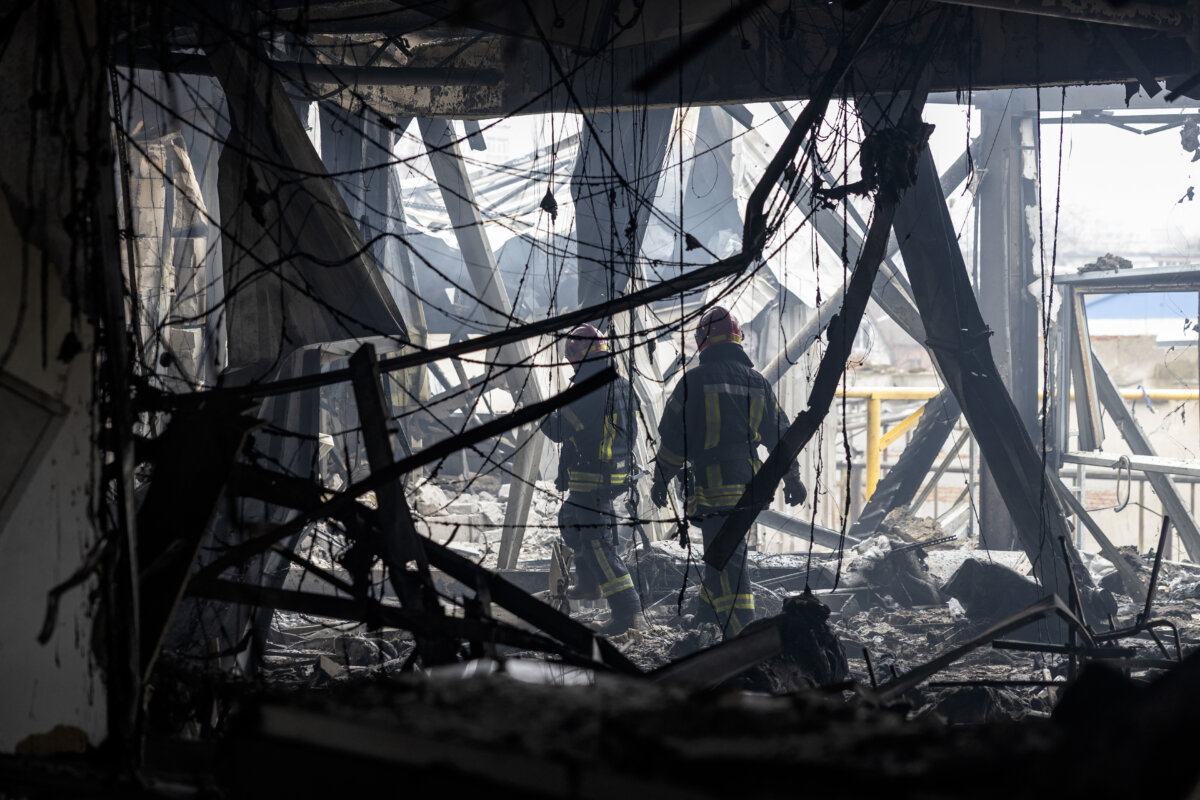
Despite numerous Ukrainian counter offensives, the front lines have remained largely stagnant for 2 years, with the line of contact currently over 1,000 kilometers from the northeastern border near Kharkiv Oblast southward to the Dnipro River in Kherson Oblast.
Russian forces control approximately 20 percent of Ukraine’s sovereign territory, primarily in the east and south. This includes nearly all of Luhansk Oblast, much of Donetsk Oblast (collectively known as the Donbas region), parts of Zaporizhzhia and Kherson Oblasts, and the entirety of Crimea, which Moscow annexed in 2014, according to U.S.-based think tank the Center for Strategic and International Studies.
The Human Cost
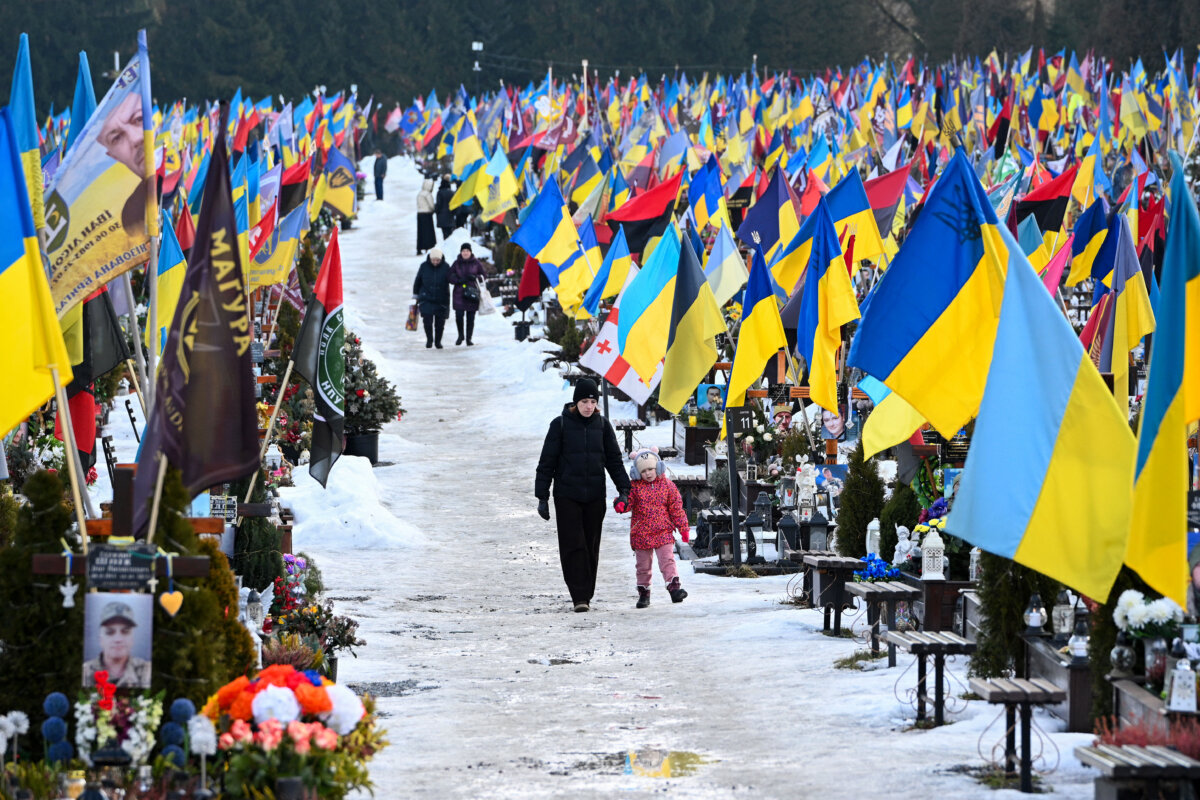
Neither Russia nor Ukraine has publicly revealed the casualty numbers they have suffered, but a report by the CSIS, published on Jan. 27, estimates that combined Russian and Ukrainian military casualties (killed, wounded, and missing) from February 2022 through December 2025 may total as many as 1.8 million.
It also projects that the figure could reach 2 million by spring 2026, if current attrition rates continue.
The report breaks this down as approximately 1.2 million Russian casualties (including up to 325,000 killed) and 500,000–600,000 Ukrainian casualties (including 100,000–140,000 killed).
The Epoch Times has not been able to independently verify these figures.
The Negotiations
Numerous attempts have been made to bring the war to an end since 2022, but all so far have failed to result in peace.
After an initial flurry of talks in the first months of the war, the two sides didn’t speak directly again until May 2025 in Istanbul, Turkey.
Those talks, however, did not yield results in terms of ending the conflict, and direct talks between the two nations broke off in June 2025.
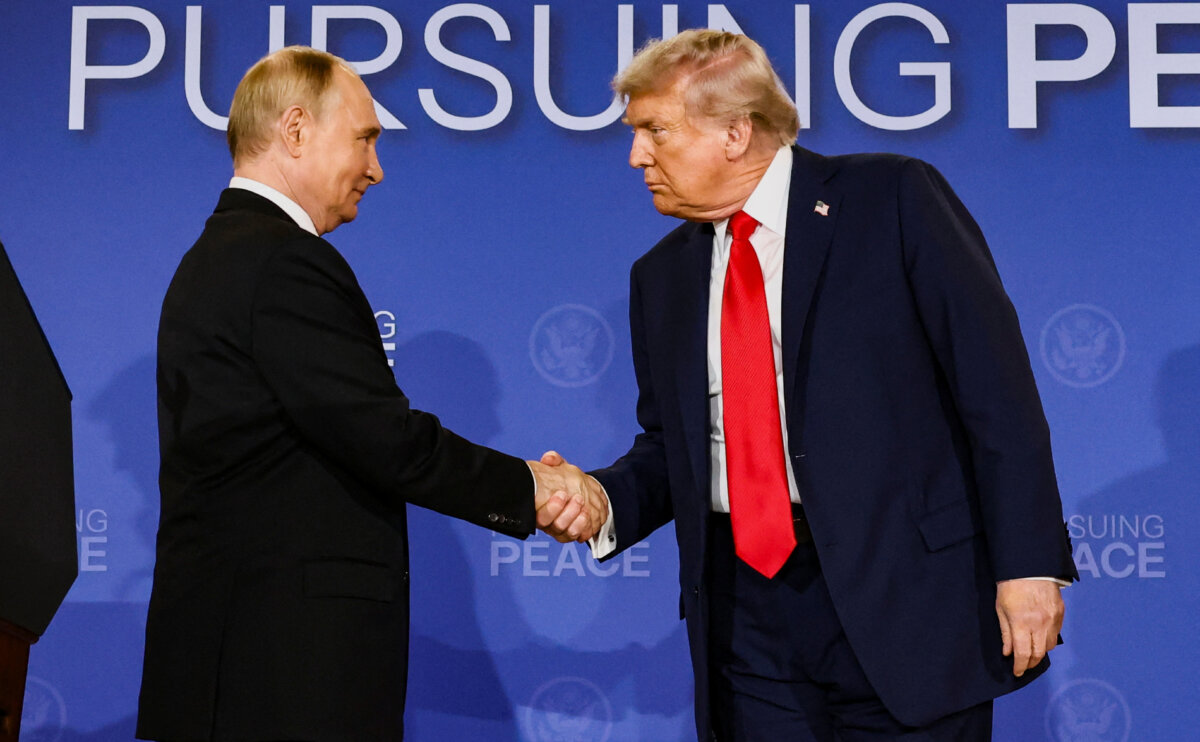
In August 2025, Trump met with Putin in Anchorage, Alaska, in the first meeting between the leaders of Russia and the United States since before the outbreak of the war.
In November 2025, an initial peace plan was revealed, comprising 28 points. It was largely welcomed by Moscow but criticized by Kyiv for its restrictions on Ukraine’s armed forces, explicitly banning it from ever joining NATO, and the secession of the Donbas.
The following month, after discussion between Washington and Kyiv, a condensed 20-point version of the plan, regarded as more amenable to Ukraine, was released. Neither plan has yet come into force.
Hopes of a solution being reached, however, were revived again in 2026 as trilateral meetings between Russia, Ukraine, and the United States began.
Starting in January 2026 in Abu Dhabi, United Arab Emirates (UAE), discussions between the three parties are ongoing, with the most recent round taking place in Geneva, Switzerland, on Feb. 17–18.
Ukrainian officials have said the next round of talks is mooted to take place on Feb. 26-27, in what would be the 4th round of such discussions in 2026, although Russia has not yet confirmed it will attend.
The Sticking Points
The question of territory remains the most vexing issue in the negotiations, with Russia demanding that Ukraine accept territorial losses.
In fact, Russia has made a few territorial gains since seizing control of the Crimean Peninsula in 2014 and starting a new assault on Ukraine in February 2022.
At present, Russian forces control about 20 percent of Ukraine’s pre-2014 territory.
With most of Donetsk under Russian control, Moscow has called on Kyiv to hand over about 20 percent of the province that Russian forces have thus far failed to capture by force. Kyiv has refused to grant this concession.
Zelenskyy’s Latest Comments
Despite pressure from Trump to “come to the table fast,” Zelenskyy’s position with respect to territory has remained unchanged, and the Ukrainian leader laid the blame for the continuation of the war at the feet of Moscow.
On Feb. 16, Zelenskyy called for security guarantees backed by the U.S. Congress before any peace deal between Kyiv and Moscow is signed.
He said the United States was preparing security guarantees but that Washington wanted a “swap of territories, or something like that,” before the guarantees were made.
“I think—first, security guarantees,” Zelenskyy said. “Second, we will not give up our territories because we are ready for compromise. What kind of compromise are we ready for? Not for the compromise that gives Russia the opportunity to recover quickly and come again and occupy us. This is an important thing.”
On Feb. 23, Zelenskyy said he believed Russia had already started World War III, in an X post referencing an interview he gave to the BBC.
“The question is: how much territory can he seize, and how to stop him. Not to prevent Russia from winning, but because Russia wants to impose its own world and change people’s lives, which they like and choose for themselves,” Zelenskyy said.
“That is why I believe, and have long believed, that Putin has already started this war. And we are preventing him from turning this into a broader, full-scale World War III. Today, we are the outpost stopping Putin.”
Putin’s Latest Comments
Putin has not spoken publicly about Russia’s terms since a Dec. 25 interview with Indian TV, ahead of his state visit to New Delhi.
In the interview, discussing the territories of Donetsk and Luhansk, he said, “either we liberate these territories by force of arms, or Ukrainian troops leave these territories and stop fighting there.”
Former Russian president and close Putin ally Dmitry Medvedev said on Feb. 23 that Russia had agreed not to disclose how the discussions between Moscow and Kyiv were progressing.
“In general terms, I can say that the Russian side, of course, put forward our position. You know it has been formulated by the Supreme Commander-in-Chief, the President of our country, and it has been stated repeatedly,” Medvedev said, according to TASS.
“This includes the most substantive issues regarding territories, the parameters of demilitarization of that state, and a number of other points. The other side is currently considering all of this, but we have not received a response.”
The war continues.
 Friends Read Free
Copy
Facebook
Tweet
Friends Read Free
Copy
Facebook
Tweet