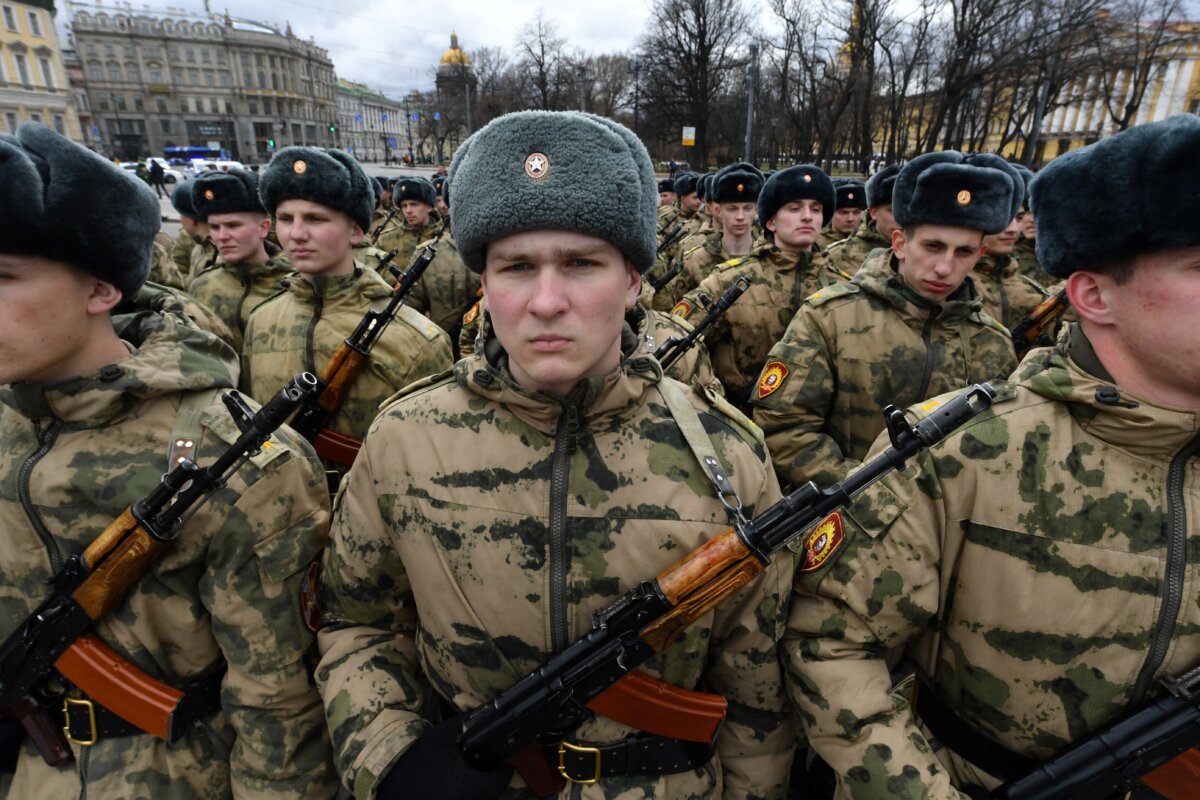
NATO Secretary-General Mark Rutte said on Feb. 12 that up to 30,000 Russian troops per month are being killed in Ukraine and that the Kremlin’s forces are only making “incremental” gains.
Rutte was speaking at NATO’s headquarters in Brussels after a meeting of defense ministers, which was not attended by U.S. War Secretary Pete Hegseth.
“The Russians are only making very incremental advances,” Rutte said. “It is very incremental against high losses. In some months, up to 30,000 Russians dead. Not seriously wounded. Dead. So these are incredible numbers.”
Rutte said last week that he visited the city of Chernihiv, Ukraine, which was briefly held by Russian forces in February 2022, and that he saw in the eyes of the residents that they would not surrender.
‘Ukraine Will Not Give Up’
“They will not give up. We will not give up. Ukraine will not give up,” Rutte said.
Ukrainian Defense Minister Mykhailo Fedorov, who was also in Brussels, said: “We see that Russia can’t defeat us on the ground.”
“Our strategy is working. We eliminated 35,000 Russians in December, 30,000 Russians in January.”
Rutte said the United States was putting “every pressure” on Russia to end the war in Ukraine, which began four years ago this month when Moscow invaded Ukrainian territory.
“[The U.S. leadership has] always consistently pleaded for Europe doing more, Canada doing more, taking more care of the defense of NATO territory, of course, in conjunction with the United States,” Rutte told reporters before the meeting.
When asked about Hegseth’s absence, Rutte said: “They have to take care of the whole world. This is the United States.”
“NATO is very important, but there’s also the Western Hemisphere. There’s also the Indo-Pacific. I totally accept it.”
Last week, Ukrainian President Volodymyr Zelenskyy said U.S. President Donald Trump had given Moscow and Kyiv until June to reach a deal to end the war.
Later on Feb. 12, Under Secretary of War for Policy Eldridge Colby gave a speech in Brussels in which he said: “The United States is prioritizing the most consequential threats to Americans’ interests, especially the defense of the U.S. homeland and interests in the Western Hemisphere, as well as reinforcing deterrence by denial in the Western Pacific.
“Times have changed, and it is only prudent that we adapt to meet them. This is not an abandonment of NATO. To the contrary, it is a return to and validation of its foundational purpose.”
The NATO defense ministers’ meeting was held after the European Parliament voted on Feb. 11 in favor of offering Ukraine a 90 billion euro ($107 billion) loan for 2026 and 2027.
The UK also announced a package valued at more than 500 million pounds ($683 million) of new air defense missiles and systems for Ukraine.
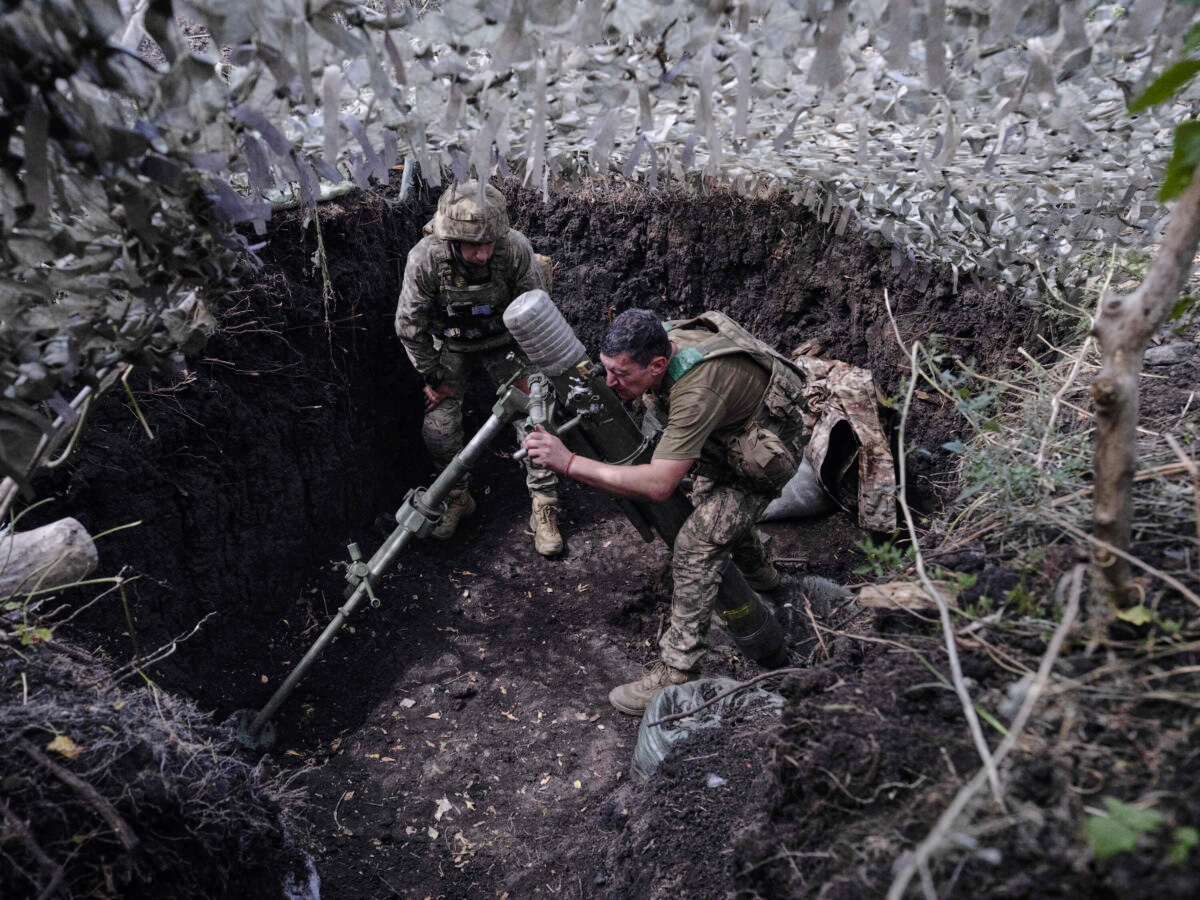
Estonia’s foreign intelligence service stated in its annual report on Feb. 10 that Russia is feigning interest in peace talks over Ukraine and is using the rhetoric of negotiations as a “tactic to buy time.”
“In his head [Russian President Vladimir Putin] still thinks that he can actually militarily win in [Ukraine] at some point,” the intelligence service’s director general, Kaupo Rosin, said in the Estonian capital, Tallinn, on Feb. 10.
Arctic Sentry in Greenland
On Feb. 11, NATO unveiled its Arctic Sentry project, designed to improve security in Greenland, following the Trump administration’s demands that the United States annex it to ensure national security.
“What is really new about it is that for the first time now we will bring everything we do in the Arctic together under one command,” Rutte said on Feb. 11, noting that Arctic Sentry would enable NATO to assess what security gaps needed to be filled in Greenland.
Norway’s chief of defense, Gen. Eirik Kristoffersen, also warned this week that Russia poses a threat to NATO members in northern Scandinavia.
“We don’t exclude a land grab from Russia as part of their plan to protect their own nuclear capabilities, which is the only thing they have left that actually threatens the United States,” Kristoffersen told British daily newspaper The Guardian.
A U.S. State Department spokesperson told The Epoch Times by email that Trump has made it clear that he wants the Russia–Ukraine war to end.
“We remain committed to continuing to encourage Russia and Ukraine to negotiate and end this war through diplomacy—the only path to durable peace,” the spokesperson said.
“The United States is engaged in tireless diplomacy to bridge the divide between Moscow and Kyiv and move the parties towards a negotiated set of terms for peace. These discussions are complex and difficult, but, thankfully, ongoing.”
The Epoch Times reached out to the Russian Ministry of Foreign Affairs but did not receive a response by publication time.
 Friends Read Free
Copy
Facebook
Tweet
Friends Read Free
Copy
Facebook
Tweet