
Liberal Senator Jane Hume has introduced a private members bill into parliament to remove Australia’s ban on nuclear energy.
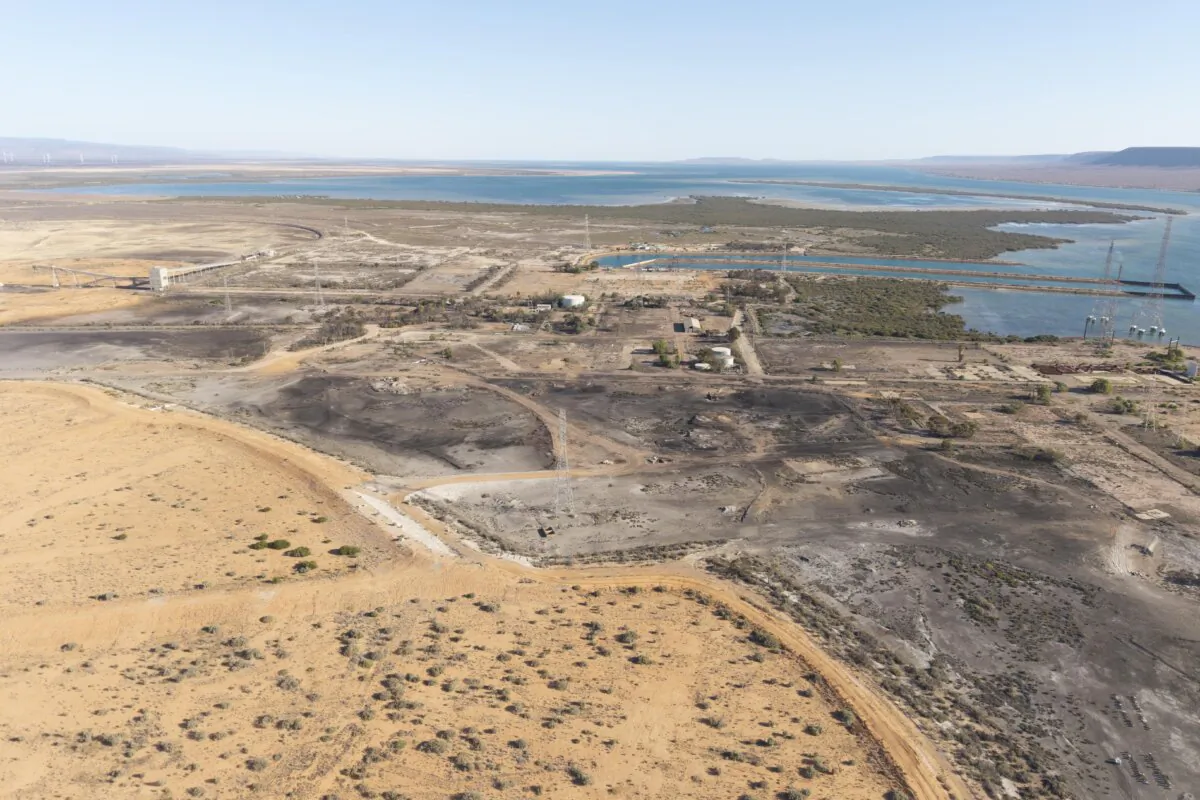
It comes while the Liberal-National Coalition reviews its policy on net zero, and whether to revive a previous pledge to build seven nuclear reactors at former coal sites across the country.
Hume’s bill lifts the current moratorium on civilian nuclear energy use, enabling the market to act on its own accord without necessarily involving government funds.
In the Senate on Oct. 29 (pdf), Liberal Senator Wendy Askew moved on behalf of Hume the bill “to amend the law relating to nuclear installations and energy technologies, and for related purposes.”
In a speech to parliament, Hume described the failure to harness nuclear energy as “the greatest missed opportunity of our generation.”
“Right around the world, nuclear power is being used to provide cheap, safe and zero-emissions energy. Nations like China, India, South Korea and Japan are firing up new nuclear reactors,” Hume said.
“The United States and the United Kingdom—two governments from opposite sides of politics—are, together, forging a new civilian nuclear partnership to accelerate advanced reactor technology.”
Senator Hume said Australia was the only developed nation in the G20 that banned itself from considering nuclear energy in its plan for a net zero future.
“Which is quite remarkable because Australia holds 111 known uranium deposits, nearly 30 percent of the world’s resources. That’s 1.8 million tonnes of potential going to waste,” she said.
“We’ve told Australians that they can dig uranium up. We’ve told them that they can ship it overseas and that they can watch it power the homes and businesses of other nations, but we can’t use it here at home.”
Senator Hume also said around the world, 31 nations have signed a declaration to triple nuclear energy by 2050 to attain net zero.
Labor MP Says Australians Voted Against Nuclear
Labor federal MP for Dickson Ali France argued against nuclear energy claiming Australians had voted against it.
“We know at the last election the people of Australia overwhelmingly voted for a cheaper, renewable-energy focused future. They did not buy the hocus-pocus nuclear policy of those opposite. But, of course, those opposite are hell-bent on ignoring that,” she said in Parliament on Oct. 28 (pdf). The Labor Party won power on a primary vote of 35.56 percent.
“And, at the election and to this day, they have said the solution to Australian energy bills is the most expensive and slowest energy possible: nuclear. It’s two to six times more costly than renewables.”
Andrew Willcox, Liberal National Party MP for Dawson, questioned the cost-effectiveness of renewables.
“I ask those opposite: if renewables are so cheap, why are power prices going through the roof? Why are they skyrocketing? … That’s why, on this side of the House, we are committed to nuclear power, no-emission technologies and baseload power that will provide power 24/7,” he told Parliament on Oct. 28.
A day later, Climate Minister Chris Bowen said the Coalition was divided internally over net zero.
“Of course, on the opposition side we see the right hand not knowing what the further right hand is doing as they battle to try and get further and further away from mainstream Australia, whether it’s on nuclear or net zero,” Bowen told Parliament (pdf) on Oct. 29.
 Friends Read Free
Copy
Facebook
Tweet
Friends Read Free
Copy
Facebook
Tweet