
South Australians’s net debt is projected to reach $53.7 billion (US$38.3 billion) by 2030 under the Labor Party’s budget handed down on June 4, with the government announcing a partial hiring freeze on public service as it grapples with rising interest costs.
Net debt is expected to reach $34.7 billion in 2025-26 before increasing to $40.3 billion the following financial year and continuing to rise over the forward estimates.
The government said the increased borrowing was necessary to fund infrastructure projects, including the Women’s and Children’s hospital and completion of the North-South Corridor.
“The government is increasing net debt and the net debt to revenue ratio over the current period to fund investment in productive infrastructure,” the budget said (pdf).
Despite the growing debt, the budget predicts an operating surplus of $189 million for 2025-26.
An operating surplus means the government’s day-to-day revenue exceeds its day-to-day expenses, while net debt reflects total borrowings after accounting for financial assets.
Partial Freeze of Public Service
The government will introduce a 12-month partial freeze on recruitment of non-frontline public service positions in an effort to manage rising debt and higher interest costs.
Under the measure, agencies will be able to fill only one in every two vacancies in administrative and other non-frontline roles.
The restriction will not apply to frontline services, including police, doctors, and nurses.
“To this end, the government will implement a partial freeze on the recruitment of non-frontline positions for all agencies for the next 12 months,” the budget states.
Cost-of-Living Relief and Housing Measures
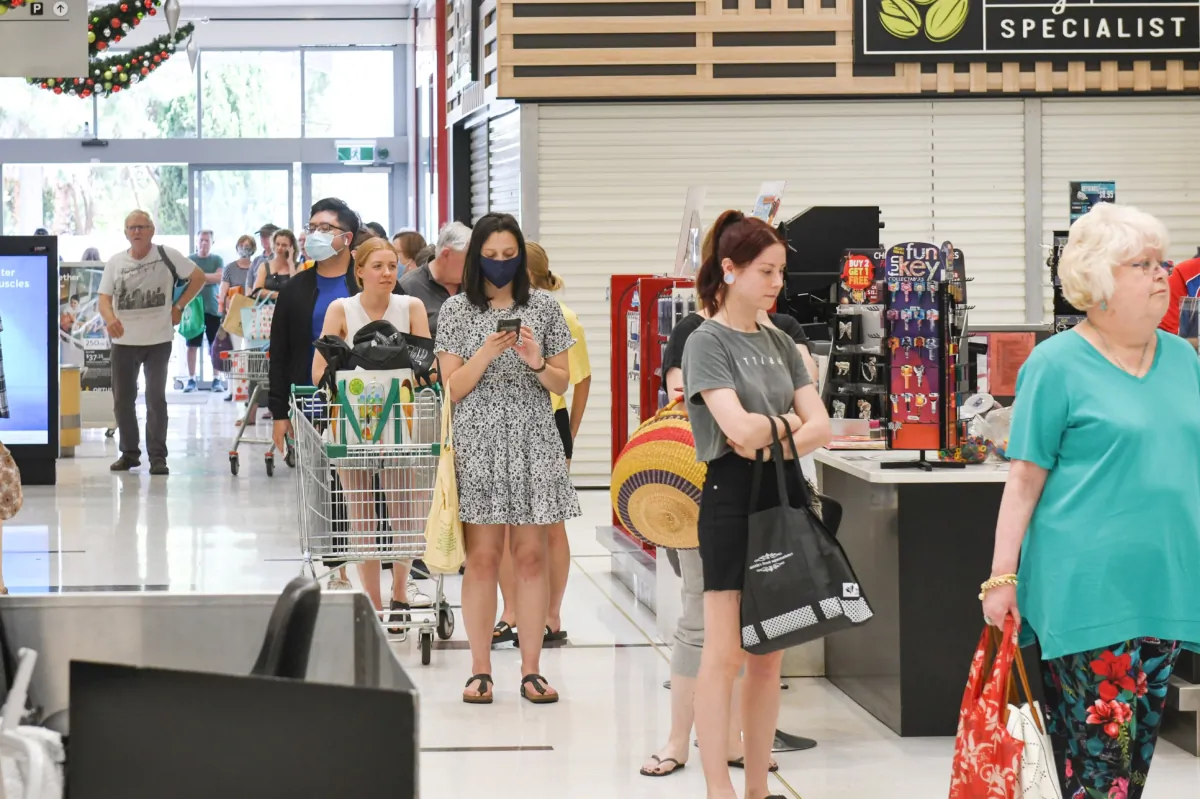
The budget includes more than $500 million in cost of living relief.
A total of $174 million will make public schooling completely free from the 2027 school year, saving families $4,000 per child over 13 years.
Public transport fares will be paused until at least Oct. 1, costing the government about $1 million.
IVF support will also be introduced, with the government delivering on an election promise to provide a $2,000 rebate for up to two IVF cycles, along with $250 for fertility testing before treatment begins.
This system is modelled on New South Wales but adds an extra taxpayer-funded cycle.
The Labor government will also spend $36.1 million over three years on insulation upgrades for 3,500 homes, replacing inefficient appliances in public and community housing.
An additional $3.5 million will fund a battery electric train trial on the Belair rail line.
In housing, the government has committed $2.5 billion to build 13,500 homes each year, including $1.3 billion for 2,000 “rent to own” homes, where tenants will lease properties at 75 percent of market rent with an opportunity to buy later.
A further $30 million will upgrade 300 vacant public homes.
Political View on the Budget
Labor Treasurer Tom Koutsantonis said the budget sets South Australia up for the future and reaffirmed the government’s commitment to no new taxes.
“It does so without surprises or detours. It is exactly what South Australians expect from a government that has been clear about its priorities and is getting on with the job,” he said.
Opposition leader Ashton Hurn said the $53.7 billion debt announced in Labor’s budget would take centuries to pay off.
“We’ve now got debt at a scale that is never seen before in South Australia, with absolutely no plan from Labor as to how to pay it back,” she said.
“You don’t need to be a genius to know that you can’t pay off your credit card if you can’t fundamentally stick to your budgets, and that’s what we are seeing with Labor. Put it simply, every single dollar that the government has spent is first earned by a taxpayer.”
 Friends Read Free
Copy
Facebook
Tweet
Friends Read Free
Copy
Facebook
Tweet