South Korea has said it will recall its ambassador to Ukraine amid an ongoing dispute after Kyiv revealed that it had transferred two North Korean prisoners of war to Seoul.
The announcement came days after South Korean President Lee Jae Myung said that Seoul would take “additional measures” if Kyiv continued to refuse to issue a public apology for the disclosure.
The South Korean Ministry of Foreign Affairs said on Oct. 8 that the government had “decided to recall its ambassador to Ukraine to Seoul,” according to South Korean news agency Yonhap.
“We hope that various issues between the two countries will be resolved smoothly, and we will continue consultations with the Ukrainian side to that end,” the ministry added.
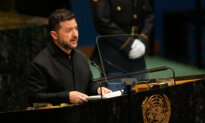
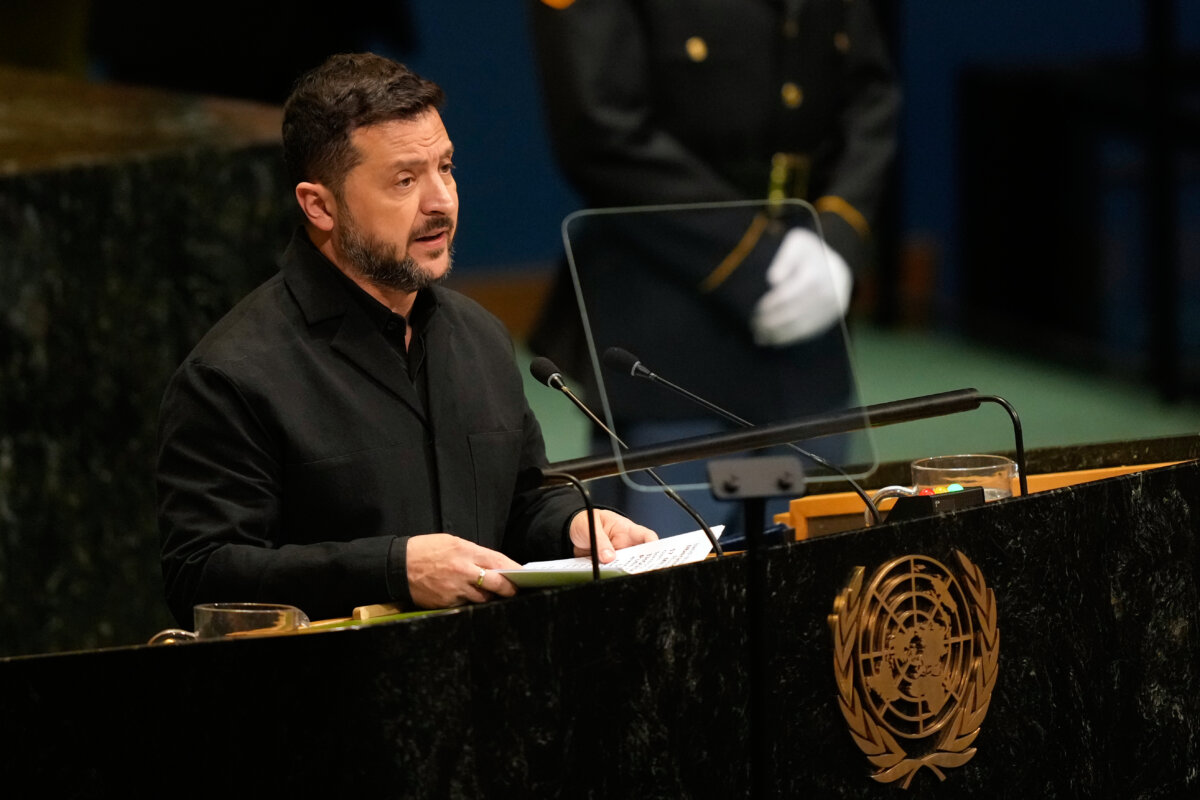
Ukrainian President Volodymyr Zelenskyy had told the U.N. General Assembly on Sept. 23 that Ukraine had recently sent two captured North Korean soldiers to South Korea.
Seoul has said that it and Kyiv had agreed to keep the repatriation confidential because of security, diplomatic, and humanitarian concerns, and to protect the soldiers and their families still in North Korea from potential repercussions.
During a regular briefing on Thursday, a Ministry of Foreign Affairs spokesman reiterated that both sides had agreed not to disclose that the two soldiers had been transferred to Seoul.
“Our side has repeatedly expressed strong regret over the [Ukrainian] side’s unilateral disclosure and false public announcements regarding the repatriation of North Korean prisoners of war, and has demanded an official clarification and apology,” he said.
“We believe that in order to advance relations between the two countries, it is necessary to comprehensively consider Ukraine’s clear explanation of these facts and its response to our requests.”
A Ukrainian foreign ministry spokesperson said that despite Seoul’s decision to recall the ambassador, Kyiv was still open to renewing a constructive dialogue with South Korea.
“We believe that diplomacy should prevail over emotions,” the spokesperson said. “Despite Seoul’s decision to recall its ambassador, Ukraine remains open to resuming constructive dialogue, even if it will take some time.”
The two North Korean troops were among thousands deployed by Pyongyang to support Russia in the Ukraine war.
Zelenskyy Discloses Transfer
Addressing the U.N. General Assembly last month, Zelenskyy had said that the two North Korean prisoners of war were “not easy to capture alive.”
“One of them, when he realized he was going to be taken prisoner, tried to kill himself. And he was shocked that fate didn’t let him die,” the Ukrainian president said.
“This is how they raise people in the North. It’s reality. They take away their freedom. They take away their right to choose. And they drill into them that they must die, no matter what.”
Ukrainian forces captured the two North Koreans in Russia’s Kursk region in January 2025, with Zelenskyy at the time describing the pair as the first North Korean soldiers to be captured alive since Pyongyang sent troops to fight alongside Moscow’s forces.
North Korean Troops
According to the South Korean Defense Intelligence Agency, North Korea has deployed more than 16,000 troops to Russia since October 2024, many of whom were believed to have been killed or injured.
The participation of North Korean soldiers in Russia’s war on Ukraine has been recognized by Russian Foreign Minister Sergei Lavrov, who said last month that North Korean soldiers had helped drive Ukrainian forces from a Russian region in 2025.
Last week, Ukrainian Foreign Minister Andrii Sybiha said that Kyiv was undertaking diplomatic efforts to resolve the “misunderstanding” between Ukraine and South Korea.
Ukrainian foreign ministry spokesman Heorhii Tykhyi told reporters on Oct. 7 that the dispute was rooted in a “difference in interpreting the agreements on confidentiality.”
“Active work is under way through closed diplomatic channels to resolve and turn the page on this,” Tykhyi said.
Guy Birchall and Reuters contributed to this report.
 Friends Read Free
Copy
Facebook
Tweet
Friends Read Free
Copy
Facebook
Tweet