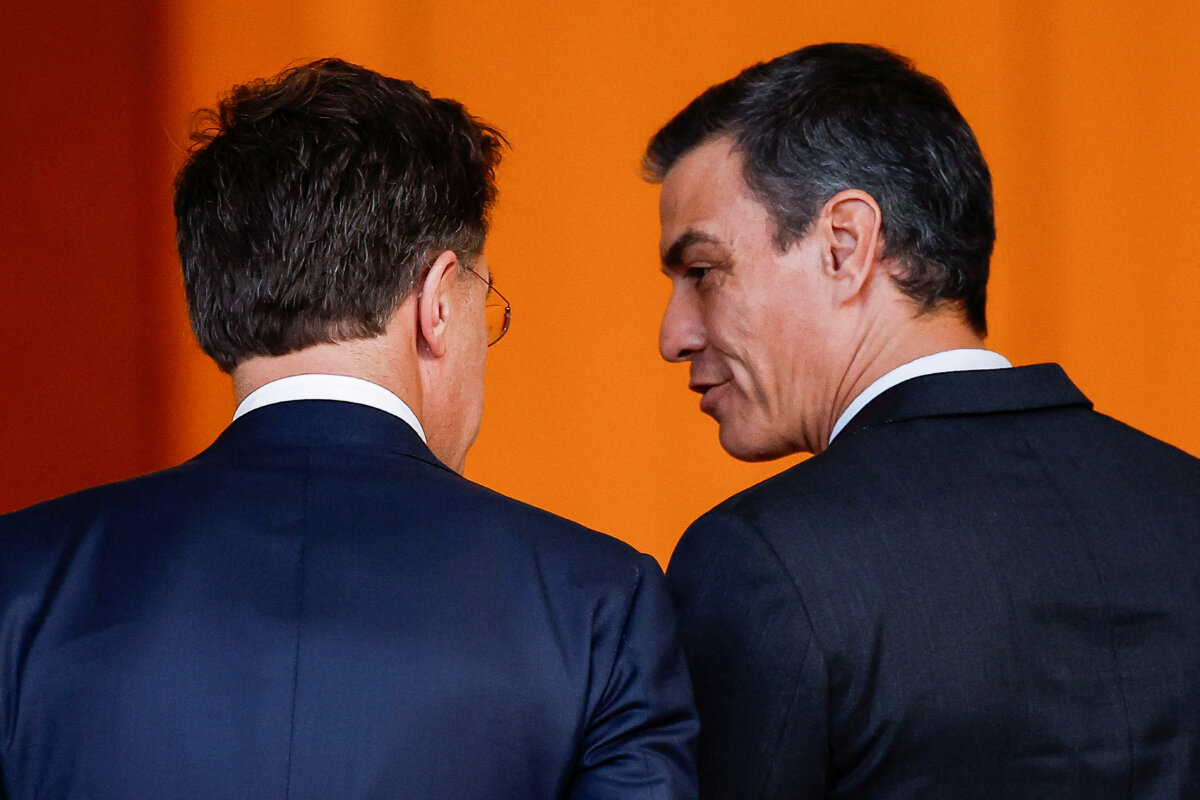

Spain has reached a deal with NATO to be excluded from a 5 percent of gross domestic product (GDP) defense spending target, Spanish Prime Minister Pedro Sánchez said on June 22.
“Spain will, therefore, not spend 5 percent of its GDP on defense, but its participation, weight, and legitimacy in NATO remain intact,” Sánchez said in a televised address on June 22.
European countries have been increasing defense spending after U.S. President Donald Trump said NATO countries must increase defense spending to 5 percent of GDP, up from the current 2 percent goal.
Sánchez, who is the leader of the Spanish Socialist Workers’ Party, made the comments ahead of NATO’s two-day summit at The Hague, starting on June 24.
“We fully respect the legitimate desire of other countries to increase their defense investment, but we are not going to do it,” he said, adding that Spain could meet all of its commitments to NATO, in terms of staff or equipment, by spending only 2.1 percent of its GDP.
On June 19, Sanchez told NATO Secretary General Mark Rutte that his country wanted to opt out of the target. Spain spent 1.28 percent, according to NATO estimates on military expenditure, making it the alliance’s lowest spender.
On June 20, Trump said Spain “has to pay what everybody else has to pay” and that Madrid was “notorious” for low defense spending.
At the pre-summit news conference on June 23, Rutte was asked why he had given Spain an exception and what message it sent to other countries that also believe that it’s not necessary to reach the 5 percent spending target.
Rutte said that he has “always had [the] highest respect for Spain’s contribution to NATO.”
In March, Swedish Prime Minister Ulf Kristersson said that his country is aiming to raise defense spending to 3.5 percent by 2030, a larger and faster ramp-up than previously planned.
At the time, he said his government believed that NATO would soon set a goal for member states to spend between 3 percent and 4 percent of GDP.
Sweden had maintained a policy of military neutrality for more than 200 years. However, in March 2024, it ended this tradition by joining NATO.
Norway reached the 2 percent defense spending target in 2024 and plans to double current spending levels by 2036.
“To be an alliance, you’ve got to be more than flags. You’ve got to be formations. You’ve got to be more than conferences,” Hegseth said at a meeting of NATO defense ministers in Brussels.
“We’re here to continue the work that President Trump started, which is a commitment to 5 percent defense spending across this alliance, which we think will happen. It has to happen by the summit at The Hague later this month.”
Reuters and Guy Birchall contributed to this report.
 Friends Read Free
Copy
Facebook
Tweet
Friends Read Free
Copy
Facebook
Tweet