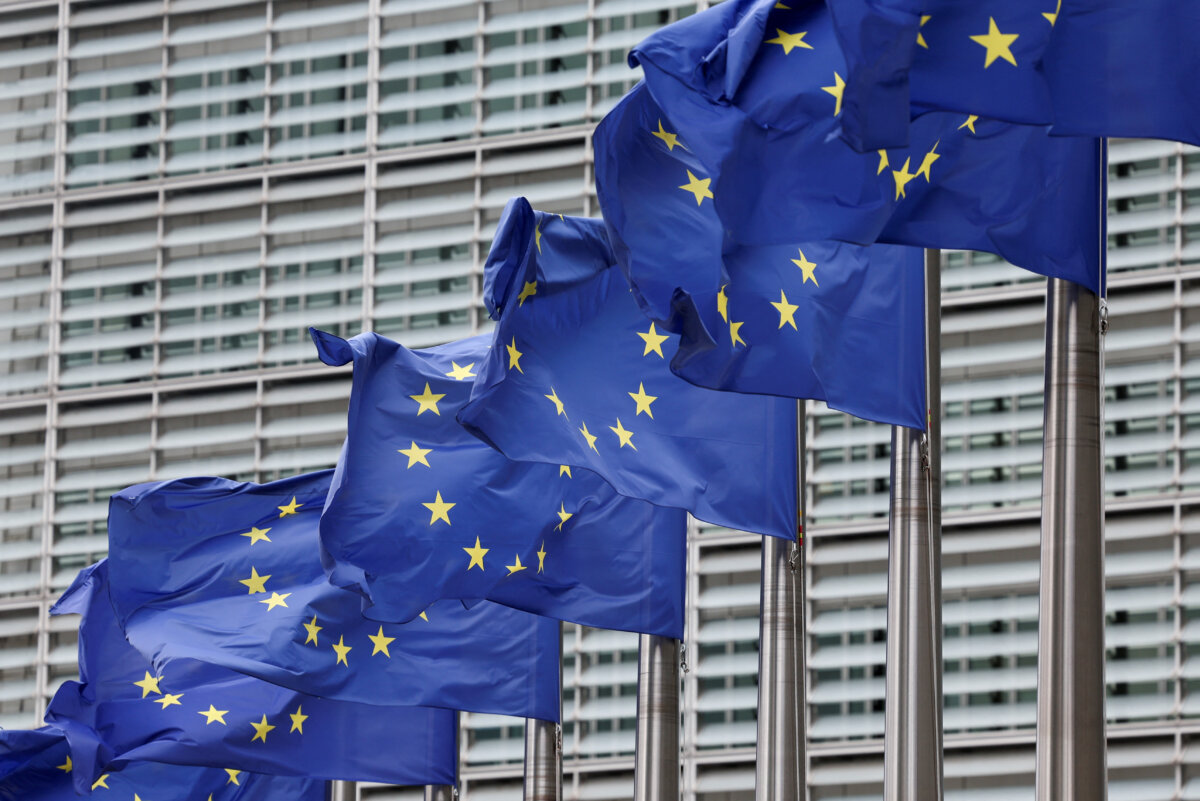

The Spanish government is urging the European Union to move toward creating a joint army for the bloc as a deterrence measure amid an ongoing dispute between the United States and European allies over Greenland.
Spanish Foreign Minister José Manuel Albares made the call for military cooperation while speaking to the media on Jan. 21 ahead of a day of meetings at the World Economic Forum at Davos, Switzerland.
Echoing the views of Spanish Prime Minister Pedro Sánchez, Albares said the bloc of 27 states should focus on bringing together its assets to properly integrate its defense industry before mobilizing a coalition of the willing.
Albares said the debate over whether European citizens from so many different nations would be willing to assemble militarily is “legitimate,” but the chance of bringing together a critical mass was higher as a bloc than at the national level.
“A joint effort would be more efficient than 27 separate national armies,” the minister said.

Greenland Dispute
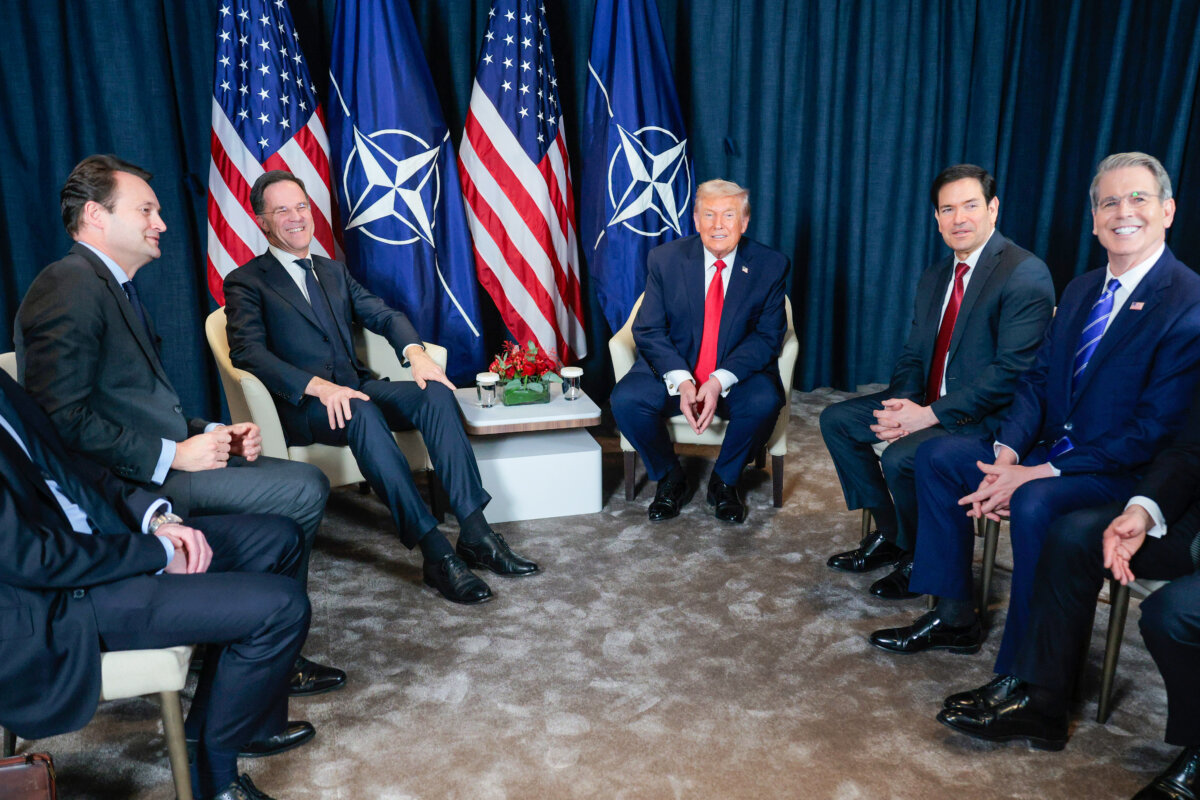
The comments came ahead of an emergency meeting between EU leaders scheduled for Jan. 22 to coordinate a joint response to U.S. President Donald Trump’s pursuit of a U.S. acquisition of Greenland. On Jan. 21, Trump said in Davos that he would not use force to seize the semi-autonomous Danish territory.
A spokesperson confirmed that the meeting would go ahead despite Trump’s announcement on social media that he and NATO Secretary-General Mark Rutte had already “formed the framework of a deal with respect to Greenland and, in fact, the entire Arctic Region.” The U.S. president said he would not impose the extra tariffs he had threatened to slap on eight European nations that were strongly opposed to a U.S. acquisition of Greenland.
Albares said the intention of an EU army was not to replace NATO, which some leaders, including the Danish prime minister, have recently suggested is under threat because of the dispute over Greenland.
“But we need to demonstrate that Europe is not a place that will let itself be coerced militarily or economically,” Albares said.
“The idea of European defense was part of the origin of the EU. It is up to my generation to finish this task.”
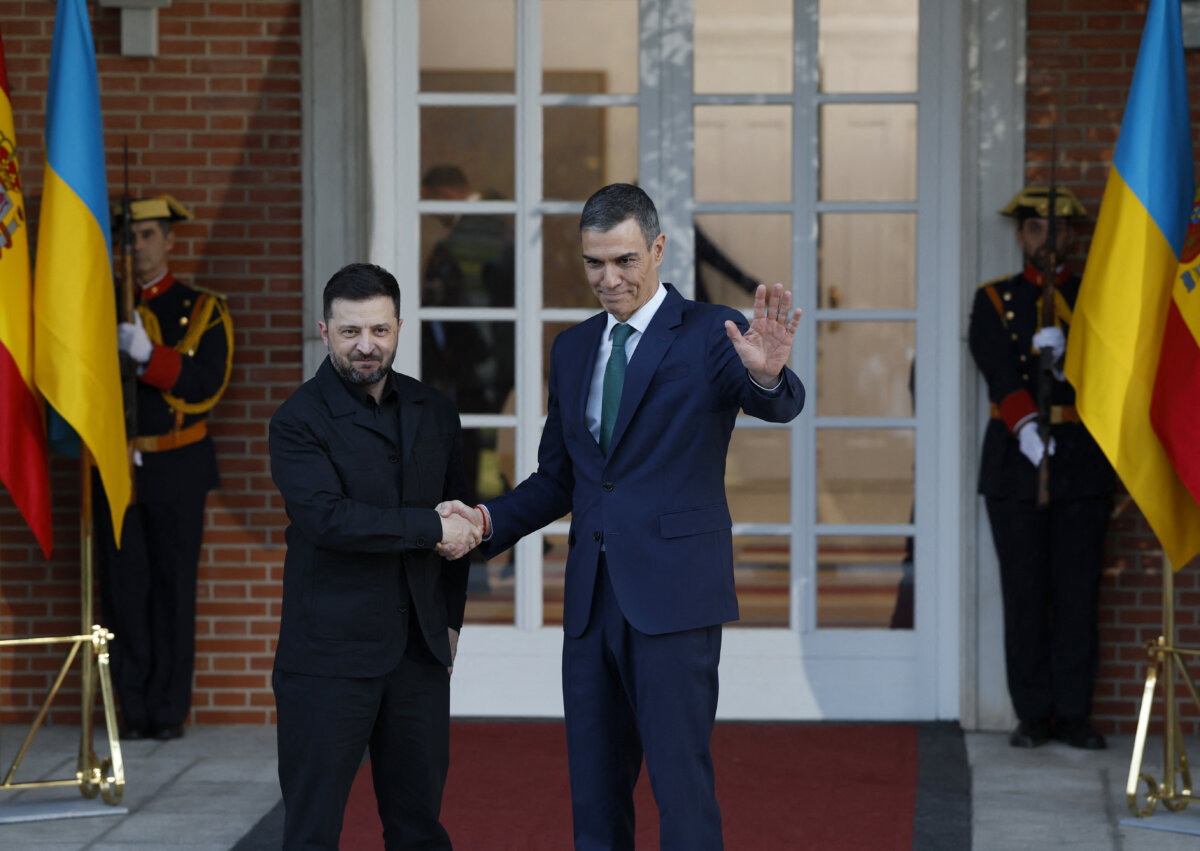
In March 2025, the Spanish prime minister said that Europe needs its own defense force to combat “old imperialist impulses in Russia,” especially in light of reduced support from the United States. He called for a military force “with troops from all 27 member countries, working under a single flag with the same objectives.”
Cold War Proposal
The idea of a supranational European army was first proposed during the Cold War to counter the capabilities of the Soviet Union and ensure that German rearmament did not threaten its neighbors.
Driven chiefly by France in the early 1950s, the proposed European Defense Community would have consisted of the “inner six” countries of Belgium, France, Italy, Luxembourg, the Netherlands, and West Germany. It failed to materialize after it was voted down by France’s parliament in 1954.
Formed in 1949, NATO remained the chief means of countering the Soviet Union, with the Warsaw Pact signed between the USSR and seven satellite states in response to West Germany’s joining NATO.
After the fall of the Berlin Wall in 1989 and the subsequent collapse of European communism behind the “Iron Curtain,” The Warsaw Pact was formally dissolved in 1991, with NATO gradually expanding into the Eastern bloc countries from 1999.
While recent rising geopolitical tensions, including the war in Ukraine, have seen military cooperation between different European countries under NATO, the idea of a unified common army has never materialized and is opposed by many EU member states.
Ukrainian President Volodymyr Zelenskyy has pushed for a European army, saying that Trump’s retraction of financial support for Kyiv and attitude toward the EU shows that the bloc urgently needs its own unified military.
Opposition From Member States
The UK, which left the EU following the Brexit vote in 2016, was the single biggest blocker of any European army concept while a member, consistently using its veto under successive Conservative and Labour governments.
Denmark has also historically been a strong opponent of a European army, stressing the need for national sovereignty, while Polish officials have repeatedly said that European defense must complement NATO and not undermine or replace it. After French President Emmanuel Macron revived the idea of a European army in 2018, Polish leaders warned that it could “divide the West” and distract from deterrence against Russia.
Ursula von der Leyen, who has been president of the European Commission since 2019, has called for a “European Defense Union,” and in April 2025 unveiled “Rearm Europe”—a five-year plan swiftly rebranded “Readiness 2030.”
The plan seeks to “mobilize” up to 800 billion euros to strengthen Europe’s defense infrastructure in response to geopolitical threats and uncertainties over U.S. military support.
Funding Concerns
Those opposed to the concept of a fully integrated EU Army cite concerns about where the funding would come from, with EU countries already divided over Von der Leyen’s call for members to increase their national defense budgets.
Another major obstacle that security analysts have highlighted is the lack of patriotism that soldiers are likely to feel toward a bloc of 27 diverse nations.
Ronja Kempin, a senior fellow in the EU research division of the German Institute for International and Security Affairs, told The Epoch Times in April 2025 that “the hardest part for the EU is the question of legitimacy.”
“Who will decide the possible deployment of such forces? Within the member states, you have such different legislation,” Kempin said.
“The question I am always asking is, ‘Are we at the point already now where we are willing to die for the European Union?’ And this is so far the biggest stumbling stone. When it comes to the deployment of soldiers, that is the hardest part.”
Reuters and Chris Summers contributed to this report.
 Friends Read Free
Copy
Facebook
Tweet
Friends Read Free
Copy
Facebook
Tweet