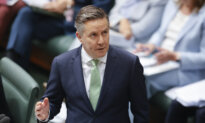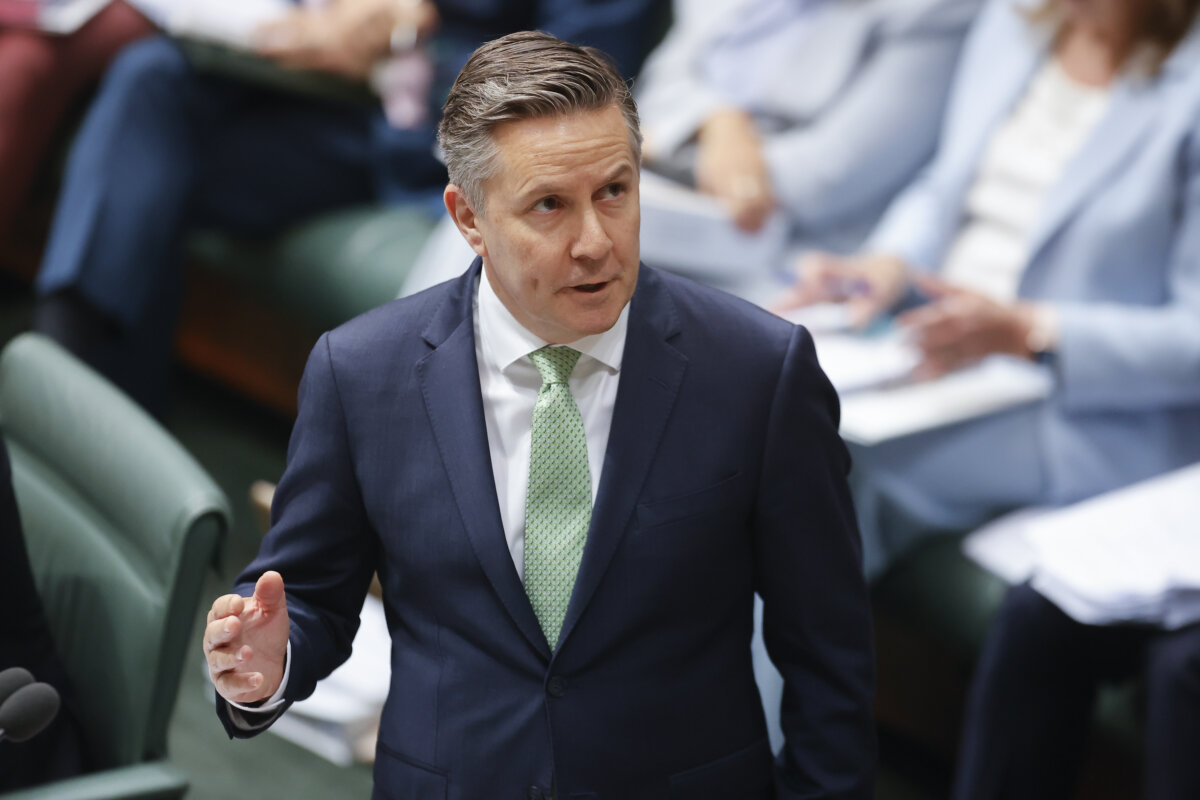

A day after unveiling major changes to the National Disability Insurance Scheme (NDIS), Health Minister Mark Butler has defended the reforms, warning the program is under ongoing financial strain.
“We’ve not been able to get spending growth under control. The scope of the scheme has expanded well beyond the original intent, and it is riddled with poor practice and fraud and rorts that I think the community, including participants themselves, are increasingly impatient about us cleaning up,” he told ABC Radio on April 23.
The comments follow the government’s announcement that around 160,000 people could be removed from the scheme by 2030 as eligibility rules are tightened.
The Labor government expects the changes will significantly reduce the $50 billion (US$35.8 billion) program’s annual growth rate to 2 percent in the coming years, before gradually rising to 5 percent. Currently, NDIS spending is growing at more than 10 percent annually.
To meet these targets, the government plans to tighten eligibility—particularly for younger children and those with lower support needs—while introducing stricter, evidence-based functional assessments.
Butler said the scheme had drifted from its original purpose of supporting people with permanent and significant disabilities.
“There are hundreds of thousands of people beyond what the original intention was,” he said.
“The fact is that too many of the support systems that used to exist for those people were dismantled, or at the very least wound back significantly, so that the NDIS has been the only port in the storm for those Australians.”
The minister acknowledged the scale of the reforms could be unsettling, but argued they were necessary to stabilise the system.
“I wish I could say that change is not needed or not much needed, but that wouldn’t be the truth,” he added.
The NDIS, launched in 2013 under the Julia Gillard government, was originally expected to support about 411,000 participants at a cost of $13.6 billion a year. However, it has since grown far beyond those projections, now covering roughly 761,000 people with an estimated cost of $49.8 billion in 2025-26.
Opposition Extends Support
The proposed overhaul has reignited political debate over how to manage the scheme’s rising costs while maintaining support for those in need.
Nationals Senate Leader Bridget McKenzie said the Opposition was willing to work with the government but stressed that stronger action was needed to fix the scheme.
“Unlike when we tried to do this, they now have an opposition that wants to actually get this right, so it delivers for the people in need, and we stop the rorting,” she told Nine News on April 23.
Attempts to reform the scheme are not new. In 2021, the former Morrison government proposed changes, including independent assessments to determine eligibility, but the plan was abandoned following strong criticism from the disability sector and opposition from Labor.
The debate has intensified in recent weeks after One Nation Leader Pauline Hanson called for a Senate inquiry into alleged waste and fraud within the scheme and renewed her push for means testing.
“People whose disability care is covered by insurance due to an accident should not be able to double-dip with the NDIS,” she wrote on X.
Meanwhile, Greens disability spokesperson Jordon Steele-John opposed the cuts, saying the government did not need to remove more than 160,000 people from the NDIS to deliver the savings.
He explained that the $15 billion that the Labor government wanted to save with these changes could come from taxing gas companies.
“If we simply put in place the 25 percent basic tax on gas companies that is getting so much conversation in the community, that would raise over $17 billion,” he told ABC News.
 Friends Read Free
Copy
Facebook
Tweet
Friends Read Free
Copy
Facebook
Tweet