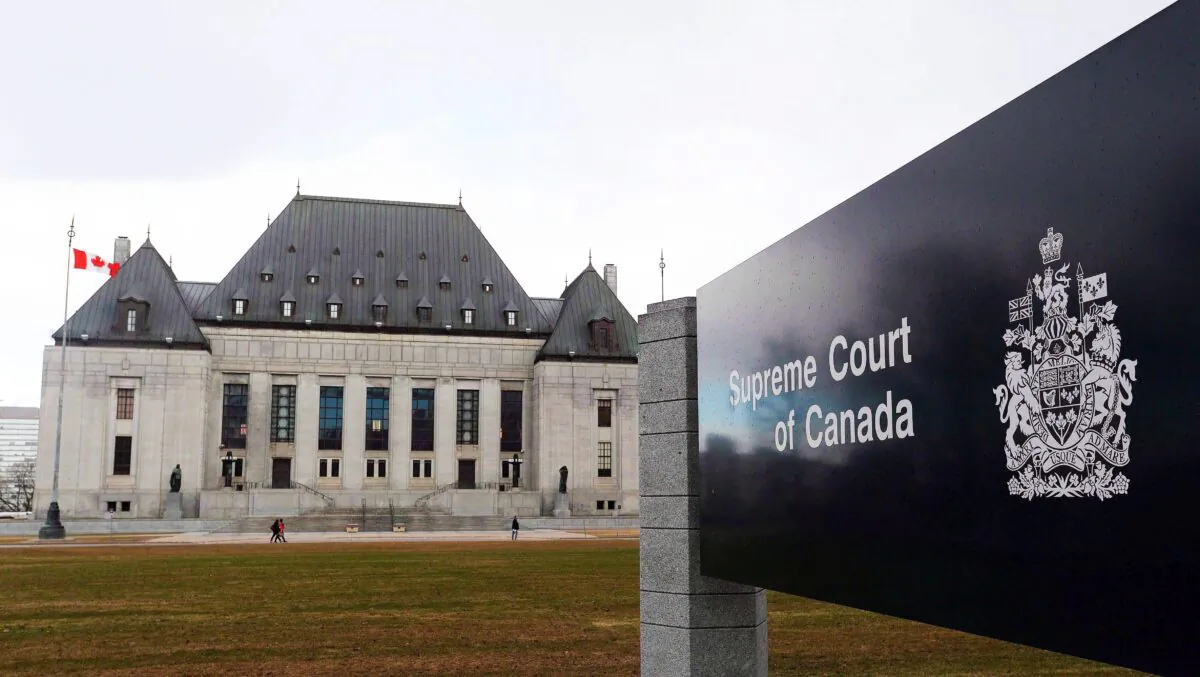

The Supreme Court of Canada has agreed to hear a challenge against the Liberal government’s ban on around 2,500 types of what it calls “assault-style” firearms.
On March 19, the top court granted leave to hear an appeal challenging the federal ban on firearms that Ottawa classifies as suitable only for military use, rather than for hunting or sport shooting.
The case centres on the May 2020 ban introduced by the government of then-Prime Minister Justin Trudeau, which prohibited more than 1,500 firearms models and variants through an Order in Council. The measure was enacted in the aftermath of the 2020 Nova Scotia mass shooting, and the list of banned firearms has since expanded to more than 2,500 makes and models.
While gun control advocates welcomed the ban, gun rights supporters say it targets law-abiding citizens rather than criminals. They also point out that the Nova Scotia shooting involved guns acquired illegally, including from the United States.
In 2023, the Federal Court dismissed multiple lawsuits by various groups and individuals, including firearms owners, businesses, hunters, and recreational and sport shooters, challenging the firearms ban.
The applicants had made several claims, including that the Order in Council outlawing the firearms was created through “incorrect, unreasonable” and “impermissible sub-delegation of authority,” that it breaches Section 7 of the Charter, and that it is inconsistent with the Canadian Bill of Rights.
The Federal Court had ruled that the government had not exceeded its authority granted by Parliament, and that the regulations do not infringe upon Canadians’ rights.
Gun rights advocacy group Canadian Coalition of Firearms Rights (CCFR), along with several firearms dealers and gun owners, submitted an appeal to the Federal Court’s decision in late 2023.
The Federal Court of Appeal rejected the challenge in April 2025, saying the Federal Court had provided “thorough and persuasive” justifications in its decision.
The CCFR says it is “thrilled” the Supreme Court will hear its appeal in challenging the government’s use of the Order in Council to prohibit firearms in Canada.
“After losing at the Federal Court and the Federal Court of Appeal, we now stand ready to present our arguments before the Supreme Court of Canada,” the CCFR said in a March 19 statement. “This is a pivotal moment not only for the hundreds of thousands of licenced firearms owners affected by the ban, but for the rule of law and the proper limits of executive power in our democracy.”
The coalition said its challenge focuses on whether the government has the authority to bypass Parliament and make decisions through an Order in Council made by cabinet. It said such orders are “executive instruments meant for implementation and administration, not for enacting broad, permanent changes that affect thousands of law-abiding citizens and ban billions in private property.”
“We are optimistic that the Supreme Court will carefully examine whether the government’s chosen method was lawful and appropriate,” the CCFR said.
Public Safety Minister Gary Anandasangaree told reporters on March 19 that his government looks forward to defending its position at the Supreme Court.
“Canada is a rule of law country. We are bound by the decisions of the court, and we look forward to robustly defending the government’s position, which we’re very confident will be in our favour,” he said.
Buyback Program
Ottawa launched a firearms buyback program on Jan. 19, and has given eligible gun owners until March 31 to make an online declaration to receive compensation for a banned firearm.
The government has said that submitting a declaration “does not guarantee” compensation, as they will be reviewed on a first-come, first-serve basis and “accepted based on availability of program funds.”
Gun owners who do not make a declaration are expected to dispose of or deactivate their banned firearms before the amnesty period ends on Oct. 30. Anyone who keeps banned firearms after that will be deemed to be breaking the law and may face criminal charges.
The Liberal government has said the program is needed to curb gun violence in the country, arguing that the public doesn’t need access to the types of guns it’s banning. It has also said more than 19,000 non-restricted makes and models of firearms remain available for hunting and sport shooting in Canada.
Several provinces and territories have indicated they will not participate in the program, including Alberta, Saskatchewan, Manitoba, Ontario, New Brunswick, Yukon, the Northwest Territories, and Nunavut. Quebec is the only province that has expressed support for the program so far.
While the RCMP and Quebec’s provincial police force have said they will collect guns eligible for compensation, numerous police services have said they will not help with the program.
Conservative Leader Leader Pierre Poilievre has said the program targets “law-abiding” hunters and sport shooters, while failing to address the illegal firearms that are most often used in crimes.
Jennifer Cowan, Matthew Horwood, and Noé Chartier contributed to this report.
 Friends Read Free
Copy
Facebook
Tweet
Friends Read Free
Copy
Facebook
Tweet