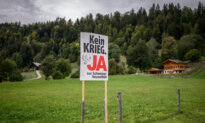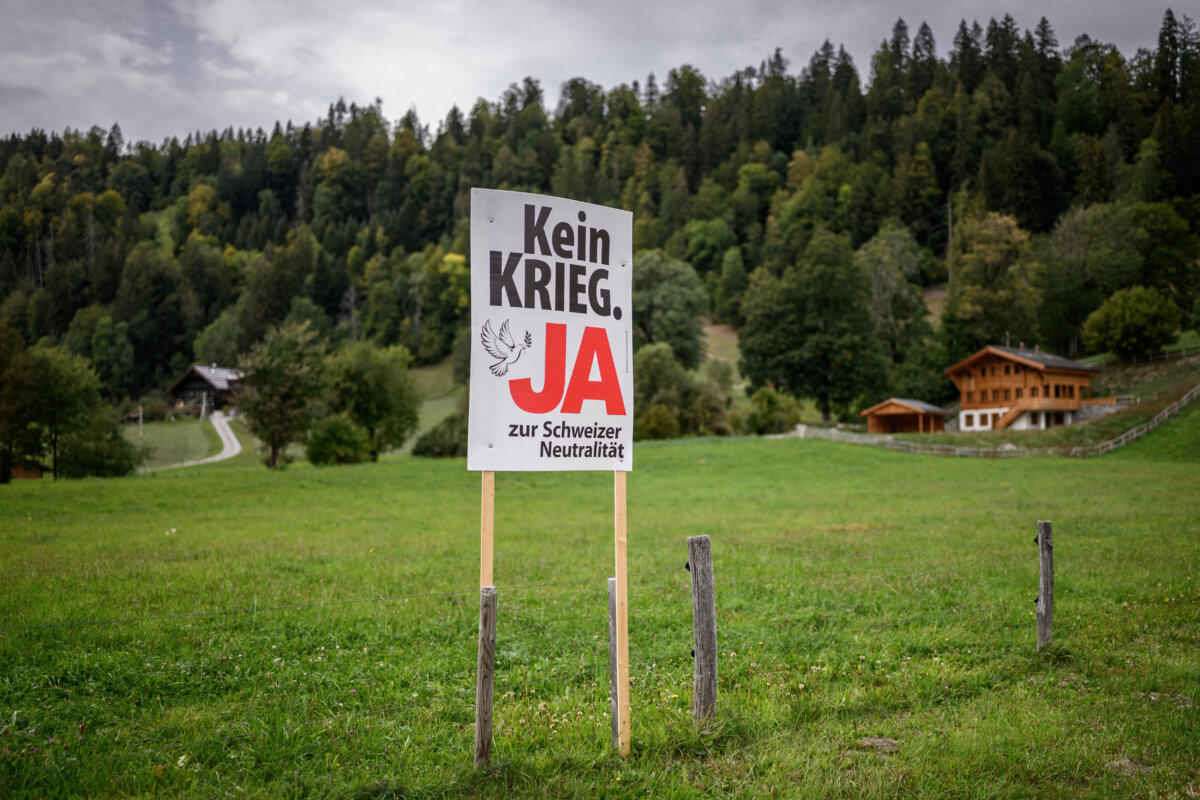

Swiss voters on Sunday rejected a proposal that would have adopted a more restrictive definition of neutrality in the country’s Constitution. About 70 percent of the voters rejected the proposal, according to the country’s Federal Statistical Office.
The proposal would have barred Switzerland from cooperating with a military alliance unless the country faced an attack or an imminent attack. It would also prohibit sanctions against countries at war, with exceptions for U.N. sanctions and measures to prevent sanctions evasion.
The proposal also urged Switzerland to use its neutrality to its advantage in its role as a mediator.
Supporters, including the right-wing Swiss People’s Party, argued that Switzerland had weakened its neutrality by adopting sanctions against Russia after the latter’s invasion of Ukraine. The Swiss government opposed the amendment, saying it would limit the country’s ability to protect its security and work with other nations.
Most parties and the Swiss government opposed the proposal. Foreign Minister Ignazio Cassis said that if approved, the proposal would harm national security and prevent Switzerland from training with NATO.
“Swiss voters like neutrality, but they approve of how the government is implementing it at present,” said Fabio Wasserfallen, a professor of European politics at the University of Bern, before the vote. “They are also generally in favour of the sanctions on Russia over the war in Ukraine, and don’t want that to change.”
Swiss People’s Party lawmaker Lukas Reimann said he was not pleased with the results but was encouraged that all sides during the campaign were committed to Swiss neutrality.
“It is absolutely clear that neutrality belongs to Switzerland and is part of Switzerland’s identity,” Reimann said. “Going forward, we will judge the opponents of the initiative by that commitment.”
Swiss neutrality has been recognized internationally since 1815 but the government has not defined the specific guidelines for its neutrality.
In 1992, Swiss voters rejected joining the European Economic Area. In 2001, they voted by 76.8 percent against opening talks to join the European Union. Switzerland kept its own currency, the Swiss franc, maintained its military neutrality, and did not agree to give EU law precedence over Swiss law.
Meanwhile, a series of treaties gave EU institutions more authority and reduced the ability of individual member countries to block decisions. Switzerland chose a different approach: negotiating agreements with the EU one issue at a time.
Reuters contributed to this report.
 Friends Read Free
Copy
Facebook
Tweet
Friends Read Free
Copy
Facebook
Tweet