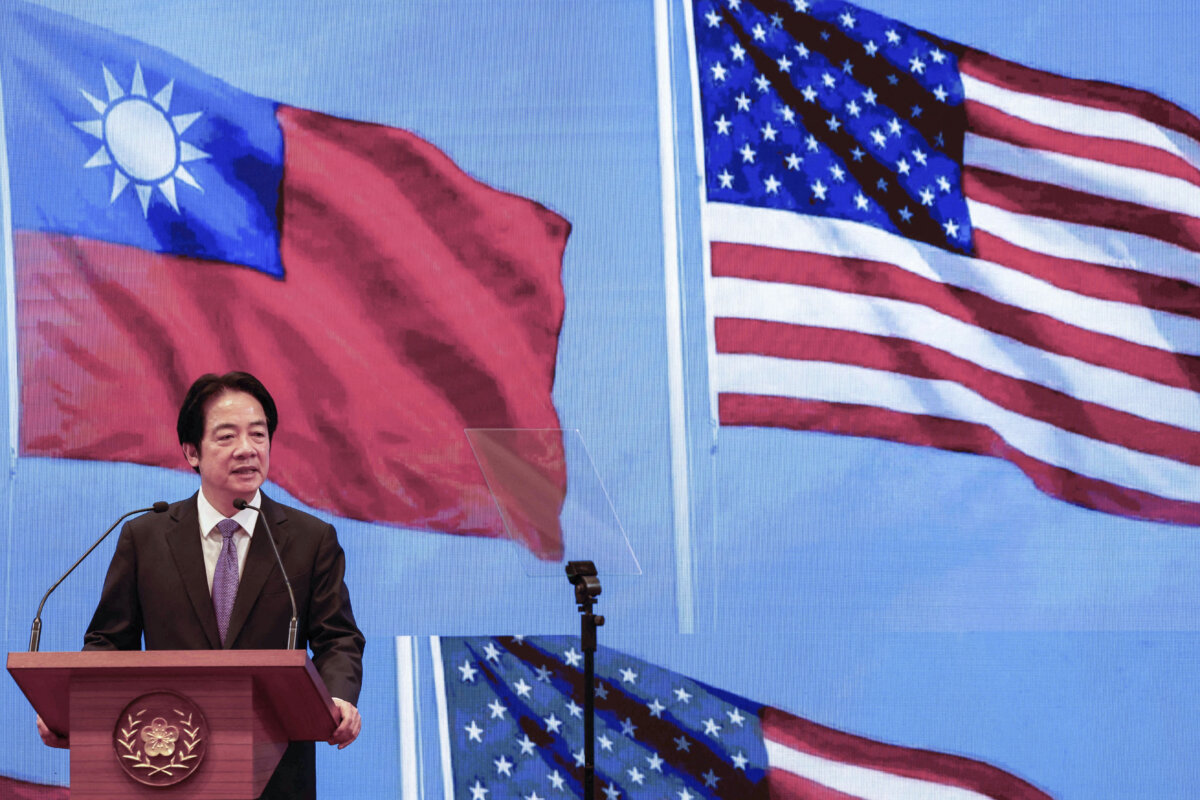

Taiwan’s Ministry of Foreign Affairs said on May 21 that Taiwanese President Lai Ching-te would be happy to speak with U.S. President Donald Trump, in what would be an unprecedented phone call between the leaders.
Trump said on May 20 that he would speak to Lai, the second time in a week he has indicated as such.
“I’ll speak to him,” Trump said when asked to clarify whether he was intending to call Lai about the final approval of U.S. arms sales to Taiwan. “I speak to everybody. We have that situation very well in hand. We’ll work on that, the Taiwan problem.”
On May 15, the U.S. president, speaking from Air Force One, said he had to speak to the person “running Taiwan.”
Taiwan’s foreign ministry said on May 21, “In addition to being committed to maintaining the stable status quo in the Taiwan Strait, President Lai is also happy to discuss these matters with President Trump.”
The presidents of the United States and Taiwan have not spoken directly since U.S. President Jimmy Carter shifted diplomatic recognition from Taipei to Beijing in 1979.
Beijing, formally the People’s Republic of China (PRC), claims that its younger regime is the rightful ruler of the Republic of China (ROC), or Taiwan, a self-ruled, liberal democratic island. It calls Taiwan a breakaway province, even though it has never governed the archipelago of 23 million people.
Conversations between U.S. and Taiwanese heads of state have been avoided as a self-imposed diplomatic practice rooted in the U.S. “One China” policy to maintain only unofficial relations with Taiwan.
On Dec. 2, 2016, Lai’s predecessor, President Tsai Ing-wen, called then-President-elect Trump to congratulate him on his election win. Trump was not yet in office, so the call was one between a head of state and a private citizen. Beijing issued a formal complaint over that exchange.
Steven Mosher, social scientist and internationally recognized authority on China’s population issues, said in a May 21 post on X that talks between Trump and Lai would be “a watershed moment for U.S.-Taiwan relations, and a major loss of face for Xi Jinping.”
Taiwan Not Seeking Independence
Since 2016, Taiwan’s ruling Democratic Progressive Party has formally stated that it is not seeking to declare independence from China in its foreign policy but is already a sovereign, independent country—the ROC—and seeks to maintain the cross-strait status quo.
On May 17, Lai, in response to Trump’s comments on Taiwan, said, “There is no ‘Taiwan independence’ issue.”
He stated that neither the ROC nor the PRC is subordinate to the other.
Lai also said that Taiwan will not provoke or escalate conflict but will not be pressured by the Chinese communist regime into giving up its “national sovereignty and dignity, and democratic and free way of life.”
Despite this, Beijing accuses Taiwan and Lai of being “separatist” forces set on seeking independence. The ruling Chinese Communist Party’s message to the Chinese public is that it seeks a so-called peaceful reunification with Taiwan, but it has not renounced the use of force.
‘Keep a Low Profile’
The secretary-general of the Taiwan National Security Council, Joseph Wu, told lawmakers on May 21 that the government will “keep a low profile” with regard to the possible talks until they are confirmed. He said that if there is any progress, it will be made public.
“If these communications and dialogues can continue to be elevated to higher levels, and if we can maintain a dialogue that contributes to regional peace and stability, this would be of great significance not only to Taiwan but also to democratic nations and the Indo-Pacific region as a whole,” he said.
Addressing Trump’s use of the words “Taiwan problem,” which echoes communist China’s phrasing, Wu said that Taiwan was not the one causing the problems.
“China is creating all kinds of problems along the first island chain,” he said. “China is the problem.”
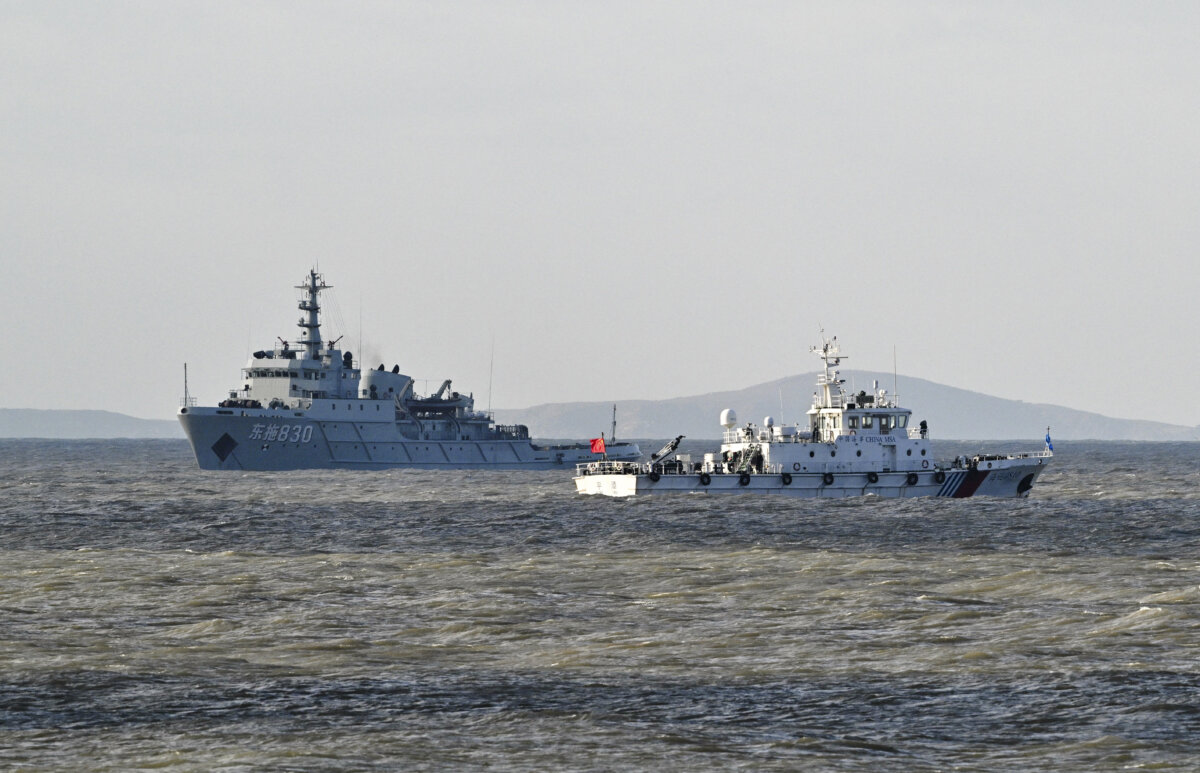
Lai on May 20 marked the second anniversary of his taking office. In a celebratory speech, he said that Taiwan remains committed to maintaining the current status quo of the ROC and PRC.
“Maintaining peace and stability across the strait and preventing external forces from altering the status quo are our national strategic goals,” he said.
The White House said on May 15 that it had a successful summit with Chinese leader Xi in Beijing.
China’s foreign ministry said the two nations reached a “new vision” for a “constructive China–U.S. relationship of strategic stability” during the summit.
Xi took the opportunity to tell Trump that if the Taiwan issues were not handled properly, it could trigger clashes or conflict between the world’s two largest economies, according to the Chinese readout.
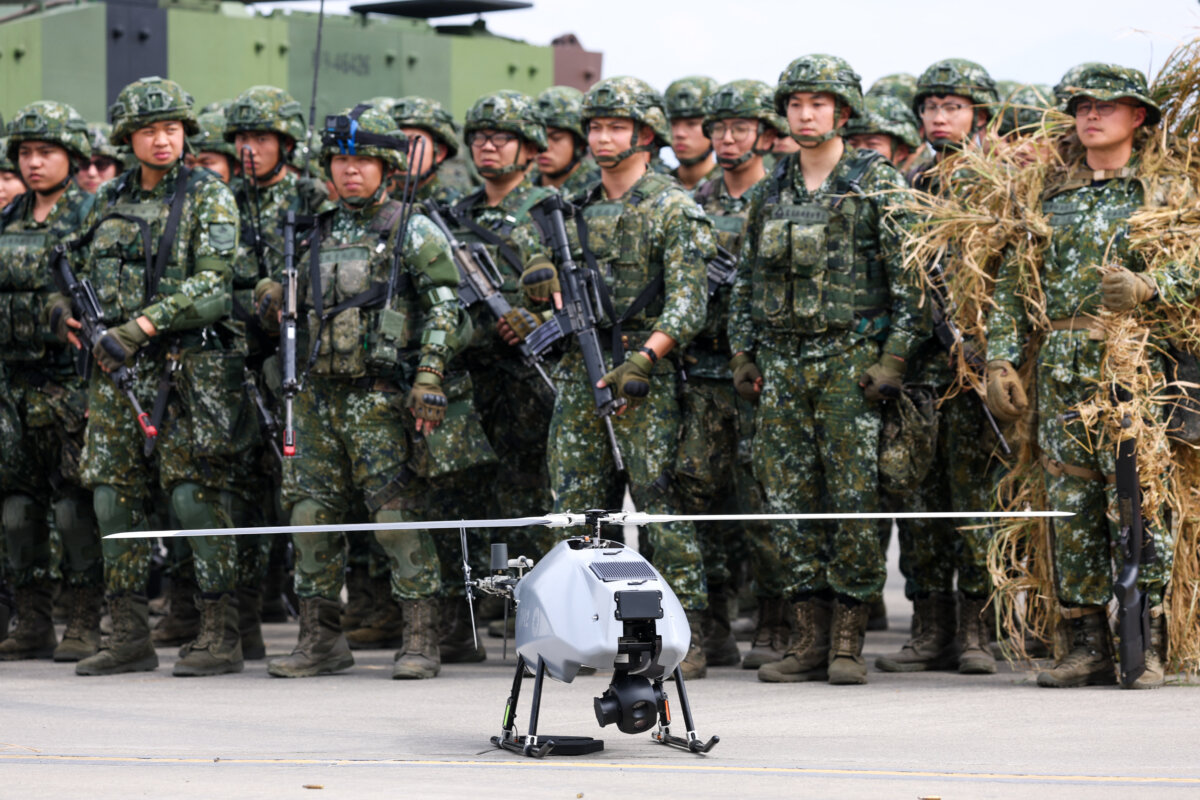
Amid the growing tensions, Filipino President Ferdinand Marcos Jr. said on May 18 that the Philippines would have no choice but to get involved if a war were to break out over Taiwan.
“In the Philippines, we do not have a choice, because Taiwan is so close to the Philippines, and we have almost 200,000 Filipino nationals who are living and working in Taiwan,” Marcos told Japanese media outlets. “So we have many other considerations, but we end up in the same position that we want to avoid any confrontation.”
Dorothy Li contributed to this report.
 Friends Read Free
Copy
Facebook
Tweet
Friends Read Free
Copy
Facebook
Tweet