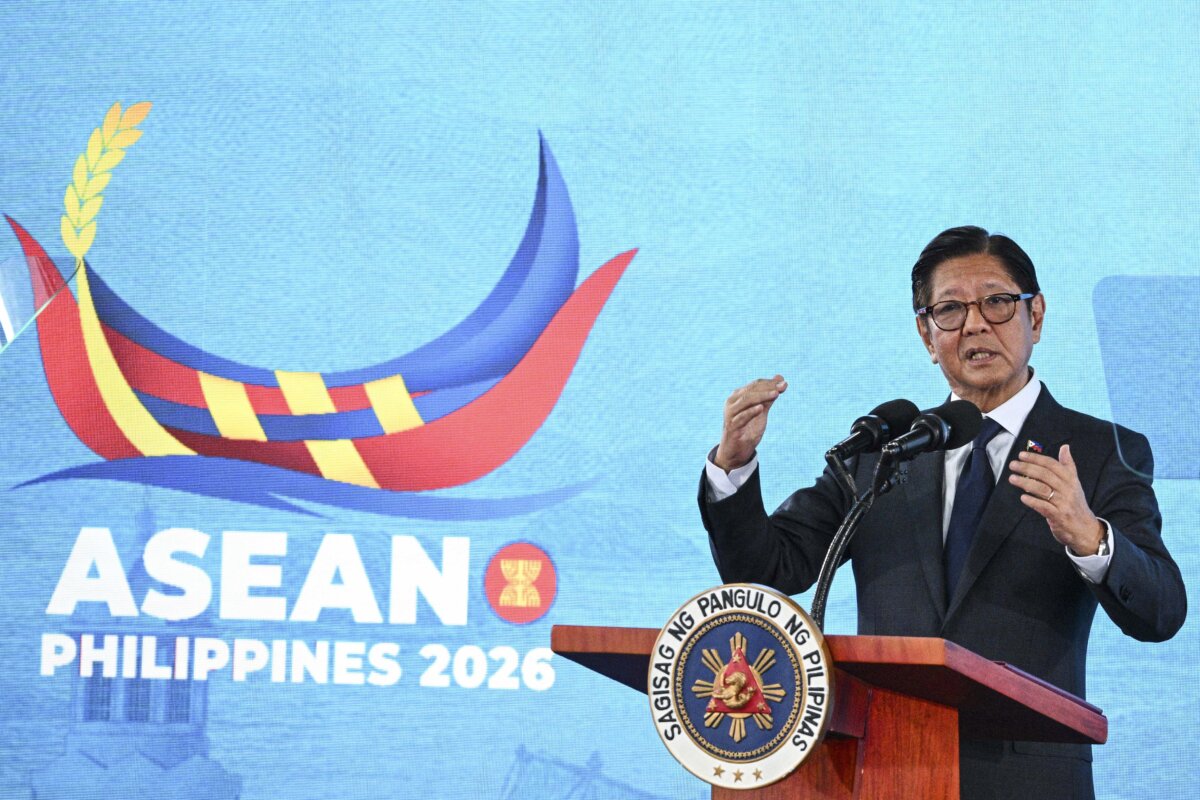

Filipino President Ferdinand Marcos Jr. has said that his country will inevitably be drawn into a conflict in Taiwan, given its proximity to the democratic self-ruled island claimed by Beijing.
“In the Philippines, we do not have a choice, because Taiwan is so close to the Philippines, and we have almost 200,000 Filipino nationals who are living and working in Taiwan,” Marcos said in a roundtable with Japanese media on May 18.
“So we have many other considerations, but we end up in the same position that we want to avoid any confrontation.”
The Chinese regime views Taiwan as a breakaway province and has not renounced the use of force to bring it under Chinese Communist Party rule.
During their summit in Beijing on May 14, Chinese leader Xi Jinping told U.S. President Donald Trump in Beijing that mishandling Taiwan issues could trigger an “extremely dangerous” situation between the world’s two largest economies, according to the Chinese Foreign Ministry.
Trump, speaking to reporters aboard Air Force One while en route to Washington, confirmed that Taiwan was a major topic during his talks with Xi but noted that U.S. policy toward Taiwan remains unchanged.
The United States, like most countries, does not have formal ties with Taiwan, but the Taiwan Relations Act makes clear that Washington’s decision to establish diplomatic ties with Beijing rather than Taipei rests on the expectation that Taiwan’s future will be determined by peaceful means.
In recent years, the Chinese regime has carried out large-scale military exercises in the Taiwan Strait and sent military aircraft and vessels near Taiwan on a nearly daily basis. The ratcheted-up military pressure has sparked global concerns about a potential conflict in the strait, a key shipping lane.
Speaking to Japanese media on May 18, Marcos made it clear that he wishes to avoid involvement in any conflict, but geographic proximity means that a conflict over Taiwan could draw his country into it.
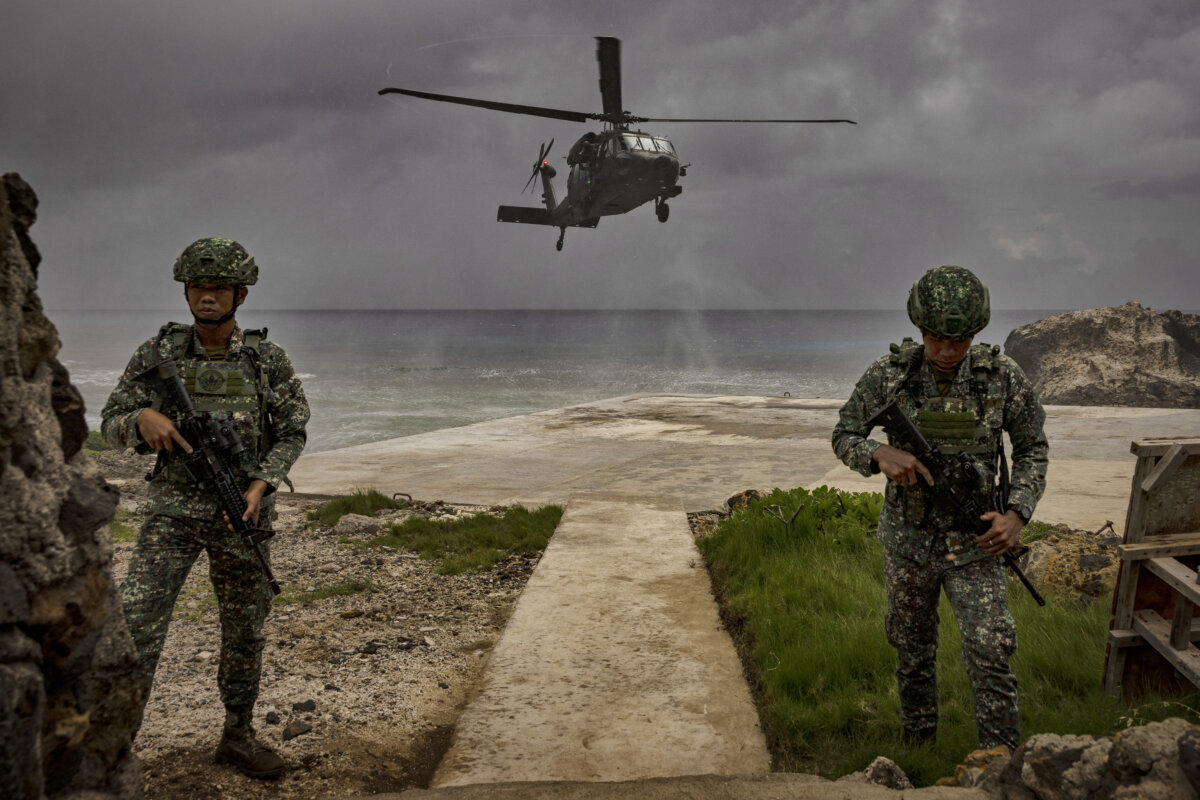
“If there is conflict, just looking at the map, you can tell that the northern Philippines, at the very least, is going to be part of that, or will feel the effects,” he said. “We certainly do not want to be part of any conflict anywhere.”
The Philippines’ northernmost island, Mavulis, lies about 88 miles from the mainland of Taiwan.
The Filipino president clarified that there is no change in the country’s “one-China” policy, under which Manila officially recognizes Beijing rather than Taipei.
“We have always held the one-China policy. And we will continue to do that,” Marcos said. “Any conflicts [should] be resolved peacefully.”
When asked about Marcos’s comments during a regular briefing on May 19, Chinese Foreign Ministry spokesman Guo Jiakun urged Manila to recognize Beijing’s sovereignty claim over Taiwan.
Beijing’s ‘Coercive Acts’
Marcos is scheduled to travel to Japan next week for a three-day state visit beginning on May 26, marking the first such visit by a Philippine president in more than a decade.
In addition to energy issues, Marcos said he would also like to discuss regional security during his upcoming meeting with Japanese Prime Minister Sanae Takaichi.
“Japan and the Philippines have experienced the same difficulties in terms of coercive acts, in terms of different gray zone, shall we say, tactics that are being exercised in the South China Sea, and in all of [the] China Sea,” Marcos told reporters on May 18. “So that is something that we will certainly be discussing.”
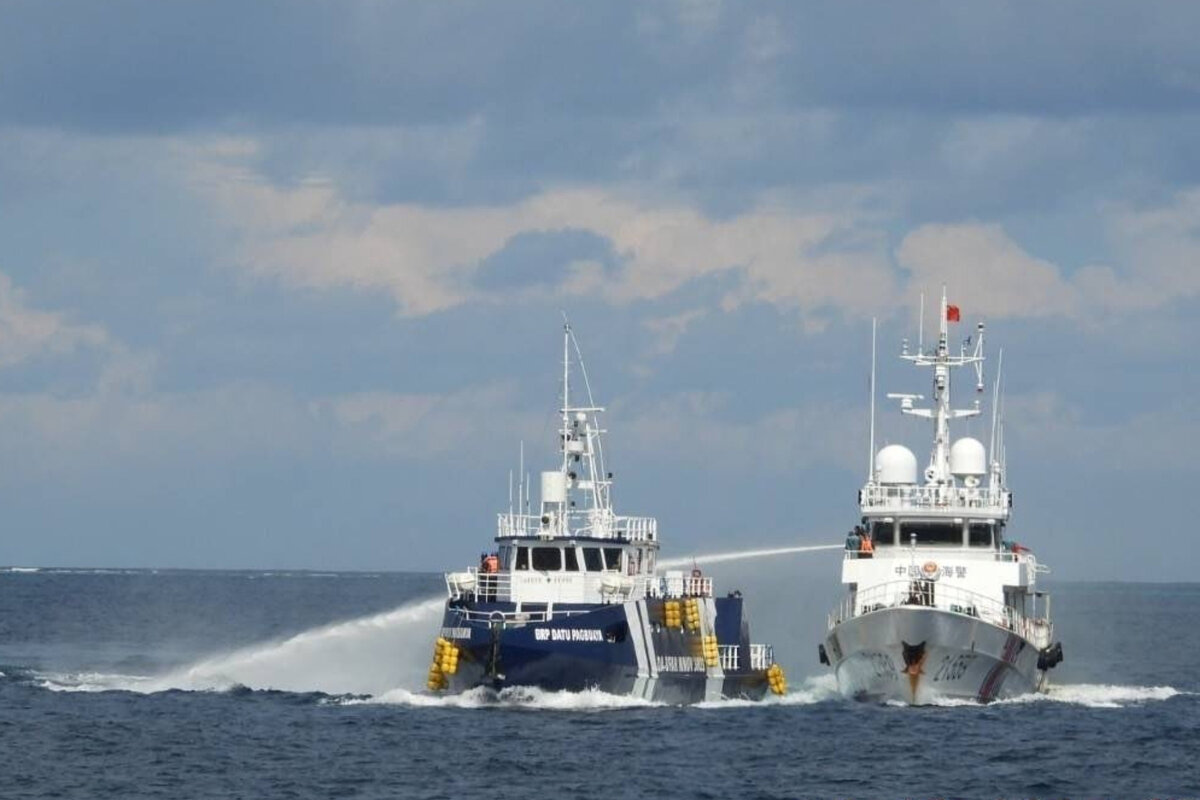
Manila is locked in a maritime dispute with Beijing over the resource-rich South China Sea, where China claims nearly the entire region.
Japan remains concerned about the regular presence of the Chinese Coast Guard ships around a group of Japanese-administered islands in the East China Sea, which Beijing also claims. According to the Japanese Coast Guard, in May, Beijing’s large, heavily armed coast guard vessels have been detected near the uninhabited islands—known as Senkaku by Japan and Diaoyu by China—every day.
Japan has also faced diplomatic and economic pressures from the Chinese regime since November 2025, when Takaichi linked a Taiwan contingency to a potential “survival-threatening situation” for Japan—a designation that could allow Tokyo to deploy troops.
Japan’s westernmost island, Yonaguni, is 68 miles from Taiwan. The island nation also hosts more than 50,000 American troops along with advanced U.S. military aircraft.
In January, Japan and the Philippines signed two defense pacts that analysts had previously told The Epoch Times are critical for countering the Chinese regime’s aggression.
In April, when the Philippines and the United States conducted the annual military exercise known as Salaknib, Japan broke a decades-long tradition by deploying its Ground Self-Defense Force to participate directly.
Marcos, speaking to Japanese reporters on May 18, called Japan’s transition from observer to participant a “significant development” for continued cooperation and training personnel toward further and better interoperability.
“Japan is now allowing itself to participate in such exercises,” Marcos said. “And that is important because that changes the playing field, as it were. It changes it significantly.
“We would like to hear more [about] what exactly Japan [intends] to do, and what they are willing to do.”
 Friends Read Free
Copy
Facebook
Tweet
Friends Read Free
Copy
Facebook
Tweet