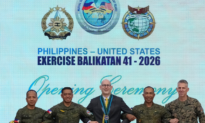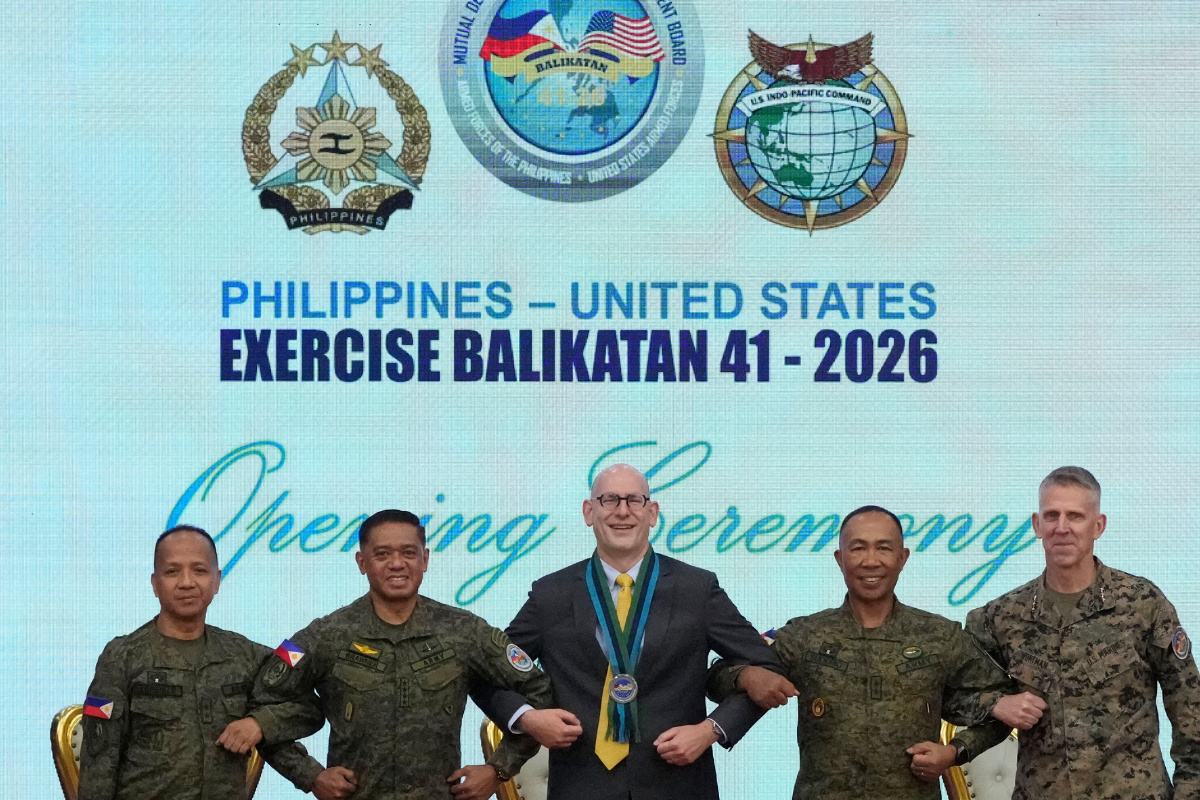

The U.S. military and Armed Forces of the Philippines (AFP) kicked off on April 20 one of their largest combat drills to strengthen collective defense in Asia as the region faces increased aggression from the Chinese regime.
The AFP said in a post on X that the 41st iteration of Exercise Balikatan, which means “shoulder-to-shoulder” in the Philippine native language Tagalog, is the “most expansive engagement in the exercise’s history.”
The annual drill involves mock battles and live-fire exercises in locations facing the disputed South China Sea and the Taiwan Strait, and will involve more than 17,000 U.S. and Filipino military personnel.
The exercise will also include partner nations such as Australia, Canada, France, New Zealand, and Japan.
The Philippines military said that its involvement “reflects a deepening collective effort to uphold regional security and stability.”
Some of those new full-time participants have signed visiting forces agreements with the Philippines, including France and Japan.
Strengthening Collective Defense
The AFP said that this year’s Balikatan coincides with the 75th anniversary of the U.S.–Philippine Mutual Defense Treaty, “further reinforcing the enduring alliance and a shared vision for a free and open Indo-Pacific region.”
The U.S. Embassy in the Philippines similarly marked the beginning of the annual exercise and its coinciding with the treaty, writing in a post on X that both forces “will train shoulder to shoulder with Australia, Japan, Canada, France, and New Zealand.”
AFP Chief of Staff Gen. Romeo S. Brawner Jr emphasized the significance of these exercises in strengthening collective defense.
“Balikatan is readiness made real, cooperation put into action, and peace preserved through strength,” he said.
“Let this exercise not only demonstrate our readiness, but affirm our commitment to stand together and to act together.”
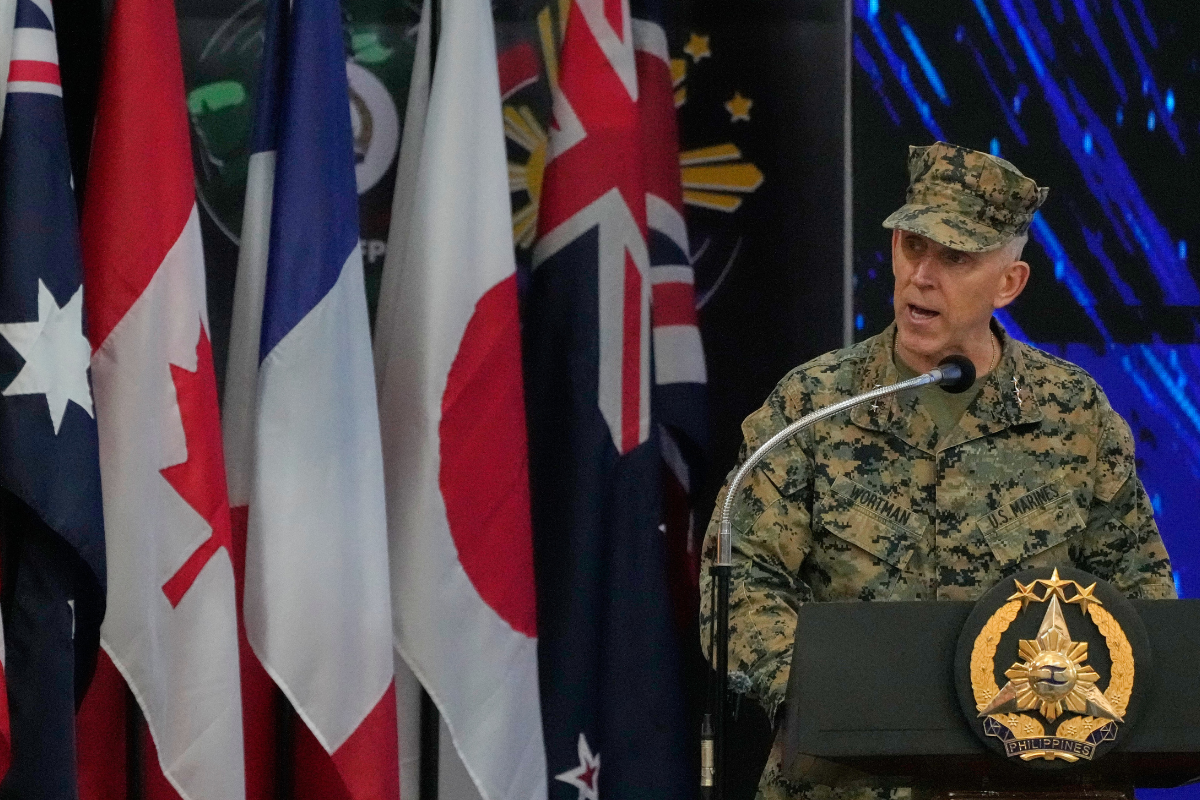
Commanding General of the U.S. Marine Expeditionary Force Lt. Gen. Christian Wortman said in the opening ceremony that “the United States’ focus on the Indo-Pacific and our ironclad commitment to the Philippines remains unwavering.”
The Chinese communist regime has objected to Exercise Balikatan, saying it is aimed at containing China’s global rise. The Philippine military has said the drills do not target any specific country and will allow its forces to prepare to respond to emergencies and natural disasters.
Brunei, China, Malaysia, the Philippines, Vietnam, and Taiwan all claim some sovereignty over the South China Sea, a key maritime trade route. Confrontations over territorial ownership have spiked in recent years between the Chinese and Filipino militaries.
Beijing’s Aggression at Sea
Since 2023, the Philippines has worked with several countries to assert its rights and maritime entitlements in the West Philippine Sea, a part of the South China Sea that Manila claims as an exclusive economic zone.
China says it owns most of the resource-rich waterway, rejecting a 2016 international arbitration ruling that has voided Beijing’s claims to the area.
The Philippines is the United States’ oldest treaty ally in Asia, and Washington has repeatedly warned Beijing that the U.S. is obligated to defend the Southeast Asian country if Filipino forces come under armed attack in the disputed waters.
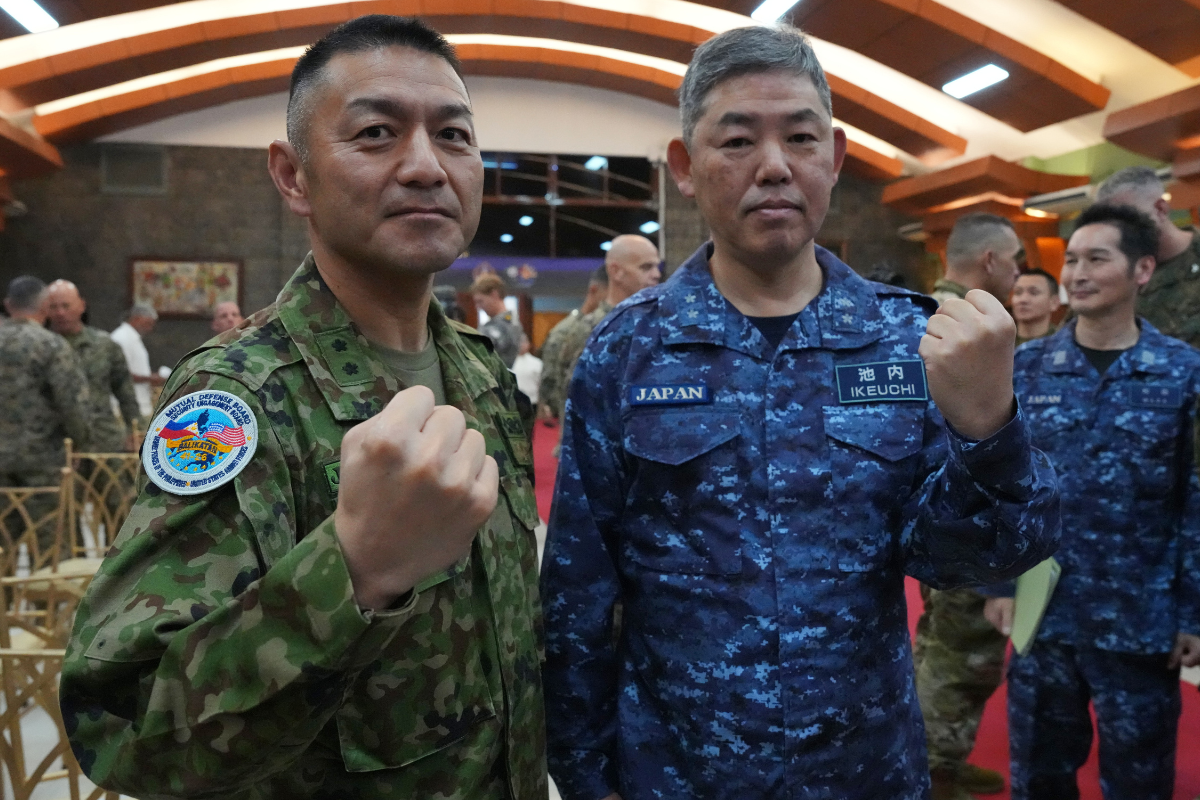
Other nations in the region that have been impacted by the Chinese communist regime’s aggression at sea have reinforced their mutual defense cooperation. These include Japan, which faces China across the East China Sea.
In February, Japan held joint naval exercises in the South China Sea with the United States and the Philippines to demonstrate the allies’ commitment to an open Indo-Pacific.
The exercises followed Tokyo and Manila’s signing a pact on Jan. 15 to allow their forces to exchange supplies and services for joint exercises and training.
The Associated Press contributed to this report.
 Friends Read Free
Copy
Facebook
Tweet
Friends Read Free
Copy
Facebook
Tweet