The leaders of Thailand and Cambodia agreed on July 28 to an “immediate and unconditional cease-fire” starting at midnight, according to Malaysian Prime Minister Anwar Ibrahim.
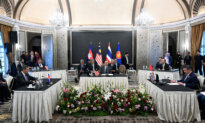
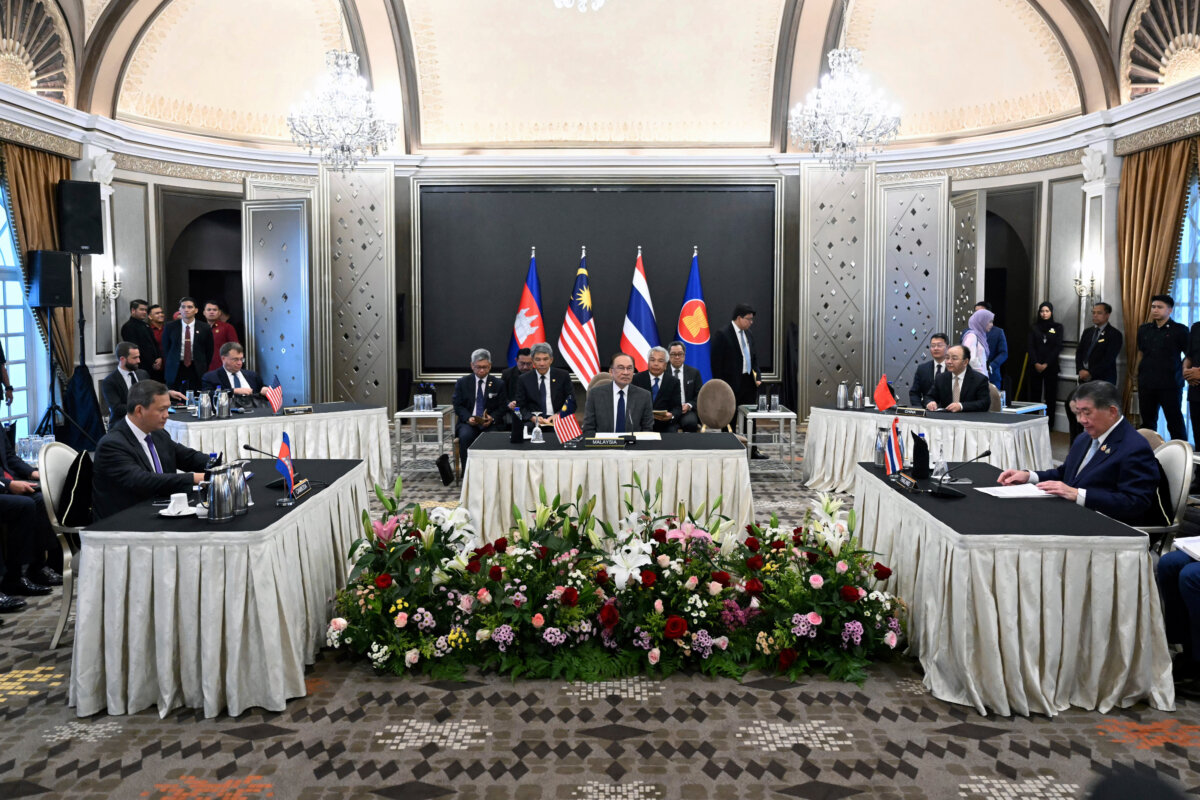
Cambodian Prime Minister Hun Manet and Thai Acting Prime Minister Phumtham Wechayachai agreed to the truce after talks at the official residence of the Malaysian prime minister, who currently chairs the Association of Southeast Asian Nations (ASEAN).
Hun Manet and Phuntam welcomed the agreement and shook hands at the end of a brief press conference. The announcement was made about six hours before midnight in Thailand and Cambodia.
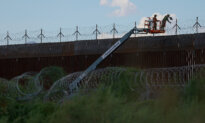
Tensions rose between the Southeast Asian neighbors at the end of May, when a Cambodian soldier was killed in a brief exchange of gunfire at a disputed area on their 510-mile border.
On July 23, several Thai soldiers were injured by a Cambodian landmine at the border.
The following day, 11 people were killed when the armed forces of both countries exchanged fire during clashes along the border.
On July 25, Thailand stated that 58,000 people had fled their homes in several provinces. Anwar called on both sides to seek a “peaceful dialogue and diplomatic resolution.”
U.S. President Donald Trump wrote in a July 26 post on Truth Social that he had spoken to the leaders of Thailand and Cambodia and suggested that he would halt trade negotiations with both countries if they did not stop the fighting.
Hun Manet said on July 27 that his country would pursue an “immediate and unconditional ceasefire” and both countries agreed to attend talks in Malaysia.
At least 35 have been killed in the conflict, and more than 260,000 people have been evacuated from their homes on both sides of the border.
U.S. Secretary of State Marco Rubio said late on July 27 that he was monitoring the situation closely.
“We want this conflict to end as soon as possible,” he said.
Thailand has shut all border crossings with Cambodia, except to allow Cambodian guest workers to return home.
Before leaving Bangkok for the talks, Phumtham told reporters that representatives from the United States and China would attend as observers.
Thailand is one of 19 designated major non-NATO allies of the United States. Others in the region include Japan, the Philippines, and South Korea.
Cambodia is one of Beijing’s closest allies in the region. In April, the Chinese Communist Party (CCP) completed the inauguration of its upgraded naval base at Ream, Cambodia, which is large enough to dock an aircraft carrier.
Thailand and Cambodia have long disputed their border, with much of the tension stemming from a map drawn in 1907, when Cambodia was under French colonial rule.
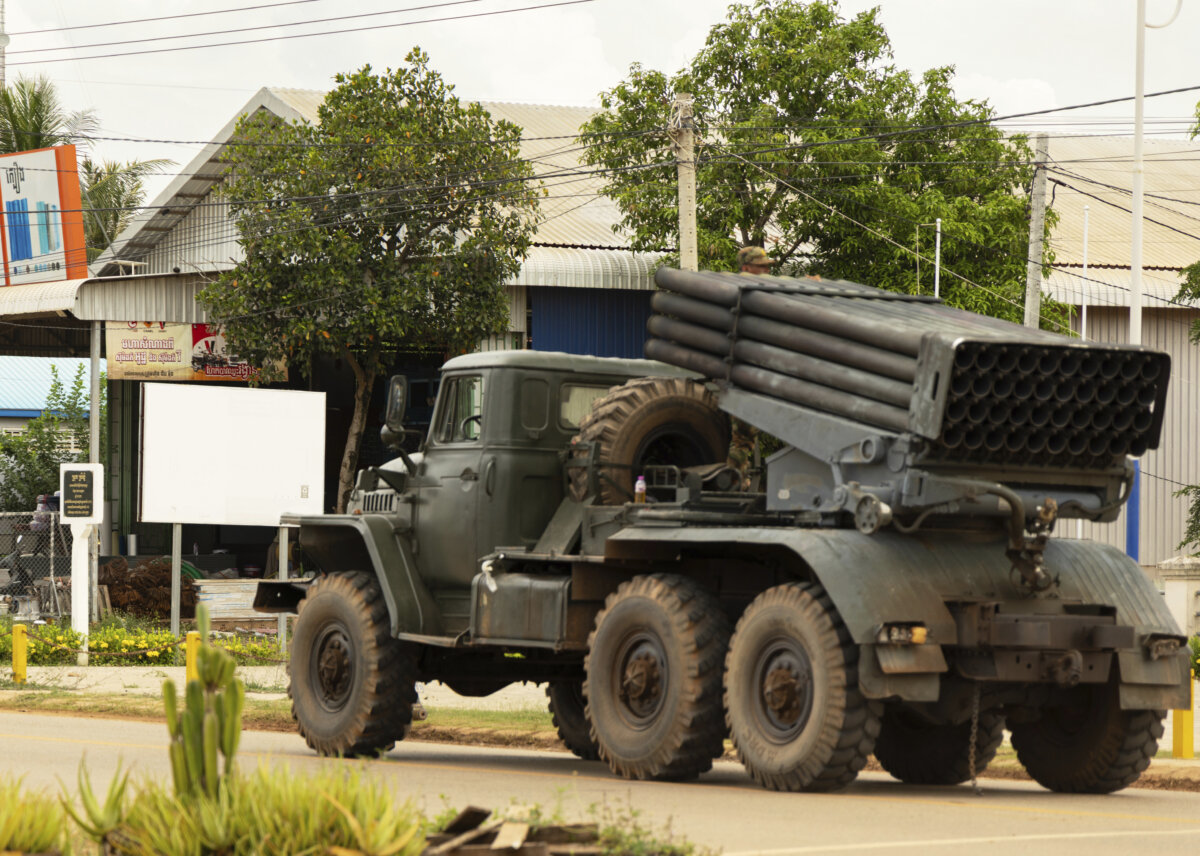
When the conflict began on July 24, the U.S. State Department said in a statement, “We strongly urge the immediate cessation of attacks, protection of civilians, and peaceful settlement of disputes.”
Chinese Foreign Minister Wang Yi on July 10 said, “China is willing to uphold an objective and fair position and play a constructive role for the harmonious coexistence between Thailand and Cambodia.”
Wang, attending the ASEAN summit in Kuala Lumpur, Malaysia, said China would take an “objective and fair” position.
The Associated Press contributed to this report.
 Friends Read Free
Copy
Facebook
Tweet
Friends Read Free
Copy
Facebook
Tweet