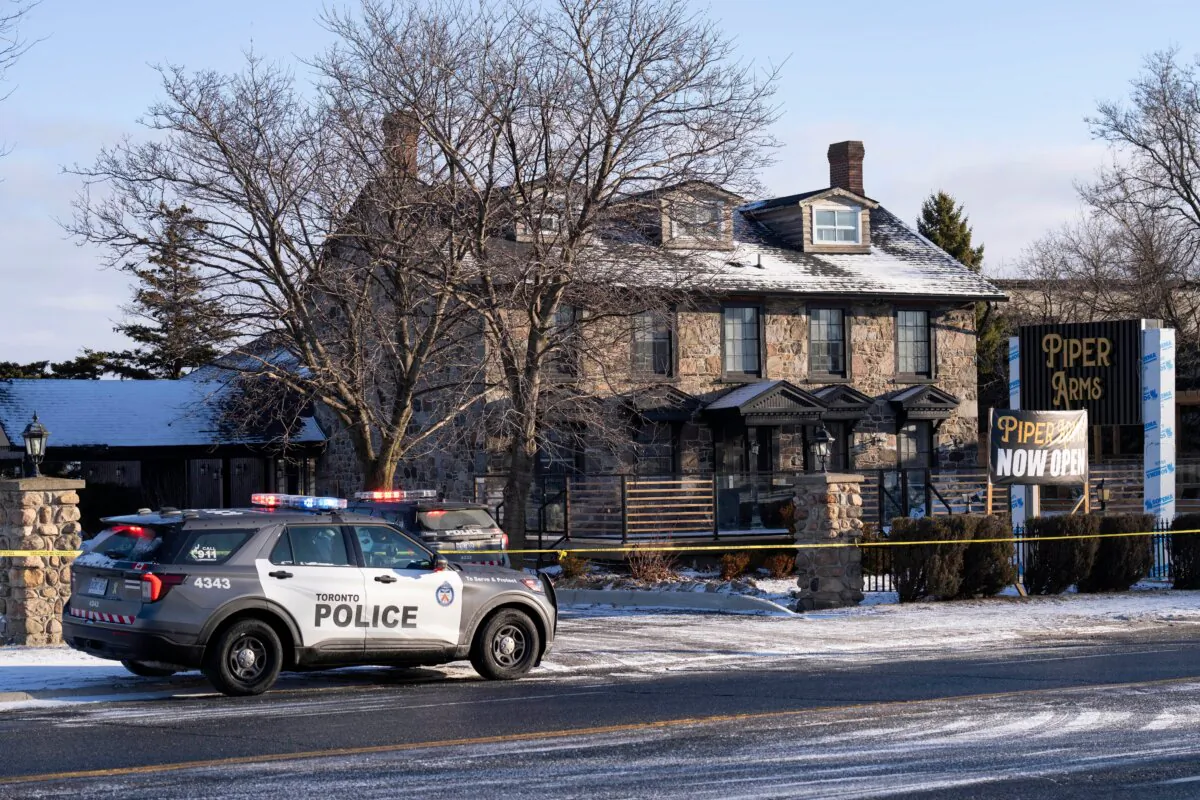

Toronto Police Association president Clayton Campbell says the federal gun buyback program won’t bring down crime in Toronto since most firearm offences involve illegal firearms.
“The gun buyback program is going to have zero impact on the crime we’re seeing in the city of Toronto,” Campbell told MPs at a Sept. 25 House of Commons justice committee meeting on the bail system, sentencing, and handling of repeat violent offenders in Canada.
Campbell noted that most firearm offences in Toronto relate to “a small number of gang members, thugs, using illegal firearms.” He said 90 percent of the 700 illegal firearms Toronto Police Service seized last year came from the United States.
Funding public safety in Toronto is “very challenging,” he said, adding that the gun buyback program’s $750 million in funding could be used in many other ways “to actually improve public safety.”
“If there was some sort of plan to try and obtain these firearms, I’m not sure who’s going to do it or what resources,” Campbell said. “I can think of 100 different ways if you want to help public safety in the city of Toronto.”
Speaking at the committee meeting, Canadian Police Association president Tom Stamatakis said police forces already don’t have the resources or capacity to target repeat violent offenders who are released on bail, so they would have challenges enforcing the buyback program.
“There’s a lot of resource challenges, and there are things that we could be using those funds for that would be more effective than a buyback program that, to be blunt about it, police services in Canada don’t have the capacity to try and manage,” Stamatakis said.
National Police Federation president Brian Sauvé, who also attended the meeting, said he hasn’t spoken to RCMP members about participating in collecting firearms from law-abiding gun owners as part of the program, but he added that focus should be on stopping illegal gun smuggling.
“The appropriate use of resources to have an impact on crime in Canada is to target illegal firearms trafficking coming up from the States,” Sauvé said.
The Liberal government launched its gun buyback program on Sept. 23 for individual firearm owners, starting with a six-week pilot in Cape Breton, Nova Scotia, where the local police service agreed to participate in the program.
The government says the program is needed to curb gun violence.
“We are serious about removing assault-style firearms from our streets, limiting the devastating effects of firearms violence and helping make Canada safer. These assault-style firearms are largely designed to kill people, not for hunting or sport shooting and have no place in Canada,” Public Safety Minister Gary Anandasangaree said.
Conservatives say resources should instead be focused on fighting crime and stopping illegal gun smuggling through the Canada-U.S. border.
“Stand with law-abiding people and stop the gun grab,” Conservative Leader Pierre Poilievre said.
Bail and Sentencing Reform Suggestions
To address gun crime and other violent crimes in Canada, the three police members’ associations provided suggestions to the Liberal government on bail and sentencing reform.
The Canadian Police Association suggests creating a standalone offence for breaching parole conditions, mandating the reporting of all breaches by supervising authorities to prevent gaps and delays, and replacing automatic statutory release with earned discretionary parole for high-risk repeat offenders.
Other recommendations include strengthening reverse onus provisions and bail decisions, particularly for violent and habitual offenders, expanding resources for police to locate and apprehend offenders who breach conditions, and training for Crown counsel, justices of the peace, and judges to support changes to bail and sentencing reform.
“These are not radical proposals,” Stamatakis said. “They are targeted, evidence-based measures that respect the Charter of Rights and Freedoms while enforcing the fairness and effectiveness of our justice system.”
The National Police Federation recommends improving data and information sharing to ensure national, provincial, and local police records are in sync, as well as improving bail hearing resources and standards to ensure they aren’t rushed and are carried out by “experienced prosecutors and qualified judicial justices of the peace.”
The federation also recommends strengthening bail monitoring and enforcement through modern technologies and the use of special constables, as well as addressing youth exploitation, since criminal networks are “increasingly recruiting young people to commit violent offences.”
“The path forward requires smart, targeted initiatives developed and implemented collaboratively across jurisdictions,” Sauvé said. “Federal, provincial, territorial, and municipal leaders must work together alongside the police, victims advocates, and communities.”
Meanwhile, the Toronto Police Association recommends strengthening the secondary grounds for detention by including a mandatory provision stipulating that someone with two convictions of serious violent offences would be ineligible for bail for 10 years, and those who have three or more convictions would be barred from bail for life. The association also recommends strengthening the rights of victims in the bail process and only considering bail pending appeal when there is a “likelihood of success.”
For sentencing and parole, the association recommends implementing mandatory consecutive periods of parole ineligibility for multiple life sentences; amending the Corrections and Conditional Release Act, particularly for high-risk prisoners; and strengthening the Youth Criminal Justice Act, considering the rise in youth violence.
“I’d like to emphasize, it might be easy to dismiss our stance as biased or politically motivated,” Campbell said. “However, for us, this is not a matter of politics—it’s about public safety, and we have a proven track record of collaborating with anybody from any party who shares our values.”
 Friends Read Free
Copy
Facebook
Tweet
Friends Read Free
Copy
Facebook
Tweet