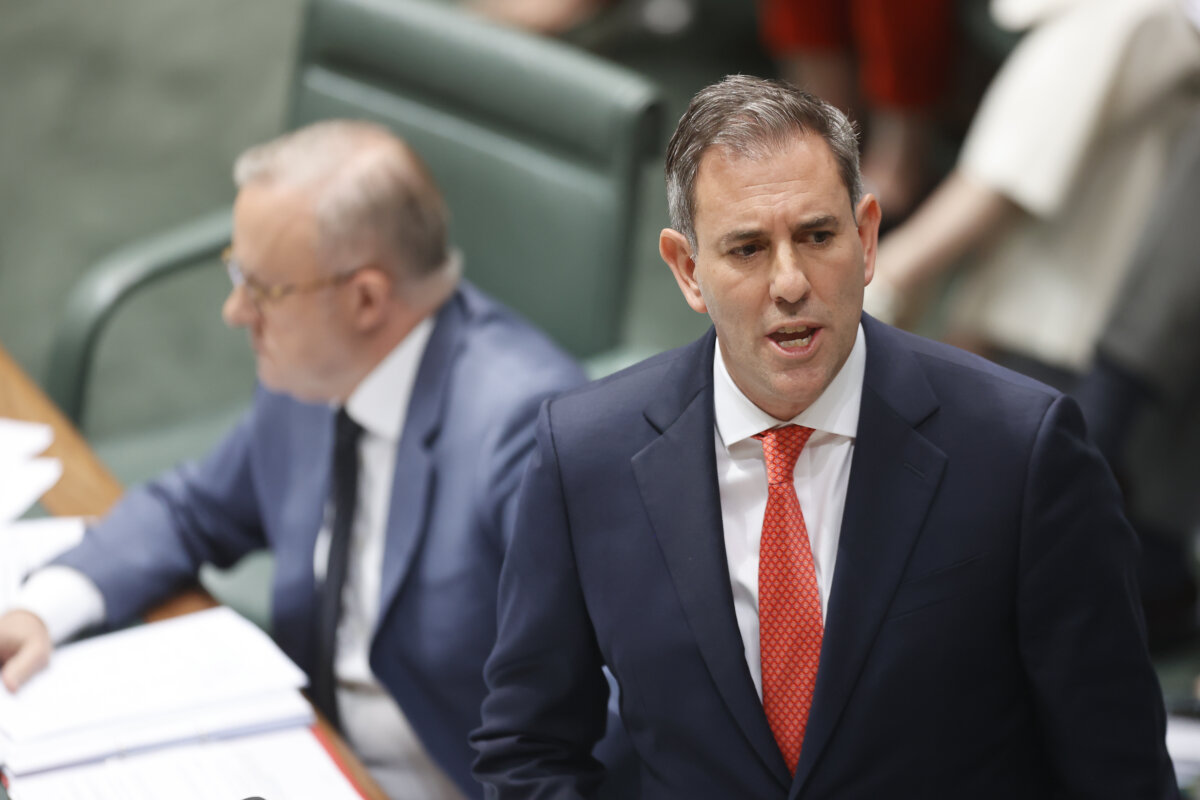

Australian Treasurer Jim Chalmers is heading to Washington for a G7 financial minister meeting to discuss rare earth with important allies.
There, Chalmers is expected to share Australia’s plan to build a $1.2 billion (US$800 million) critical minerals stockpile aimed at reducing the country’s reliance on China for critical metals needed in the manufacture of defence equipment and renewable energy technology.
U.S. Treasury Secretary Scott Bessent will be hosting the gathering for the group of advanced economies, including Japan, the UK, France, Germany and Canada.
Representatives from Australia, India, Mexico and South Korea and the EU are also invited to attend.
In October, the United States and Australia agreed to spend US$3 billion over the following six months on critical minerals projects, including the U.S. Department of War investment in the construction of a 100-metric-tonne-per-year advanced gallium refinery in Western Australia.
In total, the commitment is expected to be worth US$8.5 billion, with Australia expected to supply 30 rare-earth minerals needed in America.
Chalmers said the meeting was about making Australian workers and businesses “big beneficiaries” of the shift in global rare earth strategy.
“The world needs critical minerals, Australia has plenty of them, and our critical minerals reserve will help us weather global economic uncertainty and help to boost trade and investment,” he said.
“Everyone benefits from stronger and more diverse critical minerals supply chains, but especially Australia, and that’s what this work is all about.”
Meanwhile, the Labor government has announced that antimony, gallium and other rare earth elements will be the initial focus of its $1.2 billion Critical Minerals Strategic Reserve.
Gallium is not only crucial to advanced defence systems, but can also be found in Wi-Fi and Bluetooth devices in laptops, cell phones, and tablets, which use gallium arsenide (GaAs) semiconductors in radio-frequency integrated circuits.
The element is also critical for making strong magnets in electric vehicles, wind power generators, and solar photovoltaic cells.
Antimony also has a wide range of applications, including in liquid-metal batteries, solar panels, and defence equipment such as armour-piercing rounds, flares, night-vision equipment, and flame-retardant gear.
It is also used in the manufacture of semiconductors for infrared detectors, and components of advanced communication systems, including radar.
Resources Minister Madeleine King highlighted the importance of the $1.2 billion material reserve, saying it supports mining and processing projects.
“Developing the Strategic Reserve is another important step in Australia leading on critical minerals globally,” she said.
“The strategic reserve’s initial focus on antimony, gallium and rare earths will give added certainty to Australian projects, help attract further investment and help the sector deal with potential future market disruptions.”
 Friends Read Free
Copy
Facebook
Tweet
Friends Read Free
Copy
Facebook
Tweet