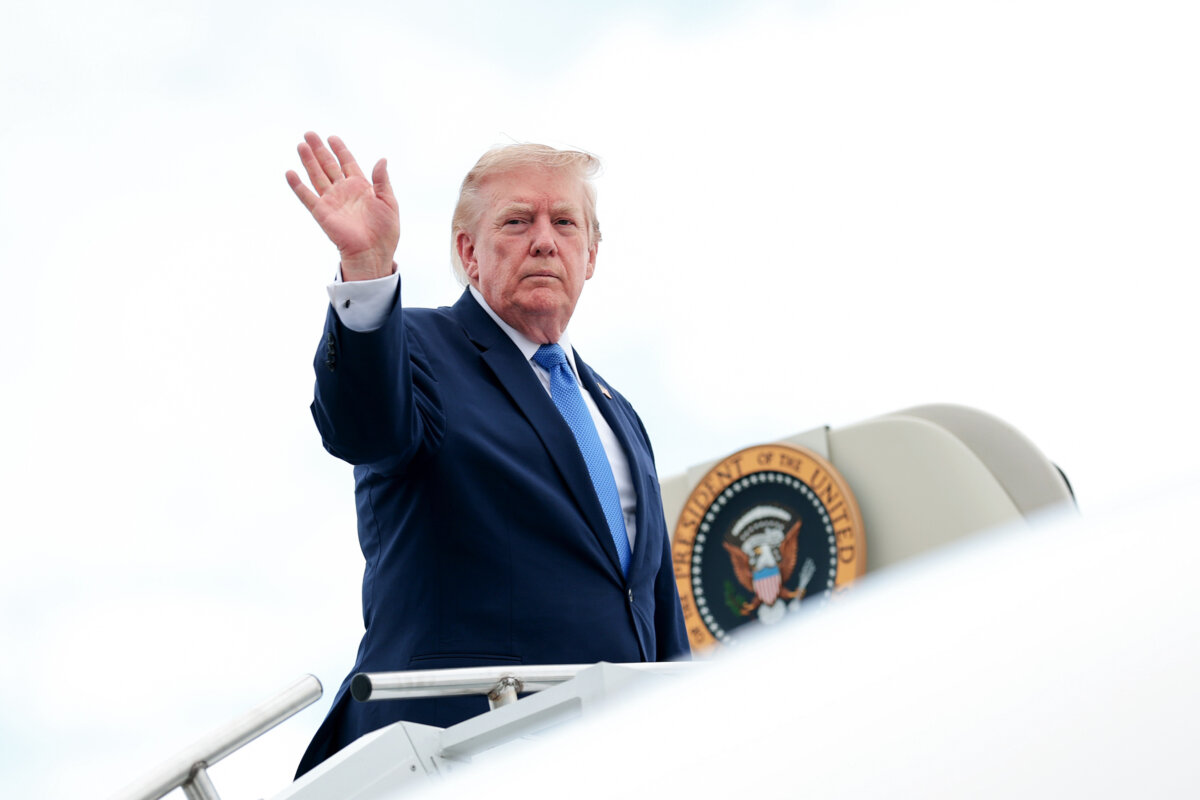

President Donald Trump on Monday again criticized Iran’s leadership and said that a U.S. naval blockade of the country would remain in effect, coming after he announced that he held off on strikes against the country due to there being another framework for a ceasefire.
Throughout the conflict between the two countries that started on Feb. 28, there have been multiple starts and stops to strikes amid pauses for negotiations. The Trump administration has said the Strait of Hormuz must remain open and that Iran must give up its nuclear program.
“Iranian Leadership is unbelievably duplicitous!” Trump wrote in a post on social media. “They ask for a meeting, some would say ‘beg,’ talks begin, with more scheduled in the immediate future, and they say, openly and proudly, that they’re not having any discussions, that nothing is being talked about, and they’re only dealing with ‘Oman.’”
Iranian officials, he added, “then go on to give their usual blather in saying, the Strait of Hormuz will be operated powerfully by them, when it is already completely controlled by the United States Navy.”
The U.S. president said that a blockade that was reimposed against Iran last month would remain in effect unless a deal, or what Trump said was “total surrender” from Tehran, is accomplished.
“Whether Iran wants to admit it or not, we are, in fact, talking of a solution to a problem that they have caused, for decades,” he said, adding that Iran can never have a nuclear weapon.
Responding to the pause in strikes, an Iranian foreign ministry spokesman said that no negotiations are being held between the two sides, according to the semi-official Mehr News outlet.
“We are not holding any negotiations with the United States at present,” the spokesman, Esmaili Baghaei, said in a statement carried by Mehr on Monday. The talks are between Iran and Oman, focused on reaching an agreement on ships passing through the strait, he added.
On Sunday, Trump said that the United States would have launched significant strikes against Iran after U.S. allies in the Middle East, such as Saudi Arabia, the United Arab Emirates, and Qatar, urged him not to.
The plan would be to launch the largest set of strikes “since World War II,” he said, without elaborating. The president added that unnamed Iranian officials also urged him not to go ahead with the planned strikes, while he said that talks between Washington and Tehran would start on Monday.
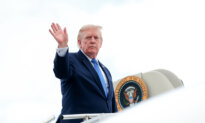
“It would have been disastrous for them. And they didn’t want us to do it,” Trump said of Tehran as he spoke to reporters on his way back to Washington on board Air Force One. “And frankly, Saudi Arabia didn’t want it either. They thought that a deal is imminent.”
Previously, Trump had warned of massive strikes that he later called off in lieu of negotiations. Iran and the United States signed a memorandum of understanding in June in a bid to stop the conflict, open the strait, end Iran’s nuclear program, and include other provisions.
However, a ceasefire was broken in July after Iran again struck commercial ships in the strait, which it has done throughout the conflict. Tehran has said it wants to impose a tolling system on ships in the key waterway, through which about a fifth of the world’s traded oil passes on a normal day.
 Friends Read Free
Copy
Facebook
Tweet
Friends Read Free
Copy
Facebook
Tweet