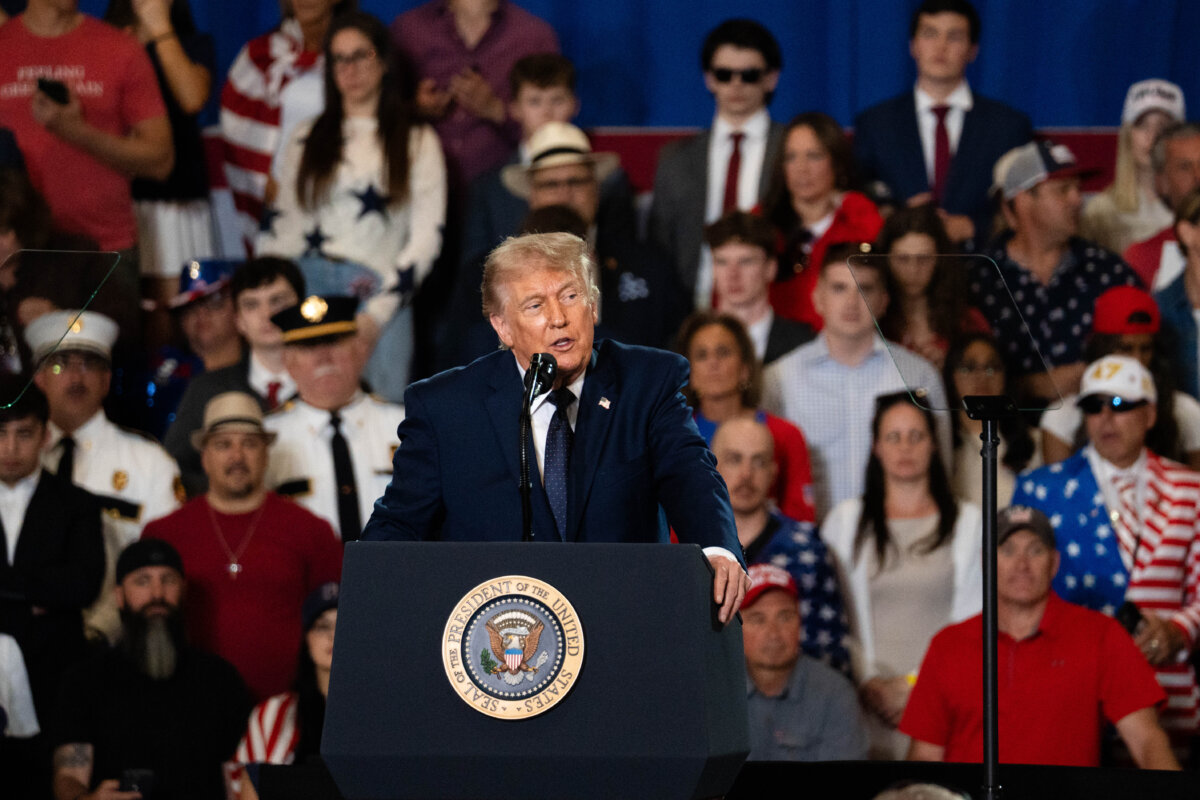

U.S. President Donald Trump on May 25 linked a potential agreement with Iran to a sweeping expansion of the Abraham Accords, saying that Arab and Muslim-majority nations involved in the negotiations should normalize ties with Israel as part of a broader settlement aimed at stabilizing the Middle East at a time of “conflict and war.”
Trump said in a post on Truth Social that negotiations with Tehran were “proceeding nicely” but warned that failure to reach an agreement could lead to renewed military action.
“It will only be a Great Deal for all or, no Deal at all—Back to the Battlefront and shooting,” Trump wrote.
He said that a resumption of strikes would be “bigger and stronger than ever before.”
Negotiations are currently underway between Iran and the United States on a potential deal to settle the conflict.
Trump said on May 23 that Washington and Tehran had nearly finalized a memorandum of understanding on ending the war. Although details of the agreement remain unclear, Trump said it would involve Iran agreeing to reopen the Strait of Hormuz, the critical maritime waterway that Tehran has been effectively blocking, sending prices of crude and other key commodities soaring.
Iranian Foreign Ministry spokesperson Esmail Baghaei said during a May 25 news briefing that the potential memorandum of understanding contains 14 points and is broadly focused on halting the hostilities and ending the U.S. naval blockade of Iranian ports and shipping, in exchange for Iran lifting its own restrictions on the Strait of Hormuz.
In the May 23 message in which Trump announced that the memorandum of understanding was nearing completion, he said he discussed the proposal with Saudi Crown Prince Mohammed bin Salman, Emirati President Mohammed bin Zayed Al Nahyan, Qatari Emir Tamim bin Hamad Al Thani, Egyptian President Abdel Fattah el-Sisi, King of Jordan Abdullah II, King of Bahrain Hamad bin Isa Al Khalifa, Pakistani military chief Field Marshal Syed Asim Munir, and Turkish President Recep Tayyip Erdogan, among others.
Trump expanded on this on May 25, saying that countries including Saudi Arabia, Qatar, Pakistan, Turkey, Egypt, and Jordan should join the Abraham Accords simultaneously as part of a broader regional settlement involving Iran.
“It should start with the immediate signing by Saudi Arabia and Qatar, and everybody else should follow suit,” Trump wrote. “If they don’t, they should not be part of this Deal in that it shows bad intention.”
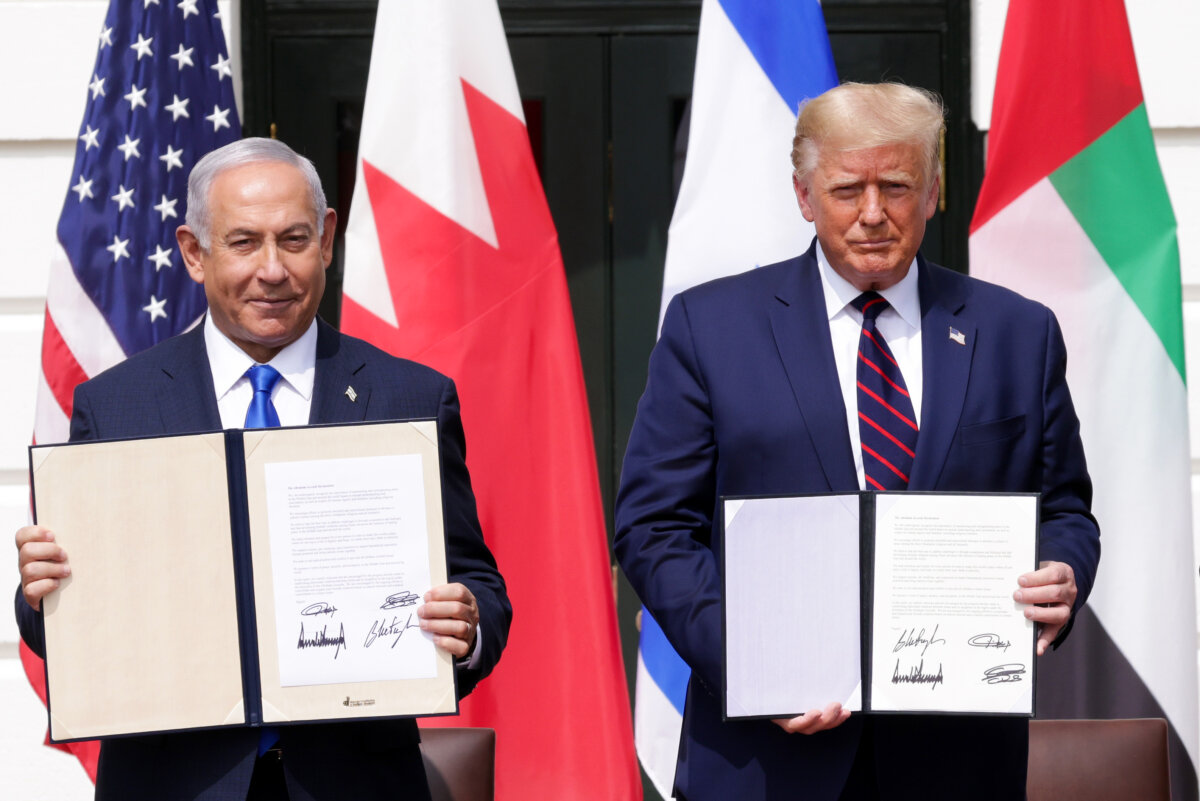
The Abraham Accords, brokered during Trump’s first term in office, normalized relations between Israel and several Arab states, including the United Arab Emirates and Bahrain, in 2020. Morocco and Sudan later joined the framework, widely considered one of the most significant Middle East diplomatic breakthroughs in decades.
Trump also floated the idea of Iran itself eventually joining the accords.
“In speaking to numerous of the Great Leaders mentioned above, they would be honored, as soon as our Document is signed, to have the Islamic Republic of Iran as part of the Abraham Accords,” he wrote. “Now that would be something special!”
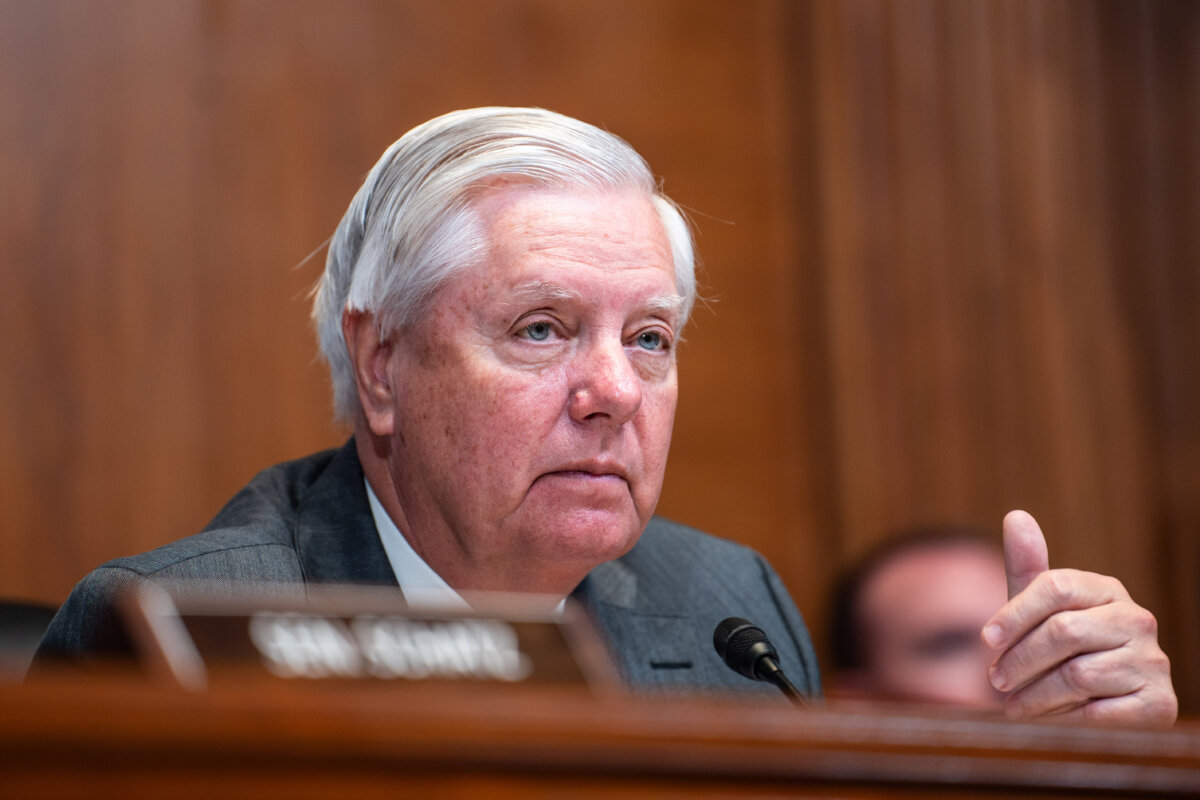
Trump’s proposal drew strong support from Sen. Lindsey Graham (R-S.C.), who called the initiative “brilliant” and potentially transformative for the region.
“With Saudi Arabia and others like Pakistan making peace with Israel, the region will know a level of stability never dreamed of before President Trump,” Graham wrote in a May 25 post on X. “I expect our Arab allies to embrace this, as well as our friends in Israel, focusing on this task as failure is not an option.”
China analyst Antonio Graceffo wrote in a commentary for The Epoch Times last year that the expanding framework increasingly aligns Muslim-majority countries with a U.S.-led security and economic order.
“For the United States, this expansion represents a strategic gain in the great-power competition with China,” Graceffo wrote. “Muslim-majority nations that strengthen ties with Israel through the Abraham Accords are aligning, at least implicitly, with a U.S.-backed security and economic order.”
The president on May 25 described the Abraham Accords as having generated a “Financial, Economic, and Social BOOM” for participating countries and said that expanding the framework could unite the Middle East economically and strategically.
Rubio Says Trump Will Not Accept Weak Deal
Trump’s latest remarks came after U.S. Secretary of State Marco Rubio was asked by reporters during a media briefing in India on May 25 about the prospects of successfully concluding a deal with Iran.
Rubio said that Trump would not accept a weak agreement with Iran and warned that the United States was prepared to pursue other options if diplomacy failed.
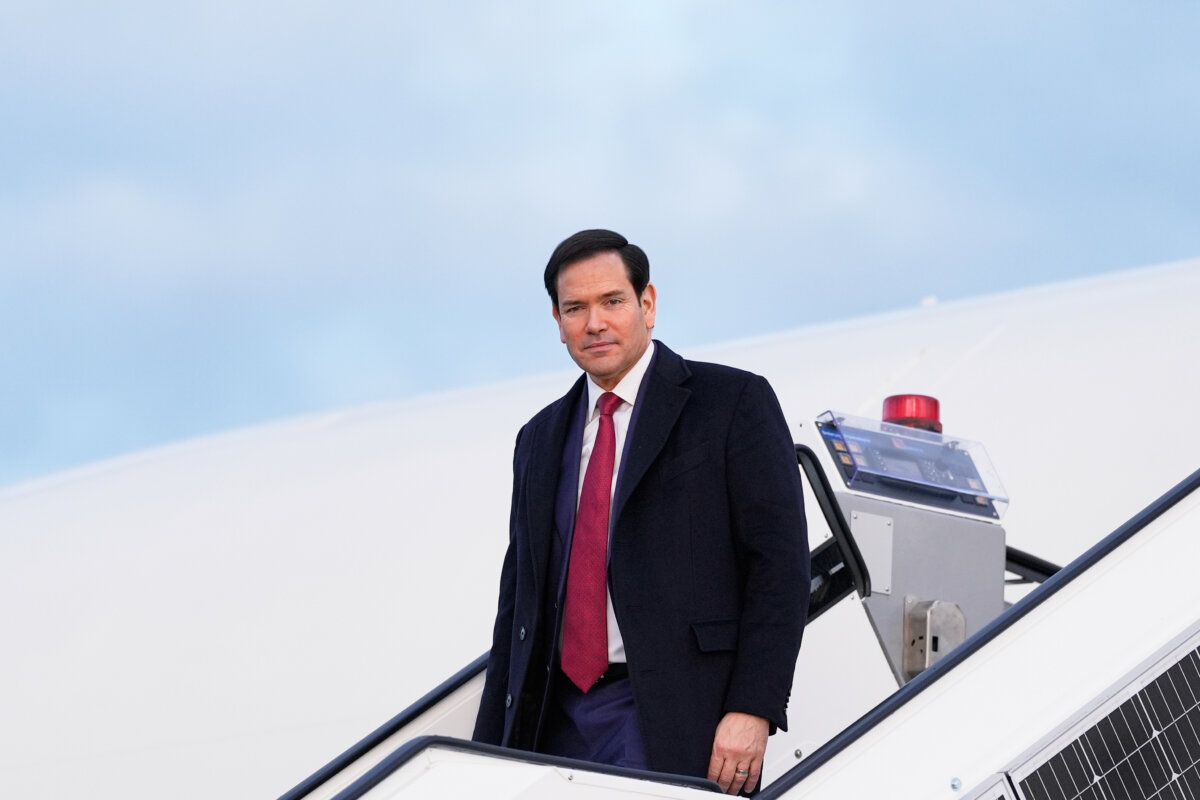
“The president said he’s not in a hurry,” Rubio said. “He’s not going to make a bad deal. We’re going to give diplomacy every chance to succeed before we explore the alternatives.”
Rubio said that Trump remained focused on preventing Iran from acquiring nuclear weapons.
“We’re either going to have a good agreement or we’re going to have to deal with it another way,” Rubio said.
A key aspect of the current negotiations centers on Iran’s nuclear program and Trump’s insistence that Iran must abandon any ambition of ever becoming a nuclear-armed power.
Iranian officials have said that Tehran’s nuclear efforts—which include enriching uranium to near weapons-grade—are peaceful and nonmilitary.
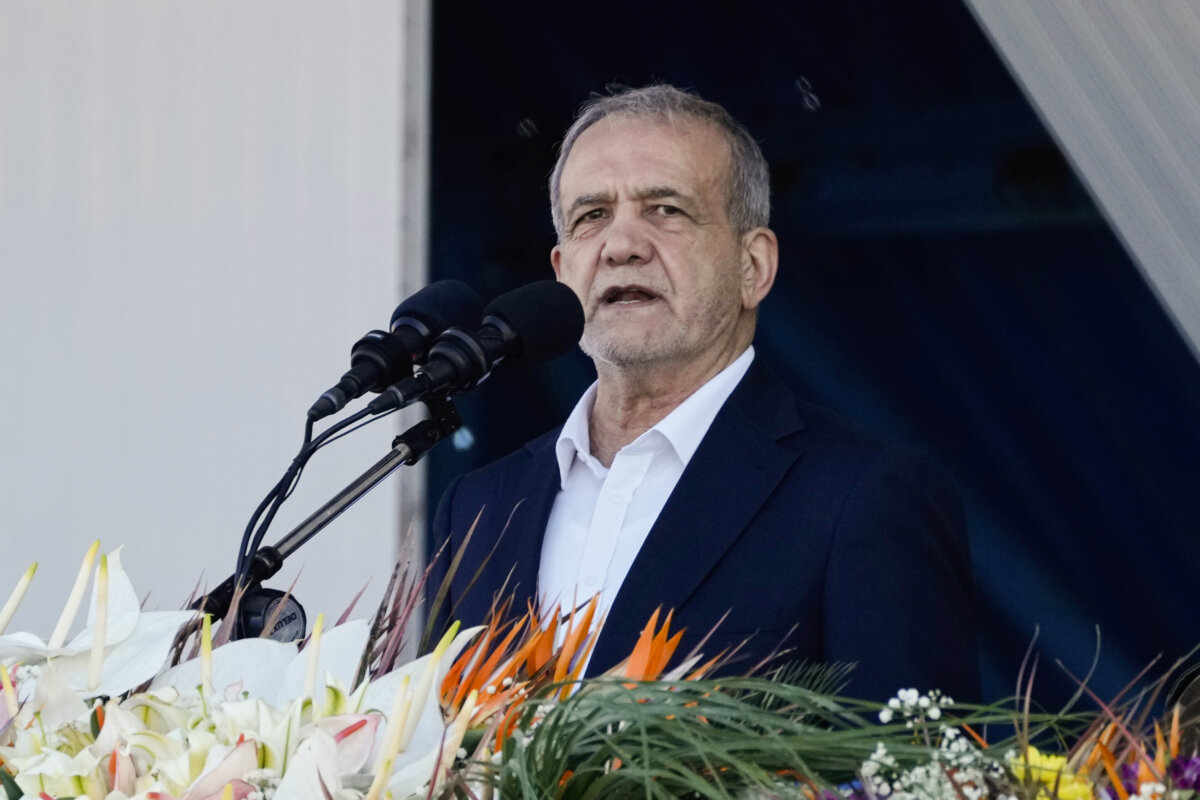
Iranian President Masoud Pezeshkian was on May 25 cited by Iran’s state-run Islamic Republic News Agency as saying that Tehran is willing to assure the world that it is not seeking nuclear weapons but that it will not compromise on “the dignity and honor of the country.”
Baghaei also said on May 25 that there is progress in talks but that no final agreement is imminent. Baghaei was cited by the Islamic Republic News Agency as saying that an agreement had been reached on “many issues” but that “whether this means an agreement is imminent is something no one can claim at this stage.”
Responding to the threat of renewed U.S. strikes, Mohsen Rezaei, an adviser to the leader of Iran, warned in remarks to state-run news outlet Press TV that a resumption of attacks could prompt Tehran to withdraw from the Nuclear Non-Proliferation Treaty.
 Friends Read Free
Copy
Facebook
Tweet
Friends Read Free
Copy
Facebook
Tweet