
President Donald Trump said on May 12 that the United States does not need China’s help to resolve the war with Iran, which has tightened control over the Strait of Hormuz.
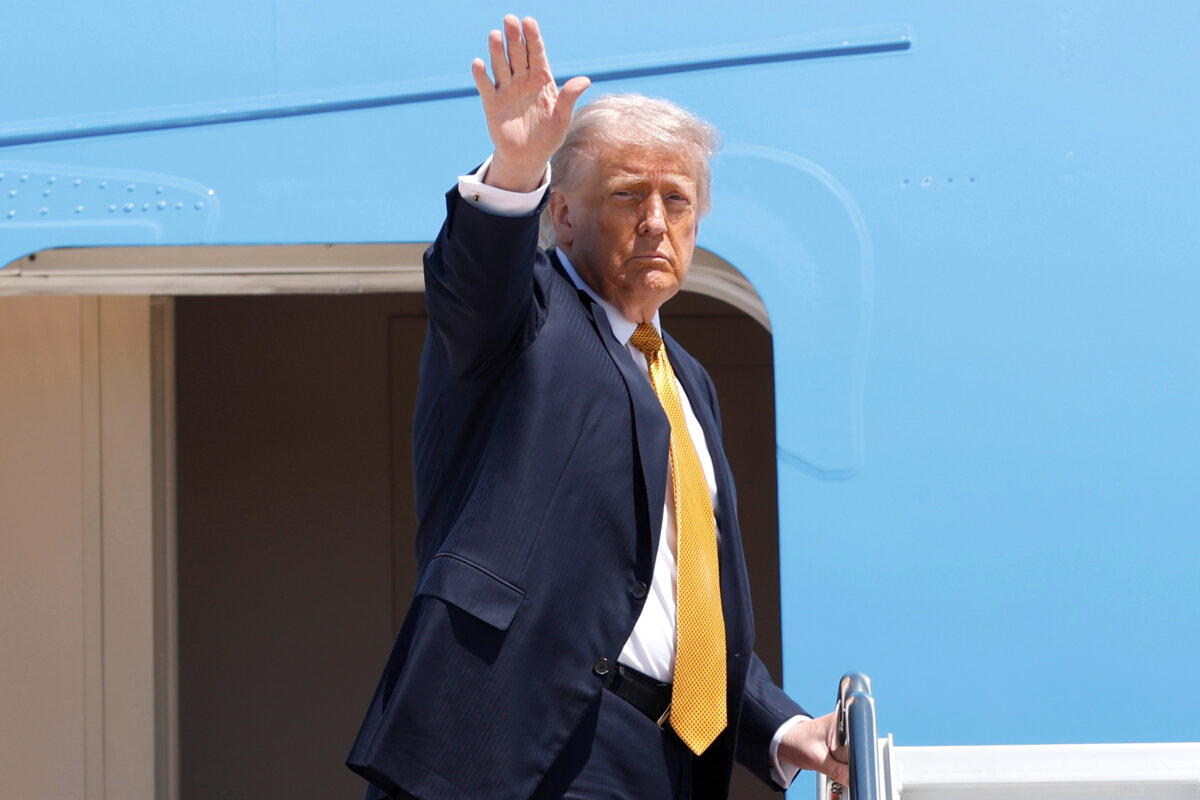
Trump made the remarks outside the White House before departing for China, where he is expected to meet Chinese leader Xi Jinping for a high-stakes summit. The president said he will have a “long talk” with Xi about the Iran war but did not see an absolute need for China’s assistance.
“I don’t think we need any help with Iran. We’ll win it one way or the other. We’ll win it peacefully or otherwise,” he told reporters.
Trump said that China is far more dependent on the Strait of Hormuz for oil shipments than the United States, which has its own oil resources, though he believes that good things will come out of the talks with Xi.
“They get a lot of their oil from that area. We’ve had no problem,” he said. “[Xi has] been somebody that we get along with. And I think you’re going to see that good things are going to happen.”
Trump later departed Washington for his May 13–15 China visit, which will mark his first presidential visit to Beijing since taking office for a second term last year.
Tensions Remain Over Strait of Hormuz
The United States and Iran entered a temporary ceasefire in April, but a U.S. naval blockade on Iranian ports remains in place while Tehran imposed military oversight in the Strait of Hormuz.
Trump said on May 11 that the ceasefire with Iran was on “life support” and “unbelievably weak” after Tehran submitted what he called an unacceptable proposal to end the war.
“I would call it the weakest right now after reading that piece of garbage they sent us,” Trump said without elaborating. “I didn’t even finish reading it.”
Responding to Trump’s comment, the Iranian Foreign Ministry spokesman said that Tehran’s proposal contained what he said were reasonable demands and suggested that Iran be able to control the strait.
Trump said last month that the U.S. naval blockade would end once an agreement is reached to end the war, under which Iran will have to abandon its nuclear weapons program and fully reopen the strait.
The strait is one of the world’s most critical energy chokepoints, with about 20 percent of global oil supplies passing through the waterway, but shipping traffic has been disrupted by Iran in response to U.S. and Israeli attacks on its nuclear and military sites beginning in late February.
Iran retaliated with drone and missile attacks on Israeli and U.S. military assets across Gulf nations and laid sea mines in the strait.
Jack Phillips contributed to this report.
 Friends Read Free
Copy
Facebook
Tweet
Friends Read Free
Copy
Facebook
Tweet