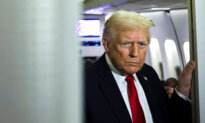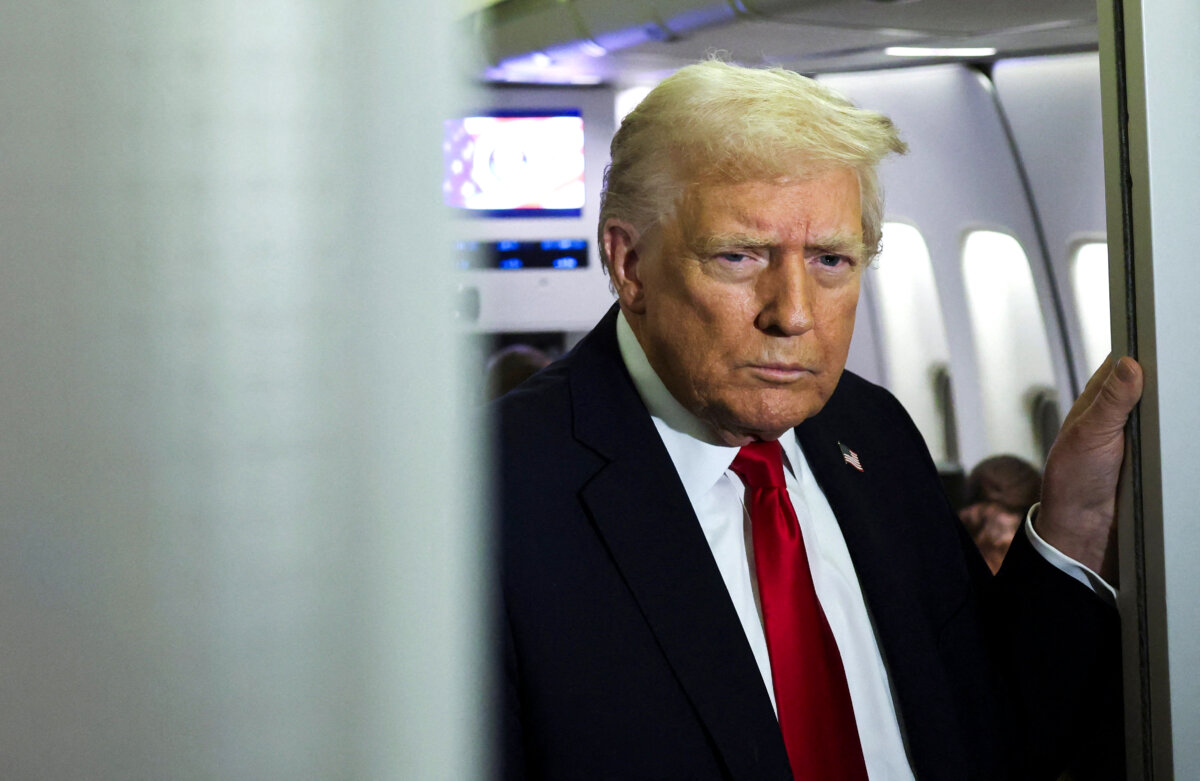

President Donald Trump said on Nov. 27 that U.S. forces may soon carry out ground operations targeting drug trafficking in Venezuela.
Trump announced this in a call to U.S. troops, in which he praised the U.S. Air Force’s 7th Bomb Wing for its role in deterring Venezuelan drug traffickers. He noted that they have intercepted about 85 percent of drug trafficking by sea.
“You probably noticed that people aren’t wanting to be delivering by sea, and we’ll be starting to stop them by land also,” the president said in his remarks.
“The land is easier, but that’s going to start very soon. We’d warn them. Stop sending poison to our country,” he added.
His remarks came just days after Joint Chiefs Chairman Gen. Dan Caine, the highest-ranking officer in the U.S. military, embarked on a three-day visit on Nov. 23 to the U.S. Southern Command area of responsibility—which includes the Caribbean—to meet with U.S. service members.
Caine also met with Trinidad and Tobago Prime Minister Kamla Persad-Bissessar on Nov. 25 to discuss regional security. Caine’s office said the two talked about the challenges facing the Caribbean, including illicit narcotics and human trafficking in the region.
The United States has, in recent months, increased its military presence in the Caribbean to deter drug smuggling and targeted vessels that U.S. officials say were carrying narcotics to the country.
The U.S. military has carried out at least 21 strikes on drug-smuggling boats in the Caribbean since September, killing about 83 alleged drug traffickers aboard those vessels.
On Nov. 16, the USS Gerald R. Ford, known as the world’s largest aircraft carrier, arrived in the Caribbean Sea in a move aimed at expanding U.S. counter-narcotics efforts in the region.
The Pentagon posted a video on Nov. 27 of Secretary of War Pete Hegseth meeting with sailors on the aircraft carrier and delivering a Thanksgiving message to U.S. troops.
The U.S. military operations have heightened tensions with the Venezuelan regime, which Trump has accused of involvement in drug trafficking, an allegation Venezuelan leaders have denied.
Trump told reporters on Nov. 17 that he would be open to holding talks with Venezuelan leader Nicolás Maduro but did not rule out sending U.S. troops into Venezuela.
“We just have to take care of Venezuela. They dumped hundreds of thousands of people into our country from prisons,” he told reporters in the Oval Office.
In September, Maduro sent a letter to Trump seeking dialogue to address the “many controversies” in U.S.–Venezuela relations. He said that data from the United Nations and other organizations indicated that only 5 percent of drugs originating in Colombia are shipped through Venezuela.
“This is the most egregious instance of disinformation against our nation, intended to justify an escalation to armed conflict that would inflict catastrophic damage across the entire continent,” he stated in the letter.
In response, the White House said the letter contains “a lot of lies,” and the administration’s stance on Venezuela remains unchanged.
 Friends Read Free
Copy
Facebook
Tweet
Friends Read Free
Copy
Facebook
Tweet