
News Analysis
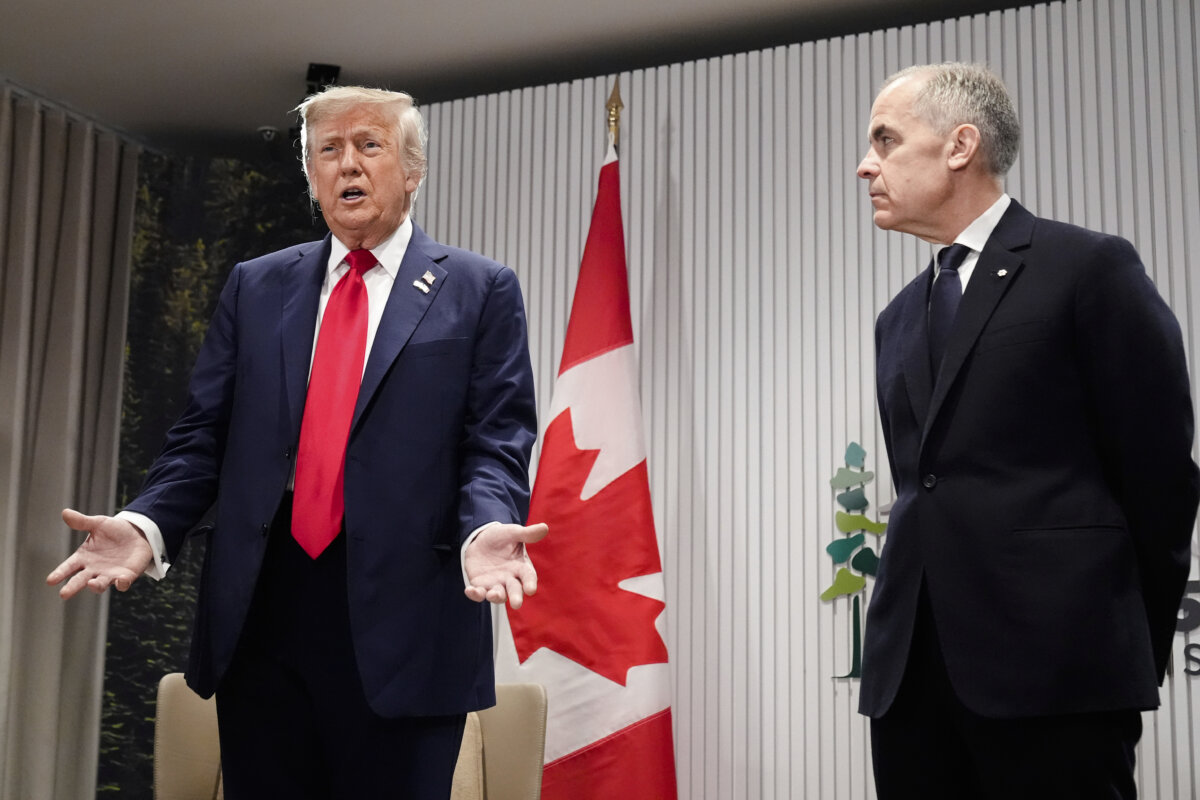
Expectations of a trade deal with the United States being finalized this month were tempered by President Donald Trump’s threat of new tariffs on Canada.
In a possible sign the Canadian government may not have made enough concessions during negotiations, Trump said he would slap a 35 percent tariff on Canadian goods starting Aug. 1.
This week marked the end of a 90-day pause on Trump’s “reciprocal” tariffs announced in April. The move had caused a global markets crash.
Canada was spared given it already falls under Trump’s tariffs related to concerns with border security and drug trafficking. Those tariffs target goods with a 25 percent surtax and energy with 10 percent duties. Goods covered by the USMCA free trade deal are exempted.
There was an expectation from the White House that granting a pause after threatening high tariffs would lead countries to sign trade deals with the United States, but very few have done so during the period. A deal was announced with the United Kingdom and Vietnam, and there was a climb-down with China after a brief trade war.
Trump started publicizing letters sent to leaders of various countries on July 7, informing them of their respective tariff rates. Japan and South Korea were slapped with a 25 percent tariff, Brazil with 50 percent.
The letter addressed to Prime Minister Mark Carney was released on July 10. Trump says the letter demonstrates the “strength” of the trading relationship between the United States and Canada despite Ottawa’s retaliation with counter-tariffs.
Because of this retaliation, and Canada’s “failure to stop drugs from pouring into our Country,” Trump said he would impose a 35 percent tariff on Canadian goods on Aug. 1, separate from sectoral tariffs. Those relate to tariffs on steel, aluminum, automobiles, and car parts.
This move by Trump has at the very least reshuffled some cards in the ongoing trade talks between Ottawa and Washington.
There was optimism at the G7 Summit in mid-June when the Prime Minister’s Office announced that Carney and Trump had agreed to aim to reach a trade deal within 30 days. That deadline was later moved forward by the government to July 21.
The July 21 date was also a deadline Ottawa had set to adjust its counter-tariffs on steel and aluminum, depending on the progress of trade talks.
Carney reacted to Trump’s letter letter but did not announce potential counter-measures. In a July 10 statement, he said his government has “steadfastly defended our workers and businesses” during negotiations and would continue to do so with the revised deadline of Aug. 1.
A Trump administration official told The Epoch Times the expectation is that only the goods currently tariffed at 25 percent would be impacted by Trump’s announcement, with USMCA exemptions remaining in place and tariffs on energy and potash also staying at 10 percent.
“That said, no final paper has been drafted and no final decisions by POTUS been made,” said the official.
Trump’s letter was not the first public hiccup of the negotiations. In late June, the president said he was cancelling trade talks ahead of a key deadline of the implementation of Canada’s Digital Services Tax (DST). Ottawa announced two days later that the tax would be rescinded by way of legislation.
A few days after that, on July 4, U.S. Ambassador to Canada Pete Hoekstra said he would not commit to a date to reach a trade deal.
Supply Management System
The DST has been a trade irritant for Washington across administrations, but so have other Canadian practices. When Ottawa backed off on the DST, which targets large tech businesses, there was a sense Trump could go after another longstanding trade irritant such as Canada’s supply management system. The regime regulates the production of dairy, eggs, and poultry with quotas.
“Canada charges extraordinary Tariffs to our Dairy Farmers—up to 400%— and that is even assuming our Dairy Farmers even have access to sell their products to the people of Canada,” Trump said in his letter to Carney.
Politicians of all stripes pledged to protect supply management during the last election, and Carney said the system would not be up for discussion during trade negotiations.
“We will never have discussions with respect to supply management. It’s off the table,” he said in late March.
In late June, Parliament passed a bill sponsored by Bloc Québécois Leader Yves-François Blanchet seeking to protect supply management in future trade negotiations.
Along with criticizing obstacles to U.S. dairy products, Trump also said Canada has “many” other unspecified policies and tariffs acting as trade barriers, saying they cause an “unsustainable” trade deficit with Canada. Canada had a trade surplus in recent years which turns into a deficit if energy exports are removed from the equation.
Trump, however, did not make any specific requests regarding supply management or other trade issues.
The first tariffs were imposed on Canada under a national security pretext related to fentanyl trafficking and illegal immigration.
In his letter, Trump linked back to this issue when saying tariffs could be modified.
“If Canada works with me to stop the flow of Fentanyl, we will, perhaps, consider an adjustment to this letter,” he wrote, adding tariffs could go up or down depending on Canada’s relationship with the United States.
Trump also warned the 35 percent could increase if Canada decides to retaliate. “Whatever the number you choose to raise them by, will be added onto the 35 percent that we charge.”
Carney said in his response that Canada has made “vital progress to stop the scourge of fentanyl in North America.”
On top of its initial $1.3 billion plan to boost border security and unsuccessfully avoid tariffs, Ottawa has listed Mexican cartels as terrorist organizations, appointed a fentanyl “czar,” and introduced a bill in Parliament to reinforce security at the border and elsewhere.
Trump has not said publicly what else Canada could do to meet his expectations in countering fentanyl.
While available public data shows that not much fentanyl enters the United States from Canada, FBI Director Kash Patel said in May that the Trump administration’s actions to seal the border with Mexico had led to cartels shifting operations to Canada.
He went further by saying that regimes of China, Iran, and Russia are collaborating with criminal organizations to smuggle fentanyl across the border. “They’re sailing around to Vancouver and coming in by air,” Patel told Fox News.
For now, all eyes are on the next milestone, Aug. 1, as the date Carney says a new deal may materialize. The prime minister will also be holding a special meeting with provincial and territorial premiers on July 22 to discuss the latest development in the trade saga.
Reuters contributed to this report.
 Friends Read Free
Copy
Facebook
Tweet
Friends Read Free
Copy
Facebook
Tweet