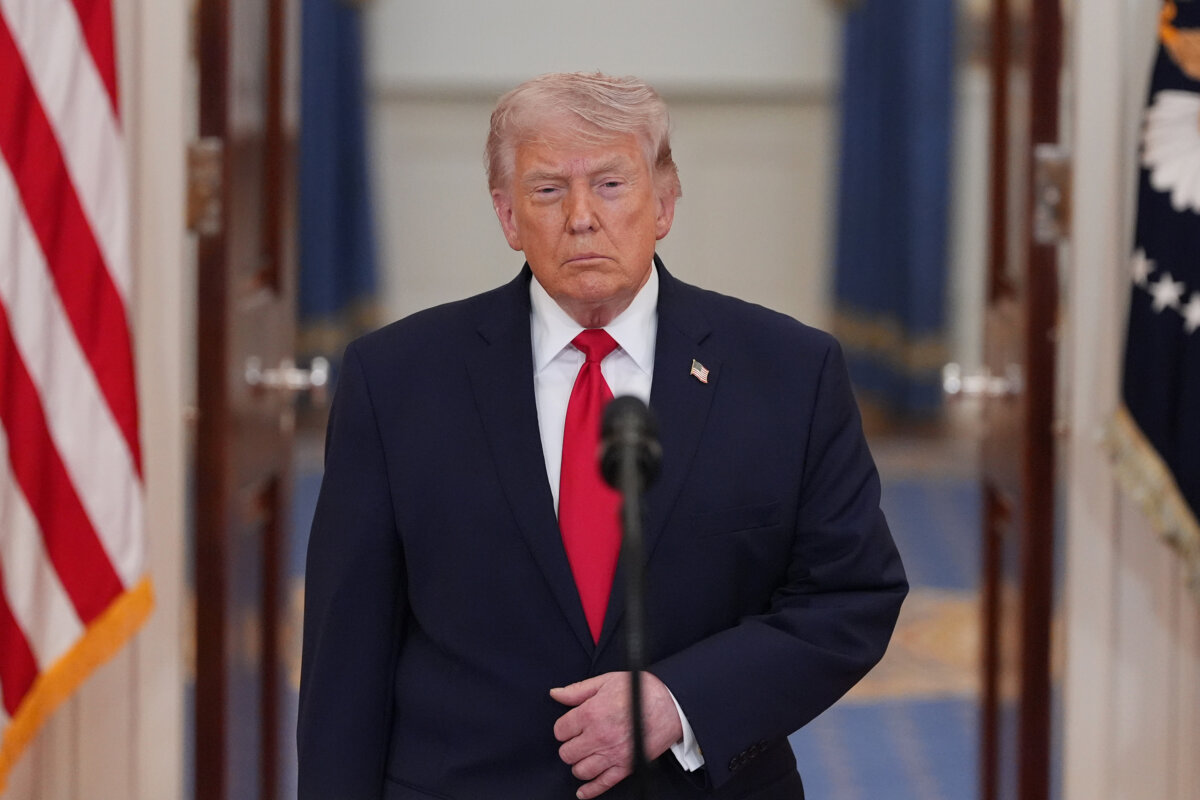

President Donald Trump warned on April 7 that “a whole civilization will die tonight” if Iran fails to meet his 8 p.m. ET deadline to reach a deal, sharpening his rhetoric as the conflict approaches a potential inflection point.
In a post on Truth Social, Trump said he did not want such an outcome but suggested it was increasingly likely without a breakthrough, calling the moment “one of the most important” in world history.
Trump added that a change in Iran’s leadership could still produce a “revolutionarily wonderful” outcome if “different, smarter, and less radicalized minds prevail,” describing the situation as both a crisis and a possible turning point of historic proportions.
Deadline Pressure Builds
The warning came a day after Trump reaffirmed that the United States could take out Iran in a single night if Tehran refused terms that include reopening the Strait of Hormuz, a vital artery for global oil shipments.
“The entire country can be taken out in one night,” Trump said at a press conference at the White House, hinting at the vast scale of potential military action if negotiations collapse.
The April 7 deadline marks the latest in a series of extensions Trump has granted since late March, after initially giving Tehran a shorter timeline to agree to terms. On Monday, Trump signaled that further delays are unlikely, saying Iran has already been given more than enough time.
“They’ve had plenty of time. In fact, they asked for seven days. I said, I’m going to give you 10. But at the end of 10, all hell’s going to break out if you don’t get there,” he said.
Washington’s demands include restoring free navigation through the Strait of Hormuz, which handles roughly a fifth of global oil flows and has been severely disrupted since the conflict intensified.
Talks at ‘Critical Stage’
Diplomatic efforts continued alongside the military threats, with Iran’s ambassador to Pakistan, Reza Amiri Moghadam, saying on Tuesday that mediation efforts had reached a “critical, sensitive stage” and urging observers to “stay tuned” for developments.
Pakistan has been working to broker indirect talks between Washington and Tehran, leveraging its ties with both sides in an attempt to avert further escalation.
So far, Iran has rejected a temporary cease-fire proposal, instead insisting on a permanent end to the conflict along with guarantees against future attacks, sanctions relief, and broader regional de-escalation.
Inside Iran, officials have begun preparing for the possibility of U.S. strikes on key infrastructure, particularly power plants and transportation networks.
Alireza Rahimi, a senior Iranian official, called on citizens—including students—to form human chains around power plants, describing them as critical national assets that must be protected.
The appeal followed Trump’s earlier threats that bridges and energy infrastructure would be targeted if Iran failed to comply with U.S. demands.
The standoff has heightened anxiety across global markets, given the strategic importance of the Strait of Hormuz and the broader implications for energy supplies. Prolonged disruption to the waterway could send oil prices sharply higher and exacerbate inflationary pressures worldwide.
Markets were on edge on Tuesday as Trump’s deadline loomed, with oil prices holding above $110 a barrel and global stocks struggling, while Wall Street futures pointed to a lower open.
 Friends Read Free
Copy
Facebook
Tweet
Friends Read Free
Copy
Facebook
Tweet