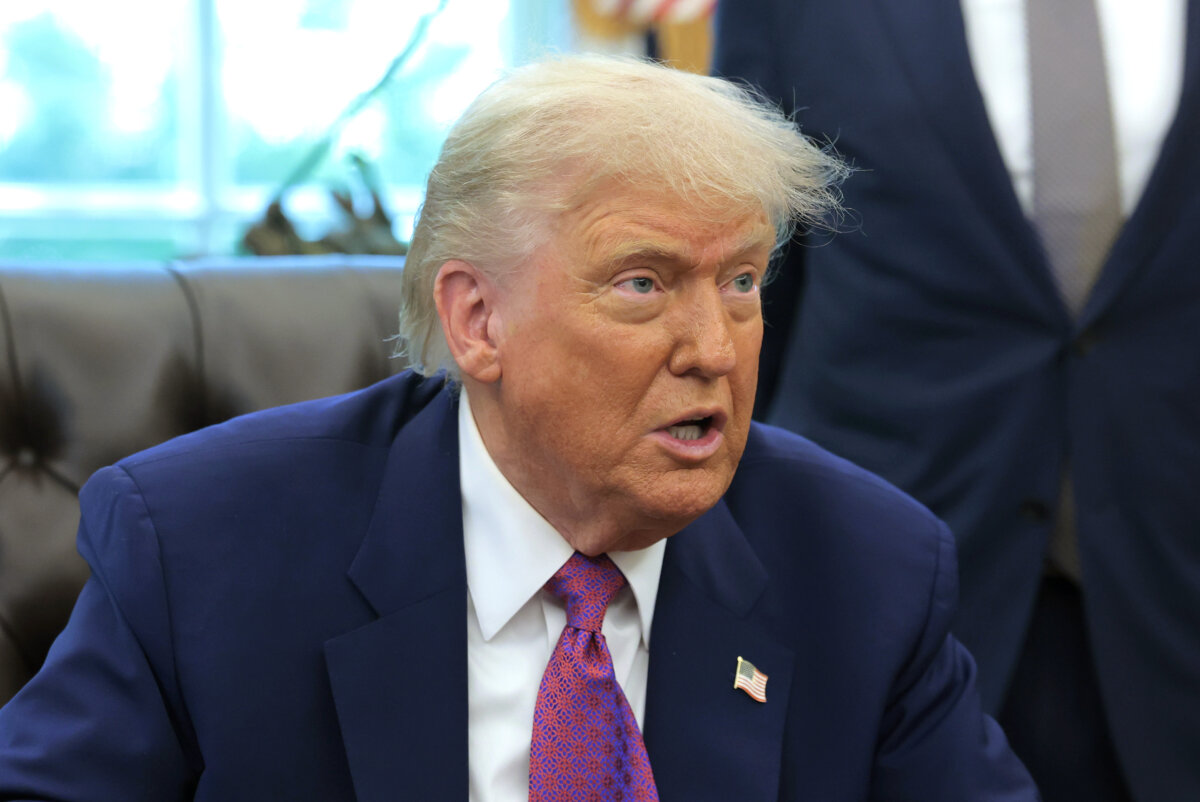

Australia may be forced to overhaul its domestic tax rules amid pressure from the Trump administration’s “One Big Beautiful Bill Act” (OBBA) that recently passed the U.S. House of Representatives.
The bill, currently under Senate consideration, includes Section 899, which could be used to penalise countries deemed to implement “unfair foreign taxes” on U.S. multinational corporations.
The law puts the spotlight on Australian and European Union authorities that have, for years, targeted the revenue streams of Big Tech companies like Google and Meta either through taxation or penalties.
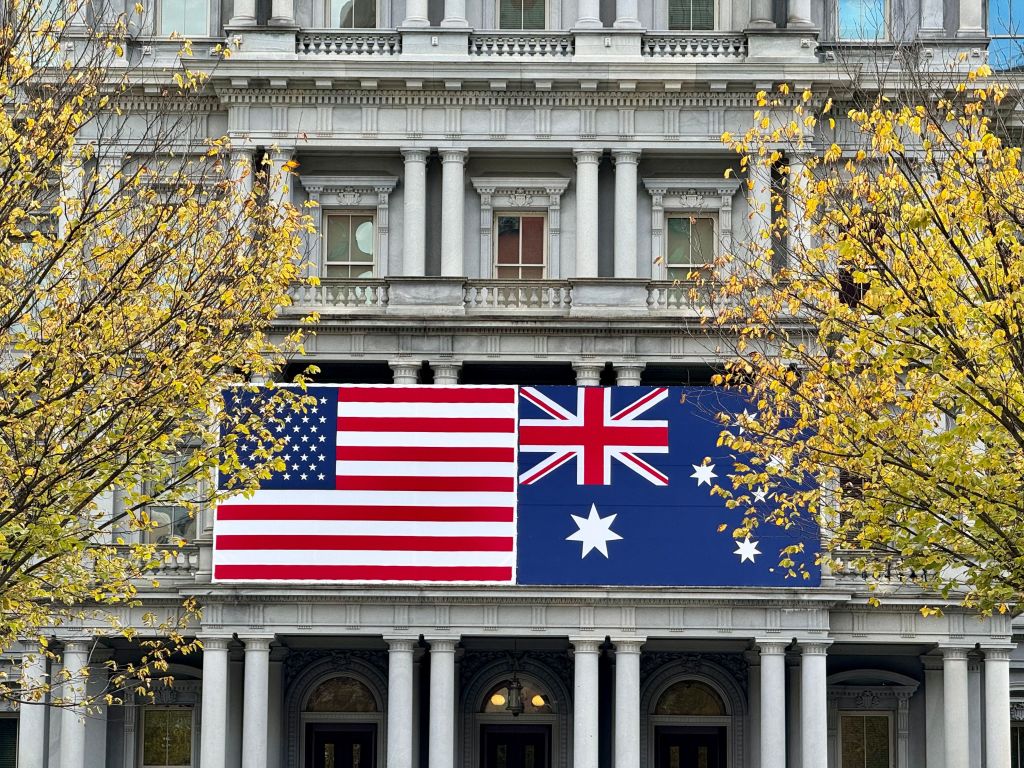
In response, Section 899 would impose a 5 percent levy on the U.S.-based income or capital gains for Australian taxpayers or companies.
This would increase each year by 5 percent until it reached a 20 percent cap. Further, Section 899 would override the U.S.-Australia Double Tax Agreement.
Effectively it could impact over a trillion dollars worth of Australian investments in America.

Australia Tax Rules Could be Interpreted as Disproportionate
Graham Young, executive director of the Australian Institute for Progress, said much of Australia’s current tax regime could be under scrutiny.
“Australia has a Diverted Profits Tax and an Undertaxed Profits Tax [which specifically target multinationals], which the U.S. could interpret as discriminatory,” he told The Epoch Times.
“We also have the News Media Bargaining Code, which might be viewed as targeting U.S.-based digital platforms. And if the Albanese government considers a Digital Services Tax, that would give the U.S. further grounds.”
A Digital Services Tax would target the revenue earned from users in a country, even if the company has no physical presence there.
While the News Media Bargaining Code was introduced as a “world first” by the Australian Morrison government and forced Google and Meta to pay for news content, effectively propping up struggling news media outlets.
Young said the cumulative effect of the above measures could be viewed as having a disproportionately large impact on U.S. multinationals like Big Tech.
“So when our rules carve out special treatment that only seems to apply to them—whether it’s direct taxation or mandated revenue sharing—it feeds a perception of unfair treatment. That’s the kind of thing Section 899 is likely trying to push back against.”

Half of Australia’s Offshore Investment in the US
Australia’s financial exposure in the U.S. is substantial.
According to Young, around $1.2 trillion worth of Australian assets are in America, including $200 billion from superannuation funds alone.
“When you compare this to Australia’s total domestic capital stock of $6.6 trillion, you realise how vulnerable we are,” he said.
Independent economist Saul Eslake was more blunt in his characterisation of the U.S. proposal, calling it “bullying.”
“This provision in the childishly-named OBBA is yet another example of how, under the Trump regime, the U.S. is attempting to dictate to other countries—including long-standing allies—how they collect taxes and regulate their societies,” he said.
“It’s a form of ‘revenge taxation.’”
Eslake said Australia’s financial interests in America have deepened significantly in recent years.
“As of end-2024, Australians had A$1.07 trillion invested in U.S. securities, up from $472.7 billion in 2018. This includes $891.5 billion in stocks and $182.9 billion in bonds. It’s over half our total offshore portfolio investment.”
In addition, Australian companies have directly invested A$243 billion in American operations.
“Much of this is superannuation money, which could be at risk if the U.S. follows through,” he said.
Australia’s Global Minimum Tax Rate Could be Overridden
While the Trump administration is bringing pressure on other countries to adjust their domestic tax laws, Young cautions this could have unintended consequences for the United States itself.
“Raising taxes on foreign firms operating in the U.S. might backfire,” he said. “It could deter investment and drive up the cost of capital in the U.S. It’s a risky move.”
Australia has been an early adopter of global tax reforms, supporting the OECD’s Base Erosion and Profit Shifting (BEPS) project since its inception in 2013.
The second phase of that project led to the development of two pillars: one reallocating tax rights based on customer location, and the other establishing a global minimum 15 percent tax rate on large multinational corporations.
Labor adopted these principles as part of its 2022 election platform and has since enacted them. However, Young doubts whether multilateral tax frameworks offer much protection against Washington’s unilateral influence.
“The U.S. is free to set whatever tax rates it wants on foreign entities operating within its borders,” he said. “Pillar Two is about closing tax havens, and the U.S. isn’t a tax haven—it’s simply being aggressive.”
Eslake was equally sceptical about relying on existing treaties.
“[The Trump administration has] ignored provisions in the [Australia-U.S. Free Trade Agreement] and even their own MCA deal with Canada and Mexico.”
 Friends Read Free
Copy
Facebook
Tweet
Friends Read Free
Copy
Facebook
Tweet