

A commercial lawyer with 15 years’ experience in Hong Kong and China says it’s time for Australia to cancel its free trade agreement with China, and take a leaf out of the Trump playbook and tariff Chinese goods to revive local manufacturing.
Dan Ryan, a Mandarin-speaking former board member of the Australia-China Council, says attempts to “liberalise” China have not succeeded, and that going forward, Australia could learn from the Trump administration’s approach to protecting U.S. domestic industries.
His comments come amid bipartisan condemnation of the Trump tariffs from political leaders and media outlets, as well as Prime Minister Anthony Albanese’s lengthy diplomatic trip to China.
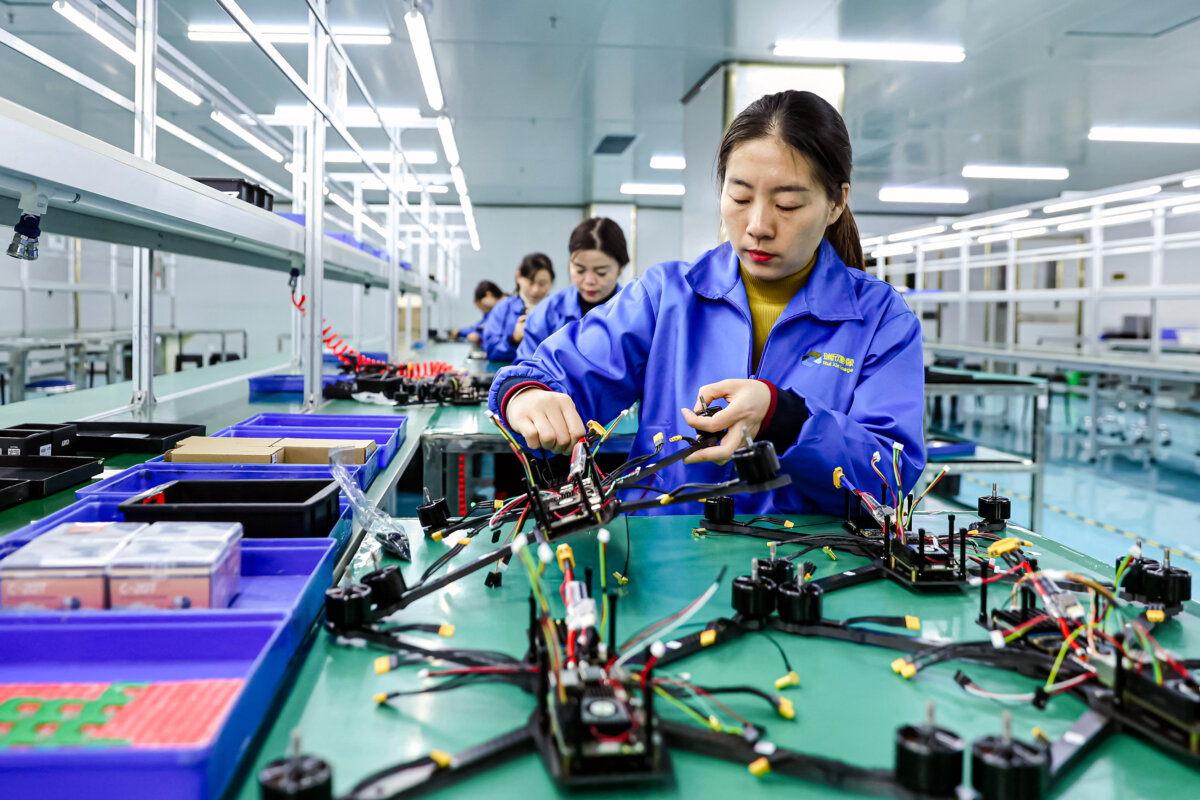
Ryan notes that despite ambitious plans to revive local manufacturing by both sides of government, it is not feasible over the long term if cheaper Chinese goods continue to flow into the country, especially with their significant price advantages.
“You will never be able to produce a manufacturing industry of any consequence, as long as you have a trade agreement with China that allows 100 percent of their manufactured goods to come in here duty-free,” he told The Epoch Times.
“It is not going to happen. You’ve got to recognise that,” Ryan said, adding that Australia should consider a tiered system of tariffs for all countries.

“[The government] tries to throw a lot of government money into rebuilding those things here, without changing trade policies. They often spend more than the [necessary] amount because we’ve lost a lot of the skills that people used to have.”
Late last year, Ryan established the National Conservative Institute of Australia.
A Short History of State-Led Manufacturing Initiatives
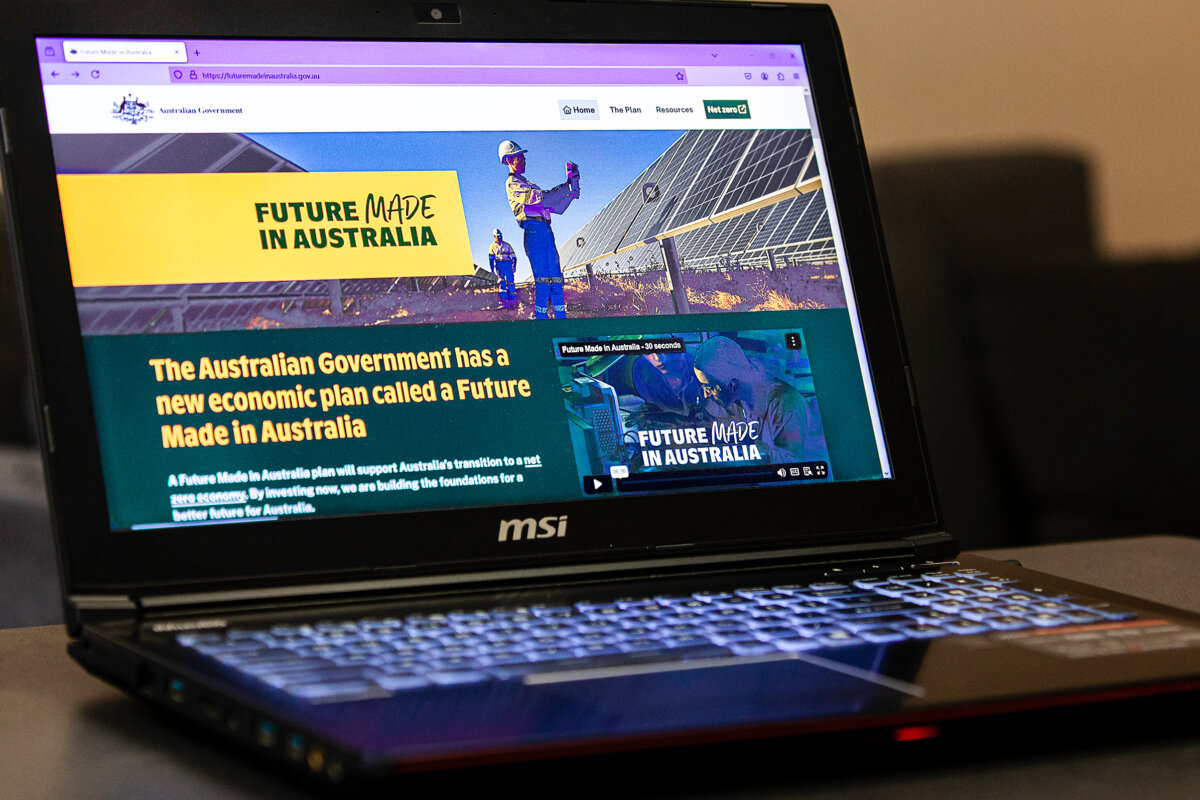
The latest manufaturing initiative is Labor’s $22.7 billion (US$14.8 billion) Future Made in Australia 2024 plan, which offers financial support for five priority areas including renewable energy manufacturing, critical mineral processing, and “green” hydro and metals.
It also includes targeted tax incentives and grants to encourage investment from the private sector.
Prior to that, the Morrison Coalition government introduced the Modern Manufacturing Strategy in 2020, which outlined six priority areas to build local industry.
“The founders of Australia, [Robert] Menzies and others, recognise that as a sovereign nation, we need to have our own independent industrial capacity, even if it costs a little bit more,” Ryan said.
Ryan warns that in the event of a conflict in the region, Australia had very little to fall back on to keep the country going.
“We have been hollowed out industrially in Australia. We used to produce a lot more things,” he said. “[For example], we obviously lost our whole automobile industry. We don’t produce cars anymore.”
“[But] cars are central to manufacturing, there are not many countries that can do it. Once you have an automobile industry, there are so many other manufacturing elements which go into it.”
At one point in the 1970s, Australia was the 10th largest car producer in the world, but by 2016 and 2017, the country’s three remaining automotive plants closed, meaning Australians rely entirely on imported models now.
Ryan noted there was also an “off-balance sheet liability” and that it was very difficult to restart manufacturing from scratch, even if trade schools are pumping out apprentices.
“You probably spend a lot more than you would if you had something existing.”

Since ChAFTA, the Value of Chinese Imports Doubles in 10 Years
Signed in 2014, the China-Australia Free Trade Agreement (ChAFTA) took effect in December 2015.
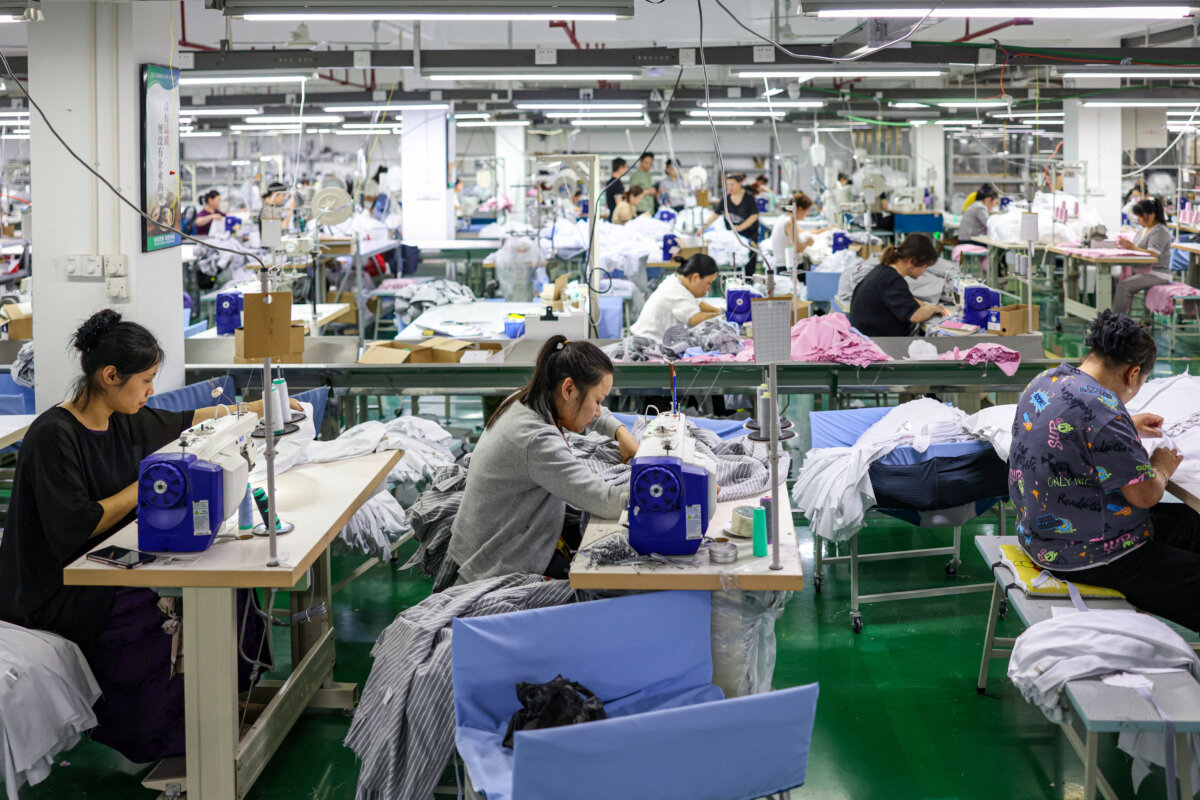
Since then, Australia has seen a surge in imported goods from China, from homewares, to electric vehicles, and even fluoride in water.
Between 2014 and 2024, the total value of Chinese imports doubled from $54.3 billion to $115.6 billion—steadily sidelining locally made products.
While there is no official data on how Australian businesses have fared under ChAFTA, there are consistent reports of manufacturing closures.
In November 2024, Keppel Prince, Australia’s last domestic wind turbine tower manufacturer, announced that it would cease operation after years of struggling to compete with cheaper Chinese imports.
The company blamed the Labor government for failing to take action to prevent China from dumping large volumes of cheaper product into the Australian market, despite the government’s push to expand renewable energy across the country.
In February 2025, Oceania Glass, Australia’s only architectural glass manufacturer, went into administration after 169 years.
The company cited cheap Chinese imports and increasing manufacturing costs as the main reasons for its collapse—although the actual percentage of Chinese imports into the glass market appear to be low.
Prior to the announcement, Oceania Glass was expecting a decision by the Anti-Dumping Commission to reinstate tariffs on imported float glass that was removed during the COVID-19 pandemic.
“People defend ChAFTA and say, ‘Oh, look, the value of our trade exports have increase so much after signing it. But what they fail to recognise is that’s all mineral exports, that’s iron or coal and the rest of it, which are completely outside of ChAFTA anyway … we were selling coal before ChAFTA,” Ryan said.
“It’s really manufactured goods that are the key thing,” he said, adding that “commodities don’t matter as much to a nation compared to the ability to industrialise.”
“And I think it should be possible in a mature, sensible way—not in an antagonistic way—to say, ‘Okay, we’ve had 10 years of this. You know what? We really need to have industrial capacity.'”
A Tariff Wall Will be Simple and More Effective: Ryan
On tariffs, Ryan said it was something “other countries around the world” were doing, but noted that locally, Australian policymakers and experts appeared to be “immune to the idea.”
“It’s actually a simple way of correcting … [the issue], rather than having a big fund that’s administered by bureaucrats being sprayed into things they think are great.”
Tariffs could also potentially balance out other inequities in the trade relationship, including the vast difference between Australian labour laws against Chinese ones.
This approach has been adopted under the Trump administration’s “Liberation Day” global tariffs, which also target countries that suppress the “domestic consumption power of their own citizens” so that they can artificially boost the competitiveness of their exports.
“Such policies include regressive tax systems, low or unenforced penalties for environmental degradation, and policies intended to suppress worker wages relative to productivity,” the White House said. Asian-based workers’ unions are generally ineffective.
The response from Australian politicians, academics, and media commentators has been to universally condemn the use of tariffs.
Prime Minister Albanese called the tariffs “economic self harm,” while opposition finance spokesman James Paterson said Australia needed to “robustly defend” the international free trade system.
Meanwhile, Professor Shahar Hameiri, political economist at the University of Queensland’s School of Political Science, said it was “difficult to understand the thinking” behind Trump’s actions.
“After decades of globalisation, most goods are often made via long and complex global value chains. Even if the final product can be made in the U.S., sometimes the intermediate goods or the capital goods—the components that go into the making of the final product and the machines used in the process—often come from other countries.
“Therefore, U.S. prices will likely rise, causing inflation, which is exactly the opposite of what Trump promised the American people,” Hameiri said in a statement.
Ryan in turn said there was a “mythology” around liberalisation and globalisation.
“They have this mythology, which is built up in the 1980s that free trade is this unique thing we discovered that no one ever knew about beforehand, and that we can’t go back to the dark ages.”
Free Trade Won’t Bring Democracy to China: Lawyer
At the same time, Ryan highlighted that the Western belief that increasing trade with China would lead to its democratisation should be shuttered.
“We need to recognise what were the reasons we should engage in free trade with China—the theory was that they would turn into a Liberal multi-party democracy,” he said.
“All of the big names at the time when China was entering the World Trade Organization … Tony Blair, George W Bush, [and] Bill Clinton—they all said more or less the same thing.”
However, Ryan said things have turned out very different.
Today, China is still an authoritarian state and free trade with the West has strengthened the communist regime and increased its industrial and technological capacity.
“So let’s dismiss the notion that free trade turns countries into democracies, or friendly countries,” Ryan said.
 Friends Read Free
Copy
Facebook
Tweet
Friends Read Free
Copy
Facebook
Tweet