Police in England and Wales are being encouraged to cite the ethnicity of suspects in high-profile cases.
The official guidance follows a series of incidents dating back to riots in the summer of 2024 after three children in Southport were murdered by a Wales-born teenager, Axel Rudakubana.
The National Police Chiefs’ Council (NPCC) stated on Aug. 13, “Police forces should consider disclosing the ethnicity and nationality of suspects when they are charged in high-profile and sensitive investigations and operations.”
Guidance developed by the NPCC and the College of Policing “encourages forces to disclose a suspect’s ethnicity and nationality when there is a policing purpose to do so,” it said.
Among the reasons cited are “to reduce the risk to public safety, where there are high levels of mis or disinformation about a particular incident, or in cases of significant public interest.”
Bebe King, 6, Elsie Dot Stancombe, 7, and Alice Da Silva Aguiar, 9, were stabbed to death during a Taylor Swift-themed dance event in Southport, a seaside town in the North West of England, 20 miles from Liverpool, in July 2024.

Riots broke out in several parts of England in the wake of the incident after reports on social media that the suspect was an illegal immigrant who had recently arrived in the country after crossing the English Channel in a small boat.
That did not prove to be the case. Rudakubana, who was 17 at the time, was born in Wales to parents who emigrated legally from Rwanda.
However, other offenses he admitted included possession of a knife on the day of the attack, production of a biological toxin—ricin—on or before July 29, 2024, and possession of information likely to be useful to a person committing or preparing to commit an act of terrorism.
The terror charge relates to a PDF file titled “Military Studies In the Jihad Against the Tyrants, The Al Qaeda Training Manual,” which he is alleged to have possessed between Aug. 29, 2021, and July 30, 2024.
The incident horrified Britain and sparked outrage, protests, and unrest across the country, leading to more than 1,500 arrests, and drew attention from far beyond the borders of the UK, in what British Prime Minister Keir Starmer condemned at the time as “far-right thuggery.”
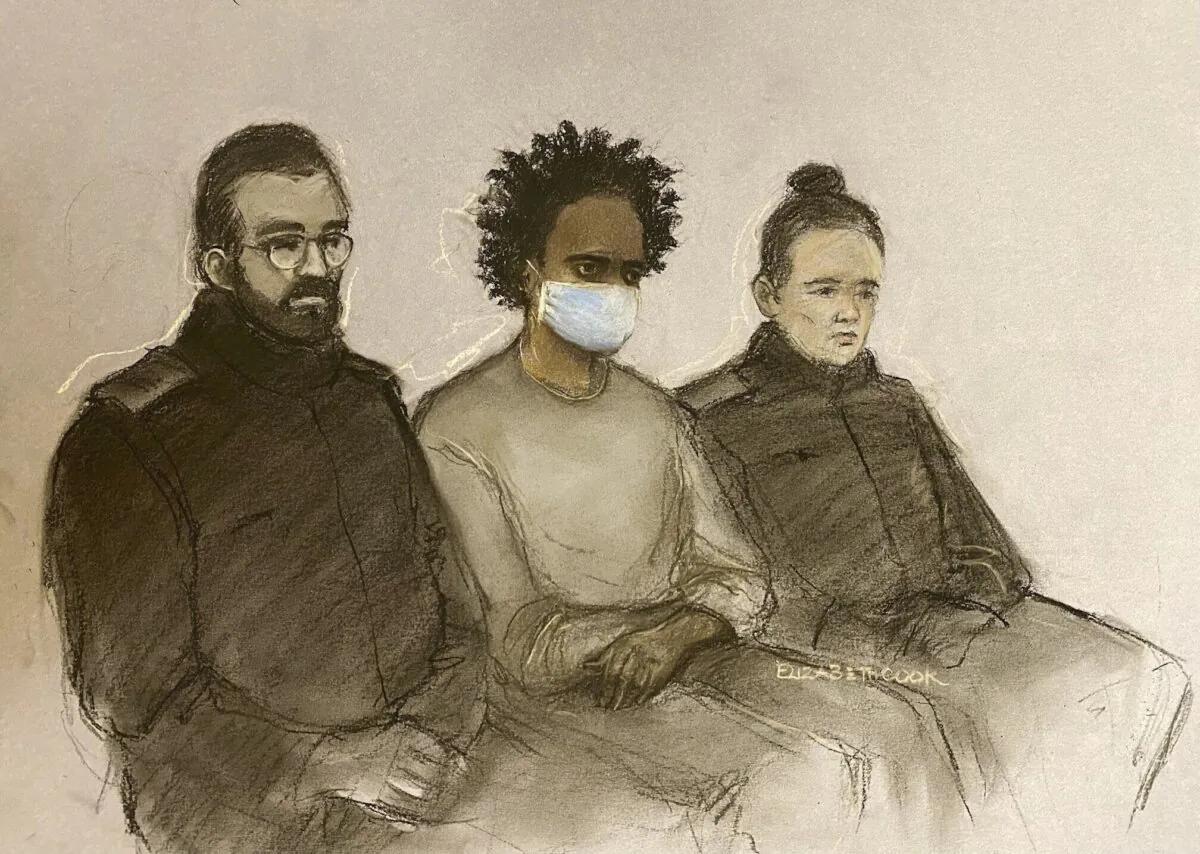
In January, Rudakubana was jailed for life, with a minimum term of 52 years, after pleading guilty to the murders.
Judge Urges ‘Full Reporting’
On Aug. 1, 2024, a judge at Liverpool Crown Court in England had taken the exceptional step of naming Rudakubana—who, as a juvenile, was entitled to anonymity—to dispel what he described as misinformation.
Judge Andrew Menary said at the time, “Continuing to prevent full reporting at this stage has a disadvantage of allowing others up to mischief to continue to spread misinformation in a vacuum,” according to reporters in the courtroom.
On May 26, 2025, four people were seriously injured after a car was driven into a crowd celebrating at a parade to mark Liverpool Football Club’s winning the English Premier League.
After video footage of the incident went viral on social media, Merseyside Police took the unprecedented step of saying the suspect, driving the car, was white, British, and from the Liverpool area.
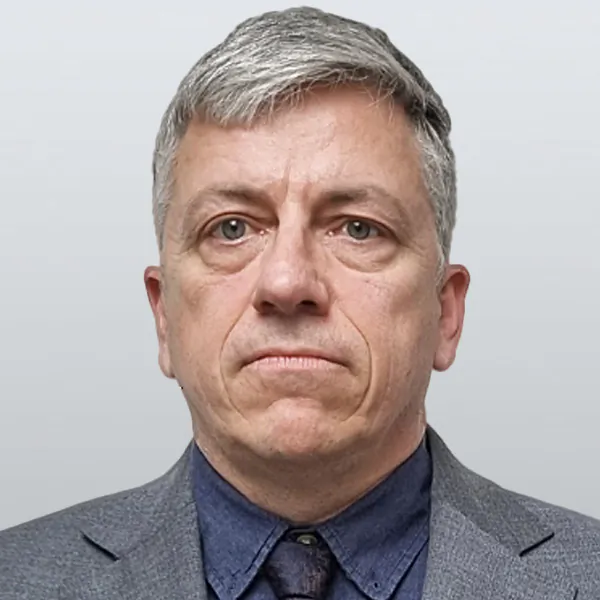
Paul Doyle, 53, was later charged with several criminal offenses, including dangerous driving and causing grievous bodily harm with intent. Slated to head to trial in November, he has yet to submit a formal plea to the charges and has made no public comment on the allegations either directly or through his lawyers.
On July 24, 2024, Anita Rose, 57, was killed on a footpath in Suffolk. A rumor began on social media that the mother of six had died after a bungled robbery by two Somali immigrants.
Suffolk police rebutted these rumors, pointing out that a man and a woman who had been arrested as suspects in the case were not Somali.
Earlier this month, Roy Barclay, a 56-year-old white British man, was jailed for life for Rose’s murder.
“The guidance, which comes into immediate effect, reaffirms that it is not the role or responsibility of the police to verify a suspect’s immigration status,” the NPCC said. “It is for the Home Office to decide if it is appropriate in all the circumstances to confirm immigration status.”
This past week, British Home Secretary Yvette Cooper told the BBC: “We do want to see more transparency in cases, we think local people do need to have more information.”
Following the announcement of the new guidelines, Cooper said, “We welcome the guidance because this is a step forward, and we have been clear that we need greater transparency and that’s what the public want to see.”
The chairwoman of the Association of Police and Crime Commissioners (APCC), Emily Spurrell, welcomed the decision.
“We have seen the speed with which mis- or disinformation can spread online and the danger to public safety that can cause, so it is right police keep the public informed as far as is possible whilst preserving a suspect’s right to a fair trial,” she said in an emailed statement.
Guy Birchall contributed to this report.
 Friends Read Free
Copy
Facebook
Tweet
Friends Read Free
Copy
Facebook
Tweet