Ukraine is launching a sweeping anti-corruption audit of all state-owned companies amid an investigation into an alleged graft scheme involving the nation’s primary nuclear energy producer.
Ukrainian Prime Minister Yulia Svyrydenko announced the decision on Nov. 13, saying that Kyiv is preparing a “comprehensive” set of measures covering every state-owned enterprise, including those in the strategically sensitive energy sector.
“Audits are under way, and supervisory boards have been instructed to review operations, especially procurement practices,” Svyrydenko wrote on X. She emphasized that “any corruption is unacceptable” at a time when targeted Russian attacks on energy infrastructure force Ukrainians to live under scheduled power outages.
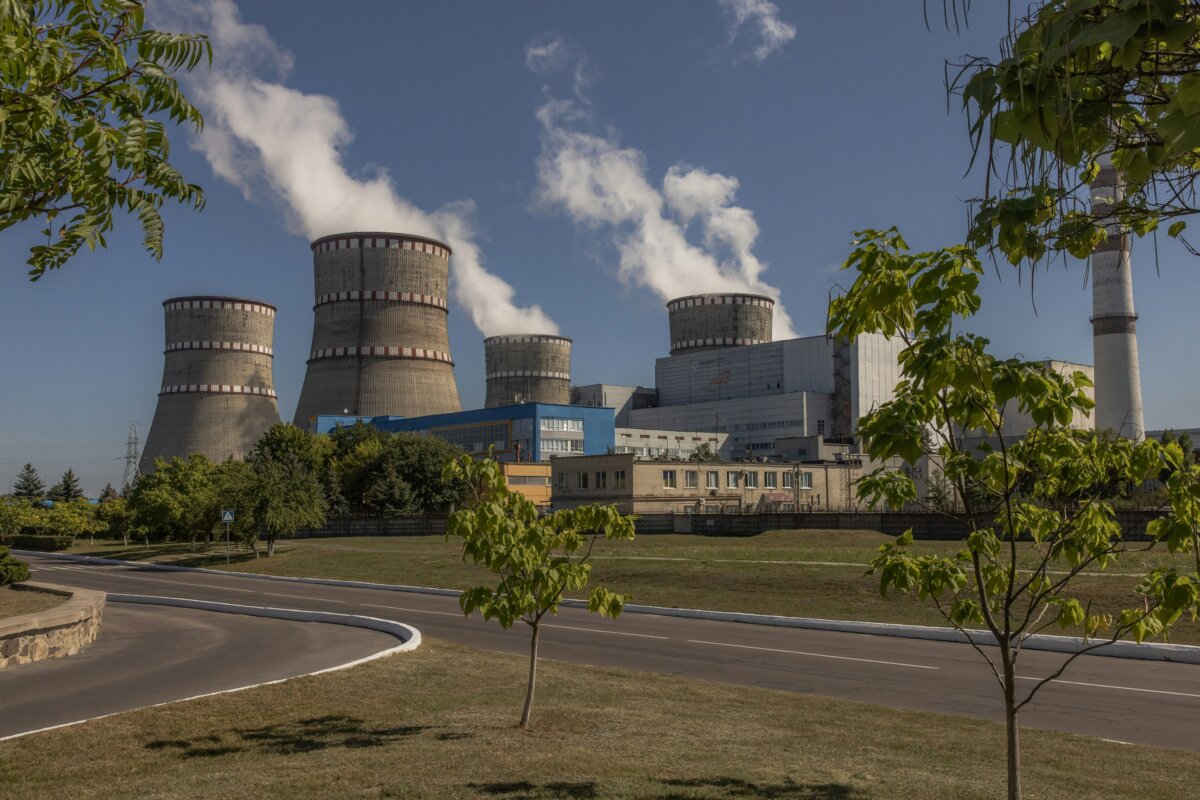
Earlier the same day, Ukrainian President Volodymyr Zelenskyy signed a decree imposing sanctions on businessmen Timur Mindich and Oleksandr Tsukerman, both implicated in an alleged corruption scheme centered on Energoatom, a state enterprise running all four of the country’s nuclear power plants.
According to Ukraine’s National Anti-Corruption Bureau, Energoatom’s contractors have been forced to pay kickbacks and bribes to the scheme ring members in exchange for keeping their status as suppliers and for not blocking their products and services. Investigators alleged that roughly 100 million Ukrainian hryvnia, or about 2.3 million U.S. dollars, was funneled through this system.
The bureau alleged that Mindich was the primary organizer of the scheme, while Tsukerman allegedly ran the “back office” responsible for laundering the illicit proceeds. Mindich is a co-owner of Kvartal 95 Studio, the production company behind Zelenskyy’s hit TV series “Servant of the People.”
The bureau also released audio recordings in which members of the group, speaking in code and using encrypted terminology, allegedly discussed bribes and kickback arrangements connected to Energoatom.
According to a statement from Zelenskyy’s office, both Mindich and Tsukerman—identified as citizens of Israel—fled Ukraine just before the charges were announced.
The scandal has implicated several prominent figures in the Zelenskyy administration, including former Deputy Prime Minister Oleksiy Chernyshov, Energy Minister Svitlana Hrynchuk, Justice Minister Herman Halushchenko, and Rustem Umerov, former defense minister and current secretary of the National Security and Defense Council.
On Nov. 12, both Halushchenko and Hrynchuk submitted their resignations, a day after Zelenskyy demanded that they step down and called corruption in the energy sector “absolutely abnormal” during wartime.
The case has sparked public outrage as millions of Ukrainians face rolling blackouts and heating shortages in the winter due to Russia’s relentless bombardment of Ukraine’s energy sites.
On Nov. 7, Hrynchuk announced emergency power cuts in “a number of regions of Ukraine,” and said they would be canceled when “the situation in the power system stabilizes.”
Centrenergo, Ukraine’s grid operator, said over the past weekend it suffered the “most massive strike” on its thermal power plants since the full-scale war between Russia and Ukraine broke out in 2022.
“We lost everything we were restoring 24 hours a day! Every time the enemy strikes even more brutally, even more cynically,” Centrenergo wrote on Facebook, noting that the country’s generation capacity was down to “zero” on Nov. 8 after Russian drones and missiles hit its energy plants.
 Friends Read Free
Copy
Facebook
Tweet
Friends Read Free
Copy
Facebook
Tweet