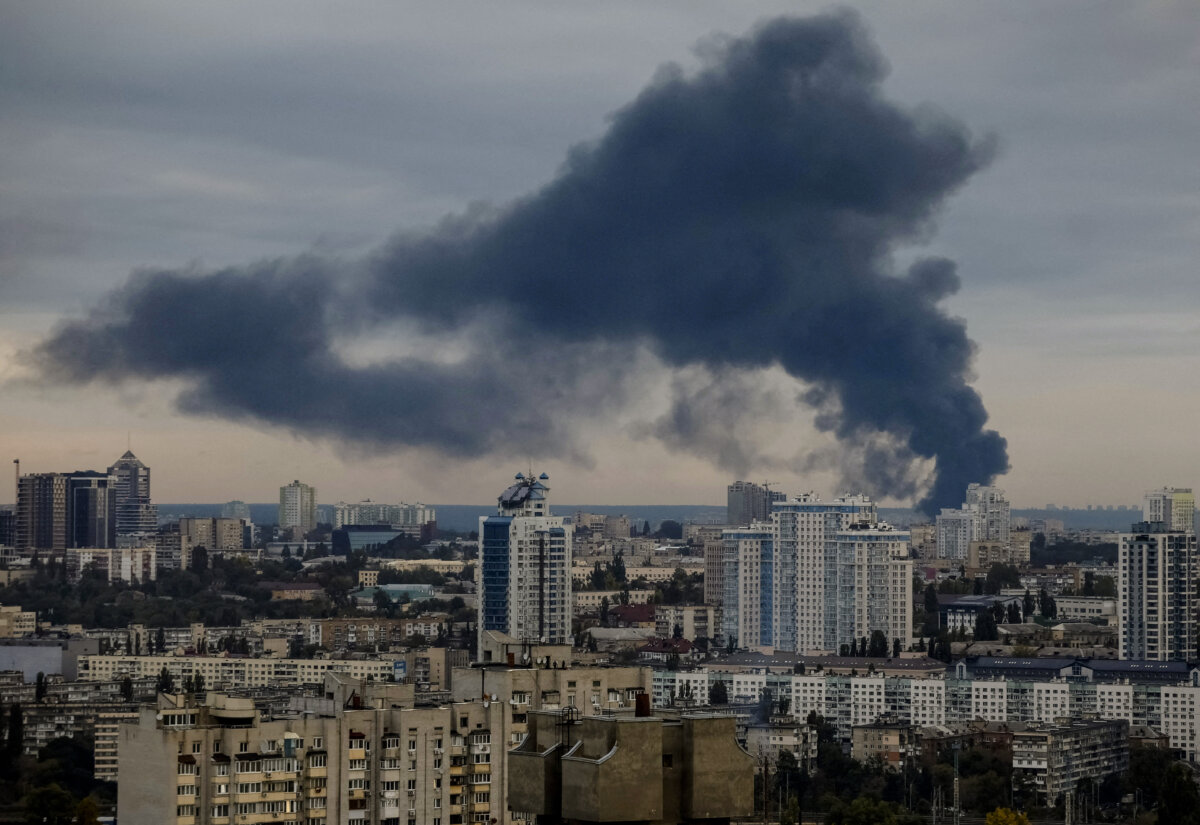

Several parts of Ukraine, including the capital, Kyiv, have experienced power outages and network failures following recent Russian attacks on its energy infrastructure, according to officials.
“Due to network overload, a problem arose at one of the capital’s power facilities,” the Kyiv City State Administration wrote on its Telegram channel on Oct. 14, noting that power was “partially lost” in three districts of the city.
It also reported power outages at several local metro stations, but later noted that all stations were “operating normally” after undergoing repairs.
On the same day, the administration also reported that water pressure in certain parts of the capital had been “reduced to a minimum” because of what it described as an “emergency situation in the city’s power system.”
Ukrenergo, the state-owned electricity operator, stated that recent Russian attacks on energy infrastructure had caused significant power outages in northern, central, and southeastern parts of the country.
“The aftermath of Russian attacks on energy facilities continues to be addressed in all regions affected by the shelling,” the company stated on its Telegram channel.
It went on to report electricity shortfalls in seven regions, especially in eastern Ukraine, parts of which Russia invaded—and claimed to have annexed—in 2022.
Ukraine’s energy ministry stated that electricity supplies had been adversely affected in multiple parts of the country, including the central Dnipropetrovsk region.
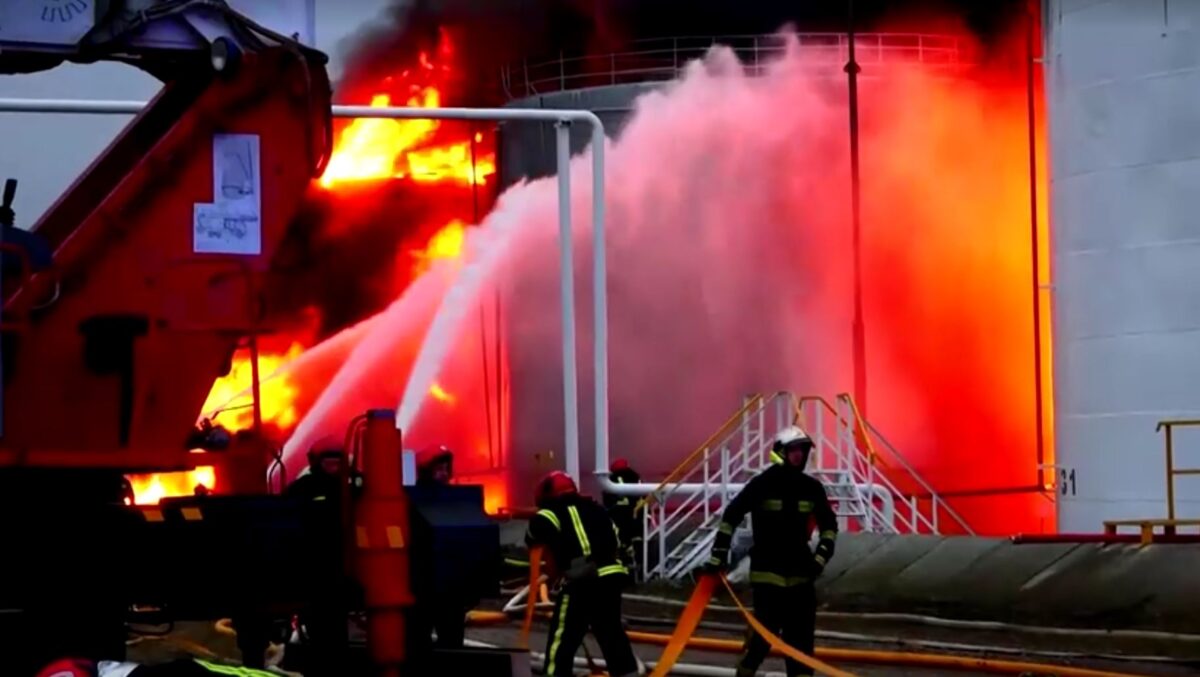
Naftogaz, Ukraine’s state-run gas company, stated that a thermal power plant had also been struck in the latest Russian attack, although it refrained from identifying the targeted facility.
According to Naftogaz, Russia has staged three separate attacks on Ukrainian gas facilities within the past week alone, during which “critically important facilities” were struck in the northeastern Kharkiv, Sumy, and Chernihiv regions.
Last week, Energy Minister Svitlana Hrynchuk announced that Ukraine was considering increasing its natural gas imports because of extensive damage to the country’s gas infrastructure.
“We plan to increase imports by around 30 percent if we manage to expand our import capacity,” she told reporters on Oct. 7. “We plan to import throughout the coldest months.”
Hrynchuk made the announcement after Russia carried out a massive attack on Ukraine’s primary gas fields, raising fears of possible gas shortages at the onset of winter.
Moscow: Targeted Sites Serve Military Function
In recent weeks and months, Russia has conducted attacks on Ukraine’s energy infrastructure with increasing intensity and frequency.
Late last week, Russian drones and missiles struck several Ukrainian energy sites, plunging several districts of Kyiv into darkness and adversely affecting local water supplies.
According to Ukraine’s energy ministry, last week’s strikes left more than 800,000 Kyiv residents without electricity, although power was restored the following day.
Russia claims to be using precision weapons to avoid civilian casualties and insists that all designated targets serve military purposes.
In its daily report for Oct. 14, the Russian Ministry of Defense confirmed that its forces had targeted Ukrainian energy infrastructure with drones, missiles, artillery, and “operational-tactical aviation.”
On its Telegram channel, it stated that the combined strikes had “inflicted damage on the fuel and power infrastructure facilities used for the interests of the Armed Forces of Ukraine.”
“[The strikes also targeted] fuel and lubricants depots, missile and artillery depots, as well as temporary deployment areas of Ukrainian armed formations and foreign mercenaries in 138 areas,” the defense ministry stated.
The Epoch Times could not independently verify claims made by either side of the conflict.
Reuters contributed to this report.
 Friends Read Free
Copy
Facebook
Tweet
Friends Read Free
Copy
Facebook
Tweet