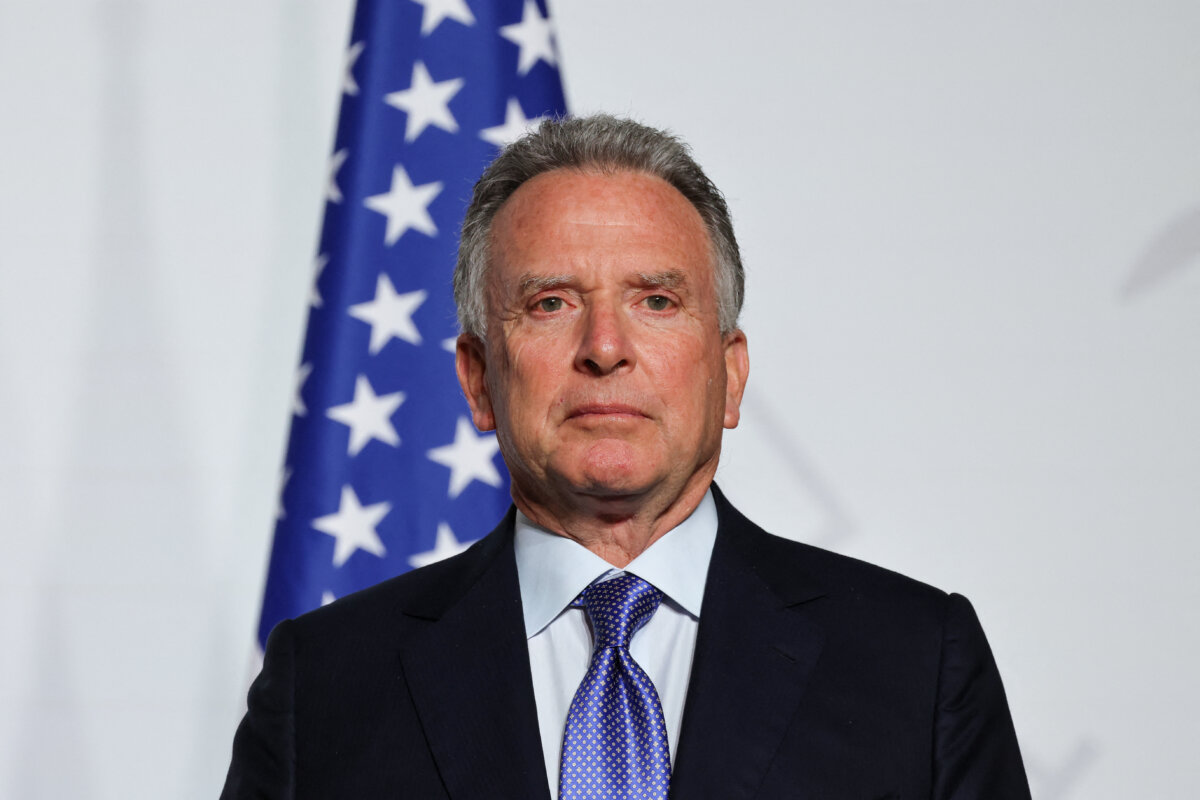
U.S. special envoy Steve Witkoff on Feb. 5 announced an agreement between Kyiv and Moscow to exchange 314 prisoners, the first such swap in five months, following U.S.-brokered talks in Abu Dhabi.
“This outcome was achieved from peace talks that have been detailed and productive. While significant work remains, steps like this demonstrate that sustained diplomatic engagement is delivering tangible results and advancing efforts to end the war in Ukraine,” Witkoff wrote in a post on X. “Discussions will continue, with additional progress anticipated in the coming weeks.”
The Russian Ministry of Defense said in a Feb. 5 post on Telegram: “157 Russian service members were returned from territory controlled by the Kyiv regime. In exchange, 157 Ukrainian Armed Forces prisoners of war were handed over.”
“In addition, three citizens of the Russian Federation—residents of the Kursk Region—who had been illegally detained by the Kyiv regime were returned and will be taken home,” it stated.
Ukrainian President Volodymyr Zelenskyy confirmed the exchange in a post on X, writing: “157 Ukrainians. Warriors from the Armed Forces, National Guard, and the State Border Guard Service. Soldiers, sergeants, and officers. Along with our defenders, civilians are also returning.”
He said that most of those returning had been held by Moscow since 2022.
Both Russia and Ukraine said that the talks had been positive.
Russian presidential representative and Russian Direct Investment Fund chief Kirill Dmitriev, who was present at the talks, said in comments reported by Russian state-owned news agency TASS that “there is progress” and that there is “good, positive movement forward.”
Dmitriev said one indicator of progress is that those he called “warmongers” from Europe and the UK are constantly trying to interfere with the process.
“It’s difficult for them, but they’re trying,” he said, without giving further details.
Dmitriev said that work was also underway to restore economic relations between Moscow and Washington.
“As you know, we are actively working with the Trump administration to restore Russia-US economic relations, including through the Russian-American Economic Cooperation Group. We met today, and the meetings are proceeding positively,” he said, according to TASS.
Kyiv’s top negotiator, Rustem Umerov, gave his assessment of the talks in a Feb. 4 post on Telegram, saying progress had been made.
“After the trilateral meeting in Abu Dhabi, the negotiation process continued today in the format of working in groups,” he said.
He also said that the work was “substantive and productive, focused on concrete steps and practical solutions.”
In his nightly address on Feb. 4, Zelenskyy confirmed he had received a report from his team in Abu Dhabi.
“Overall, Ukraine’s position is very clear: The war must be ended for real,” Zelenskyy said. “Russia must be ready for this. And partners must also be ready to ensure it in real terms with their real guarantees—security guarantees—and their real pressure on the aggressor.”
He said that people in Ukraine “must feel that the situation is genuinely moving toward peace, toward an end to the war, and not toward a scenario in which the Russians exploit everything to their advantage and continue their strikes.”

Kremlin spokesman Dmitry Peskov confirmed to TASS on Feb. 5 that the talks in the United Arab Emirates are continuing, but he said that it was too early to draw any conclusions. He said that Russian negotiators were preparing a report for Russian President Vladimir Putin.
“Of course, our delegation promptly reports to the head of state,” Peskov told TASS.
Russia has demanded that Kyiv give up the entire eastern industrial area of Donbas. Peskov said on Jan. 23 that Russia’s insistence on gaining all of the Donbas area was “a very important condition.”
Ukraine still holds about 20 percent of the Donetsk region of Donbas and has resisted Russia’s demands that it cede the territory as part of a peace agreement.
Reuters contributed to this report.
 Friends Read Free
Copy
Facebook
Tweet
Friends Read Free
Copy
Facebook
Tweet