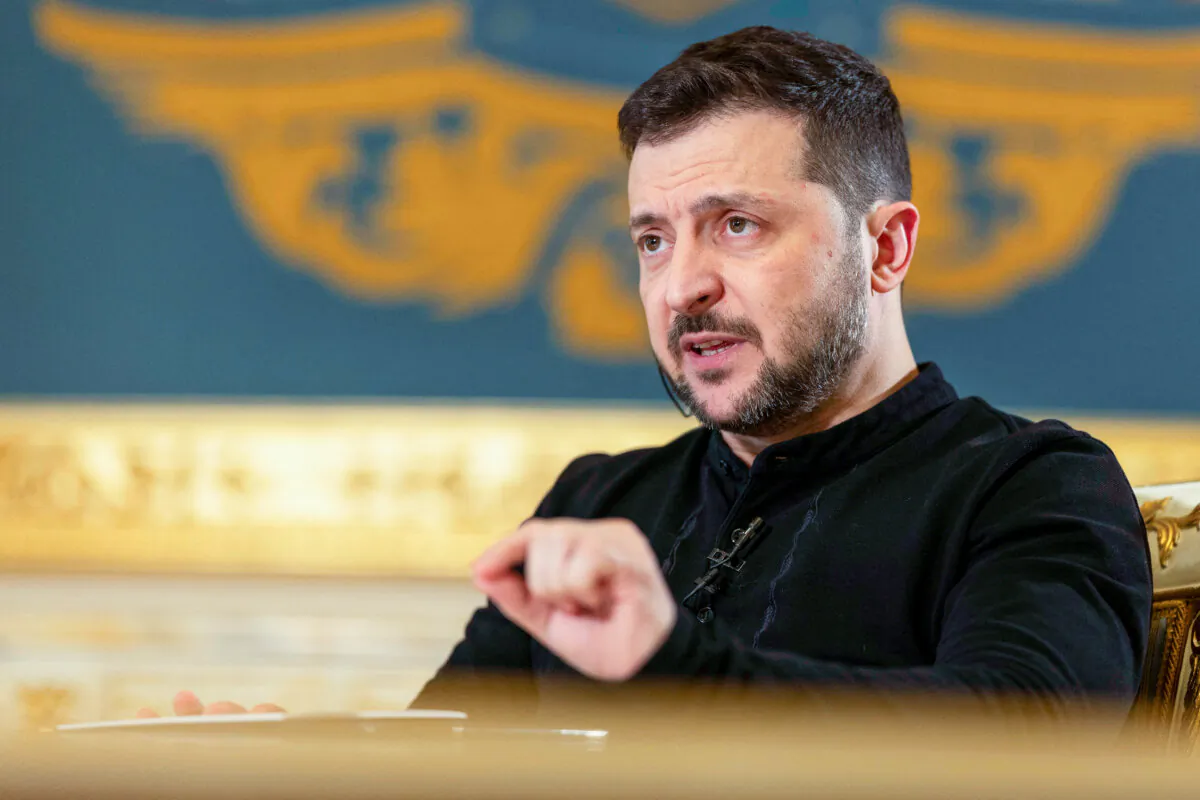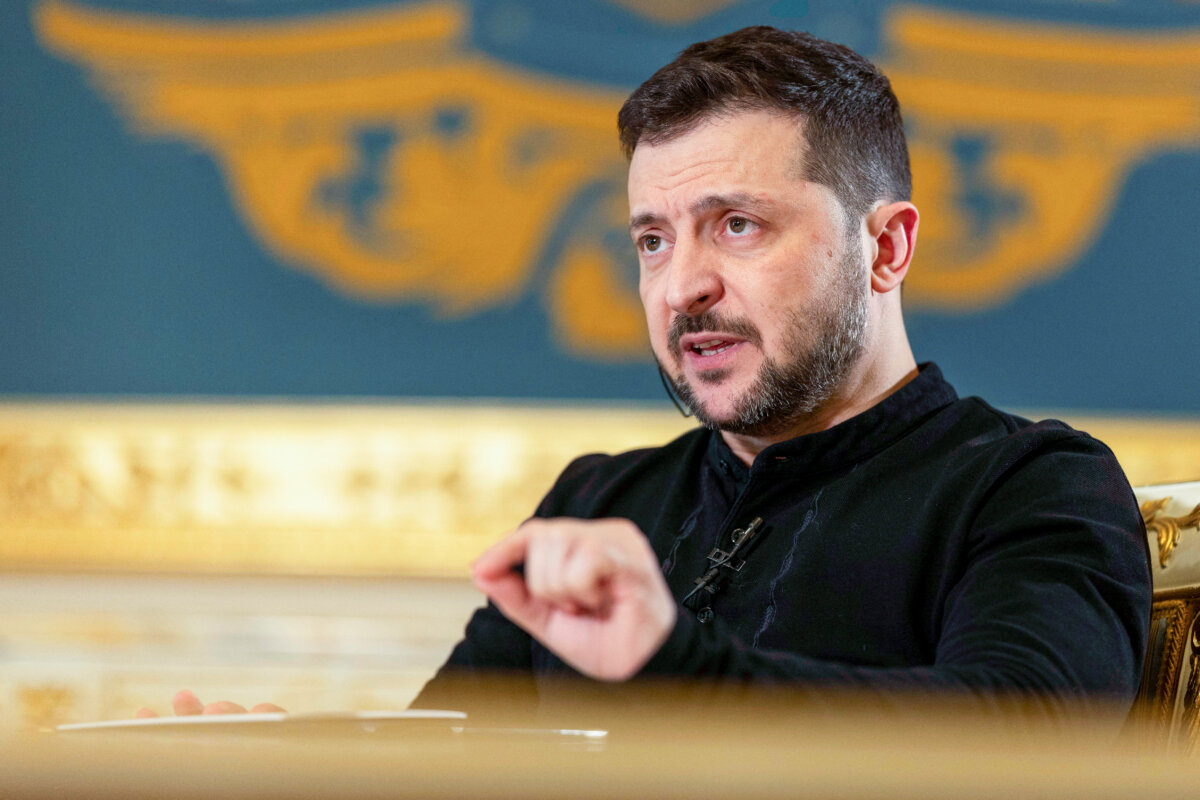

Ukrainian President Volodymyr Zelenskyy said on Tuesday that Russia has gathered 50,000 troops near Ukraine’s northern border.
Zelenskyy said Moscow’s forces had massed near the Sumy region, but added precautions have been taken to prevent a large offensive there.
Sumy borders Kursk, Russia, where Ukraine previously held some land for months, before being almost fully expelled in April.
“Their largest, strongest forces are currently on the Kursk front,” Zelenskyy said on Tuesday. “To push our troops out of the Kursk region and to prepare offensive actions against the Sumy region.”
On Wednesday, Moscow’s Defense Ministry said its troops had taken control of the settlement of Kostyantynivka in Ukraine’s Sumy region and Zelene Pole in the Donetsk region.
This claim could not be independently verified.
Meanwhile, Kremlin spokesman Dmitry Peskov has said that a personal meeting between Putin and Zelenskyy is possible, but it should only come after Moscow and Kyiv have hashed out various other issues.
In response to a question on the possibility of such a meeting, Peskov said, “There are no changes in the position on the principal possibility of such a meeting.”
“However, such a meeting should be the result of specific agreements between the two delegations,” he added.
Russian Foreign Minister Sergei Lavrov said on Wednesday that Moscow will announce the next round of direct talks between Russia and Ukraine in the near future.
The neutral status of Ukraine remains one of Russia’s key demands in the peace negotiations, Lavrov added at a conference in Moscow.
He went on to say that Russia was also keeping a keen eye on NATO forces building up near the border.
“We are watching a build-up of NATO troops along the entire line of contact with Russia with anxiety,” Russian news agency Tass reported him saying.
One of the attendees at that conference is North Korea’s state security minister Ri Chang-dae, South Korean news agency Yonhap reported.
During Ri’s trip, he is expected to meet on the sidelines of the event with Russian Defense Minister Sergei Shoigu, as Pyongyang and Moscow continue to deepen their ties.
Lavrov’s comments build on remarks made on Tuesday by Russian Foreign Ministry spokeswoman Maria Zakharova, who said Moscow was continuing work on a draft memorandum setting out the principles for a potential peace accord.
“Russia continues developing a draft memorandum regarding the future peace treaty, defining a number of aspects, such as the principles of the settlement, the timeline of the potential peace agreement, and the possible ceasefire for a limited time period if relevant agreements are reached,” she told a press conference in Moscow, according to TASS.
The last round of talks was held on May 16 in Istanbul, the first direct talks in three years.
They agreed on a sizable prisoner swap and called for further talks aimed at reaching a cease-fire.
However, there has been little progress since then, with each side blaming the other for prolonging hostilities.
According to Moscow, Kyiv has stepped up attacks on Russian territory—using Western-supplied missiles and drones—over the past week.
Since May 20, Russian air defenses have intercepted more than 2,300 Ukrainian drones, including 1,465 outside the conflict zone, the defense ministry said.
From the Ukrainian side, Zelenskyy has blamed Russia for prolonging the conflict, accusing Russia of preparing a fresh wave of offensive operations.
“There is currently no indication that they are seriously considering peace or diplomacy. On the contrary, there is ample evidence that they are preparing new offensive operations,” Zelenskyy said in a May 26 statement released by his office. “This is a blatant disregard for all those around the world who seek peace and are trying to make diplomacy work.”
On the battlefield, violence continues, with Russian air defenses downing 296 Ukrainian drones in the late hours of Tuesday and early Wednesday morning, according to Moscow’s Defense Ministry.
Ukraine’s air force, meanwhile, said Russia launched an attack using five Iskander ballistic missiles, one guided air-launched missile, and 88 drones, with air defense units shooting down 34 drones, and another 37 being electronically jammed.
 Friends Read Free
Copy
Facebook
Tweet
Friends Read Free
Copy
Facebook
Tweet