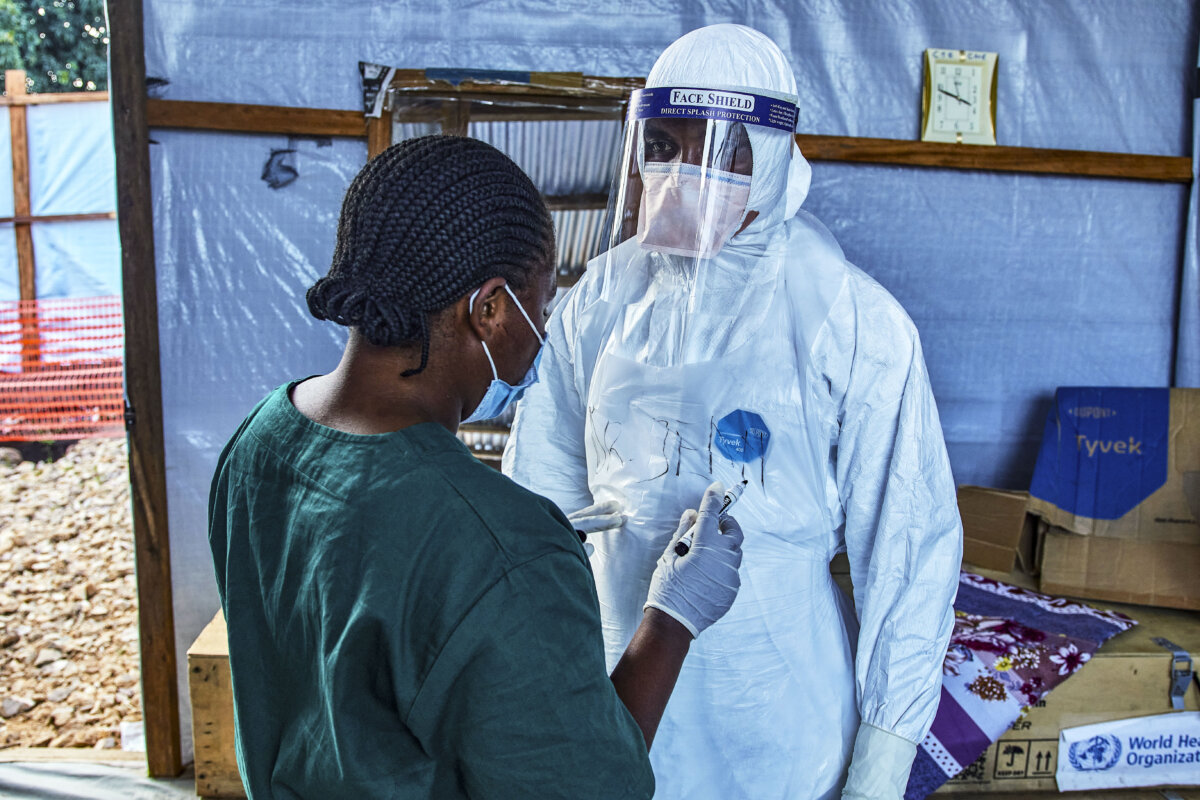

U.N. officials said efforts to contain the Ebola outbreak in Congo were beginning to produce results in some of the hardest-hit areas, but warned the epidemic remained widespread and deadly.
Speaking at a Geneva press briefing on Sept. 15, U.N. special Ebola coordinator Julien Harneis said authorities were seeing “some progress” in containing the epidemic in the northeastern province of Ituri.
Parts of Ituri, particularly around Bunia and Wani, where the outbreak first took hold, are showing “early signs of reduced transmission,” WHO’s head of the Epidemiology and Analytics for Response Olivier le Polain told the briefing.
Harneis, however, cautioned that the outbreak “remains a deadly and massive epidemic,” while le Polain said that several key indicators have not improved enough to show the outbreak is coming under control.
These include the share of patients treated outside designated Ebola treatment centers, the proportion of laboratory tests that return positive, and the percentage of new infections among people who were not previously identified as contacts.
“None of those indicators right now are showing the level of improvement we’d like to see,” le Polain said.
Outbreak Snapshot
Harneis said that cases currently stretch from Ituri to Sud-Ubangi in the northwest, spanning an area roughly equivalent to the distance between Geneva and Dublin and crossing two time zones.
Congolese authorities said on Tuesday that based on data through Sept. 13, the outbreak has reached 7,258 confirmed cases, including 3,510 deaths and 1,726 recoveries.
DRC’s Ministry of Communication added that Ituri remained the epicenter, accounting for 78 percent of confirmed infections.
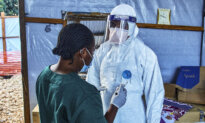
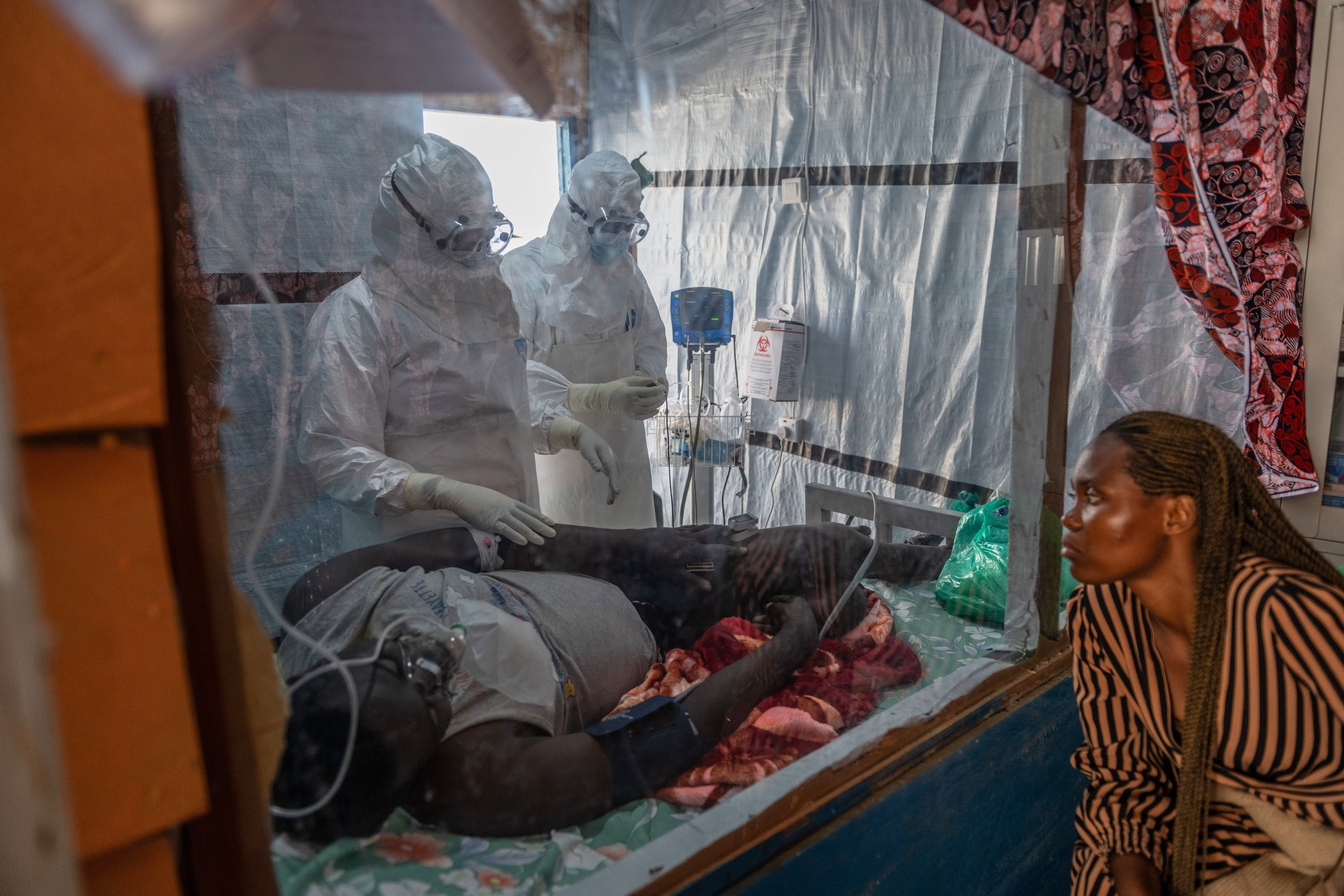 Health workers care for an Ebola patient in Ituri, Congo, on June 18, 2026. (Moses Sawasawa/AP)
The current outbreak, which was detected in mid-May in the Congo, is caused by the rare Bundibugyo ebolavirus.
There is no approved treatment or vaccine, but the World Health Organization (WHO) said in August that clinical trials are underway to develop a vaccine.
Global Response
Harneis said one of the response’s greatest strengths had been close coordination between the Congolese government, the WHO, U.N. agencies, nongovernmental organizations, the Africa Centres for Disease Control and Prevention, and international partners.
He said treatment capacity had expanded significantly, with Ebola treatment beds increasing by 440 over the past month to about 900, thanks to coordinated efforts.
International cooperation has also supported clinical research and clinical trials.
“We’re having cooperation on post-exposure prophylaxis on therapies, and very soon on new vaccines, which will be under trial,” Harneis said.
While praising contributions from the United States, the UK, Germany, and other donor countries, he said more funding would be needed not only for Ebola operations but also for the wider humanitarian response.
“With Ebola, you can’t take your foot off the gas,” Harneis said. “Take your foot off the gas, and the epidemic will come straight back at us. So to slow and stop this, resources now.”
The U.S. Centers for Disease Control and Prevention said on Sept. 14 that it is responding to the outbreak, adding that no Ebola cases linked to the outbreak have been reported in the United States.
Elsewhere in the region, neighboring Uganda has successfully contained its Ebola outbreak.
In August, WHO officials declared the Bundibugyo outbreak over in Uganda after 42 days without a new case following the discharge of the last patient from an Ebola treatment center.
Uganda had announced on July 28 that it was Ebola-free. The outbreak resulted in 20 cases and two deaths.
 Friends Read Free
Copy
Facebook
Tweet
Friends Read Free
Copy
Facebook
Tweet