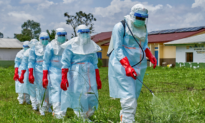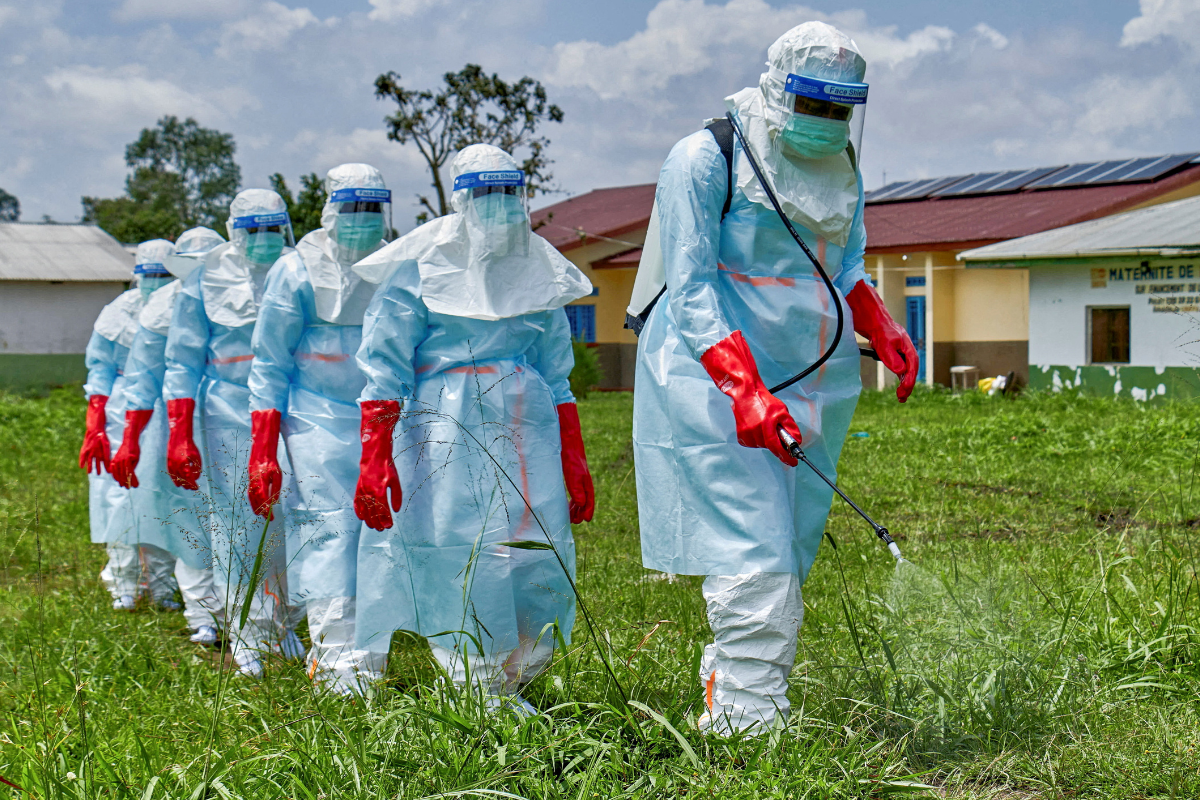

Congolese health authorities have confirmed that the number of deaths from Ebola has exceeded 3,000, with the number of confirmed cases being in excess of 6,000.
Congo’s National Institute of Public Health (Institut National de Santé Publique, or INSP) said in a Sept. 2 statement that there are 6,250 confirmed cases and that there have been 3,039 deaths as a result of Ebola, representing a case fatality rate of 48.6 percent.
“Ituri province remains the epicenter, accounting for 81.7 percent of confirmed cases nationwide and 60.9 percent of new confirmed cases reported in the last 24 hours,” the INSP said.
The current outbreak is caused by the rare Bundibugyo ebolavirus. There is no approved treatment or vaccine, but the World Health Organization (WHO) said last month that clinical trials are underway to develop a vaccine.
The outbreak was detected in mid-May in Congo, which has dealt with more than a dozen Ebola outbreaks in the past.
Since the start of the epidemic, 60 out of 151 Congolese health zones (39.7 percent) remain affected, the INSP said.
It has since spread to six provinces—Nord-Kivu, Sud-Kivu, Haut-Uélé, Bas-Uélé, Ituri, and Tshopo—despite efforts by Congolese authorities and the WHO to contain it.
The outbreak has become the deadliest in Congo’s history after surpassing the 2018–2020 epidemic, in which 2,299 people died.
Across the whole of Africa, this epidemic is now second only to the 2014–2016 West African outbreak, which infected at least 28,600 people and killed more than 11,000 across Guinea, Liberia, and Sierra Leone.
Health experts say that efforts to identify cases early have been impeded by weak surveillance systems and community resistance, among other issues.
The WHO estimates that around 60 percent of the fatalities happen outside of treatment facilities, highlighting the difficulty of detection or containment.
Last week, the WHO director of emergency preparedness for the Africa region, Dr. Marie Roseline Belizaire, said that while efforts have slowed the acceleration of transmission, “we have not yet bent this curve.”
Vaccination Program for Frontline Workers
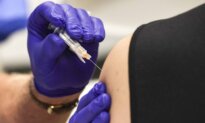
Last week, Congolese authorities launched a targeted Ebola vaccination program for healthcare staff and frontline workers.
These workers are receiving the Ervebo vaccine, which was effective in past Ebola outbreaks caused by a different, more common type of the virus.
“We have decided to use the Ervebo vaccine to protect first those who are on the front line,” Health Minister Roger Kamba said at the launch of the vaccination campaign in Kisangani, Tshopo.
Health authorities said Ervebo could offer some protection against the Bundibugyo strain because the two viruses are related. However, it’s still being studied whether the Ervebo vaccine can prevent illness in people infected with Bundibugyo Ebola.
Outbreak Over in Uganda
The WHO recently declared the Bundibugyo outbreak in neighboring Uganda officially over.
Belizaire said that Aug. 26 was the 42nd day since the last Ebola patient was discharged from a treatment center.
“That means two full incubation cycles, making sure that no more residual risk of Ebola is in the country, and [marking] the end of the outbreak in Uganda,” she said.
The all-clear from the global health body follows the Ugandan government’s declaration on July 28 that the country was Ebola-free. The outbreak in Uganda resulted in 20 cases and caused two deaths.
Reuters contributed to this report.
 Friends Read Free
Copy
Facebook
Tweet
Friends Read Free
Copy
Facebook
Tweet