
The number of cases of the Ebola virus in Congo has surpassed 4,000, according to government data, with the virus still appearing in an increasing number of parts of the country.
Data released by the National Institute of Public Health (Institut National de Santé Publique, or INSP) on Aug. 5 showed 4,053 confirmed cases, including 1,850 deaths.
The INSP said, according to an Aug. 7 LinkedIn post, that 793 people have recovered and 694 patients are either in isolation or are hospitalized.
The institute says that contact tracing has increased to 77.7 percent.
The epidemic is now affecting people across 53 health zones in five provinces, the INSP said, with cases detected in two new zones: Gombari in Haut-Uélé province and Bafwasende in Tshopo province.
Other provinces affected are North Kivu, South Kivu, and Ituri. The Ituri province remains the epicenter of infection, with 86.9 percent of cases.
The current outbreak is caused by the rare Bundibugyo ebolavirus. It was first detected in mid-May, and several international and national groups have traveled to the infected areas to try to contain its spread. It has no approved treatment or vaccine.
According to the U.S. Centers for Disease Control and Prevention, people can contract Ebola if their mucous membranes in the eyes, nose, or mouth, or their broken skin, come in contact with the bodily fluids of an infected person or contaminated objects.
Ebola does not spread the same way as respiratory viruses like influenza; a person cannot become infected by being near someone with the disease.
The African Centres for Disease Control and Prevention has previously described this as the fastest-growing Ebola outbreak on the continent.
Delays in detection, a lack of treatment for this virus, and military conflict have allowed the disease to outrun containment efforts.
Director-General of the World Health Organization Tedros Adhanom Ghebreyesus said in an Aug. 7 post on X that the Ebola outbreak “is outpacing our response, making it imperative that we rapidly scale up every aspect of our efforts to contain it.”
Tedros said that current efforts must be bolstered with greater resources and stronger international support.
Last month, government data from Congo showed that the Ebola outbreak was now the world’s second-largest on record, with only West Africa’s 2014 to 2016 outbreak being bigger. That epidemic saw 28,616 cases and 11,310 deaths recorded across Guinea, Liberia, and Sierra Leone.
“It’s the fastest-spreading Ebola epidemic that we have ever seen,” acting head of the U.N. World Food Programme Carl Skau told Reuters in July.
Congo Tests Boat Passengers
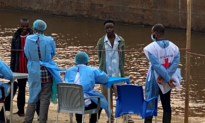
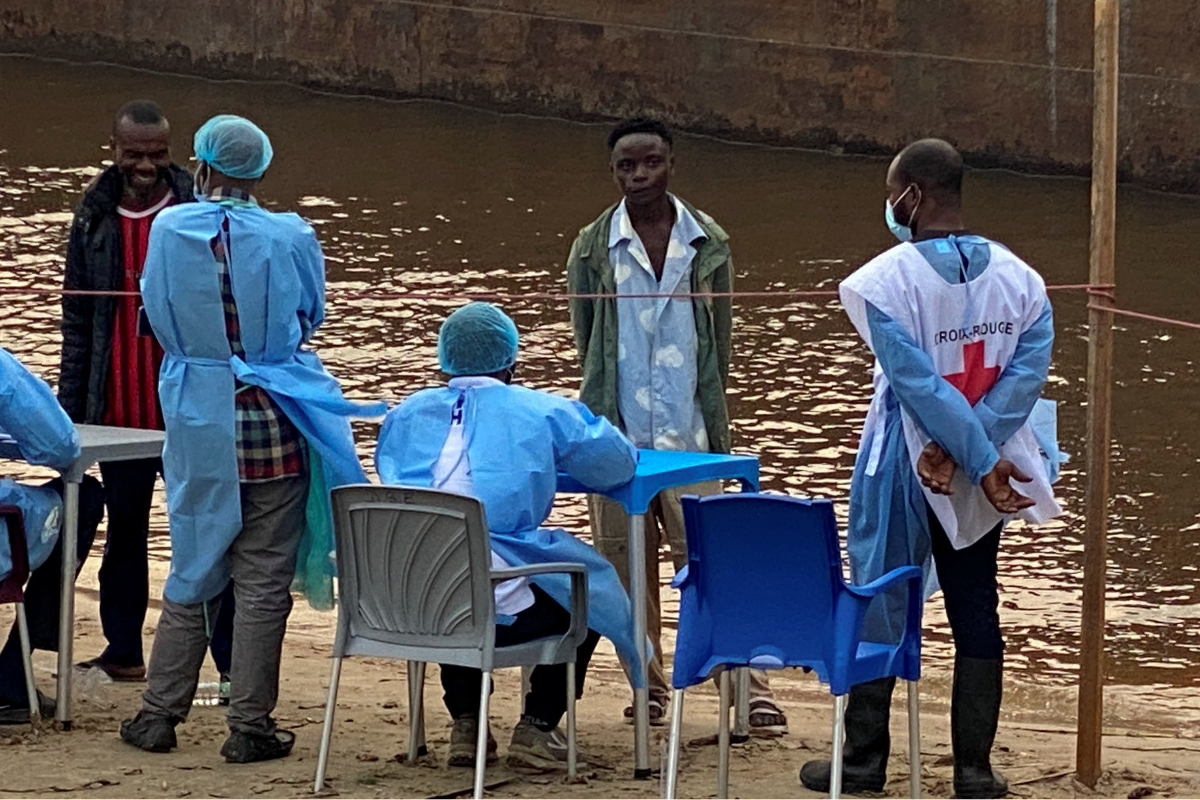
Congolese officials said on Aug. 6 that they were screening more than 300 people traveling on a riverboat, after a man who is believed to have been a passenger who disembarked further upstream had died.
The INSP said in an Aug. 6 LinkedIn post that a boat originating from Tshopo in the northeast was stopped around 40 miles from the capital Kinshasa, in the southwest of the country.
A mobile laboratory was deployed to screen all passengers.
The INSP said that the person with the suspected case of Ebola died in Pimu in the province of Mongala, more than 750 miles from Kinshasa.
“At this stage, there is no scientific evidence to conclude that a death was linked to Ebola virus disease,” the institute said. “Epidemiological investigations and laboratory analyses are continuing to establish the precise cause of death.”
Body Ilonga Bompoko, the secretary-general of Congo’s health ministry, said all passengers were undergoing temperature checks and clinical screening.
Samples had been collected from four people who displayed symptoms, including fever, Bompoko told reporters.
Health authorities in Mongala province reported the death on July 25 of a 32-year-old man suspected of having Ebola. He was believed to have been a passenger on the boat.
Reuters contributed to this report.
 Friends Read Free
Copy
Facebook
Tweet
Friends Read Free
Copy
Facebook
Tweet