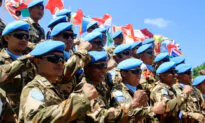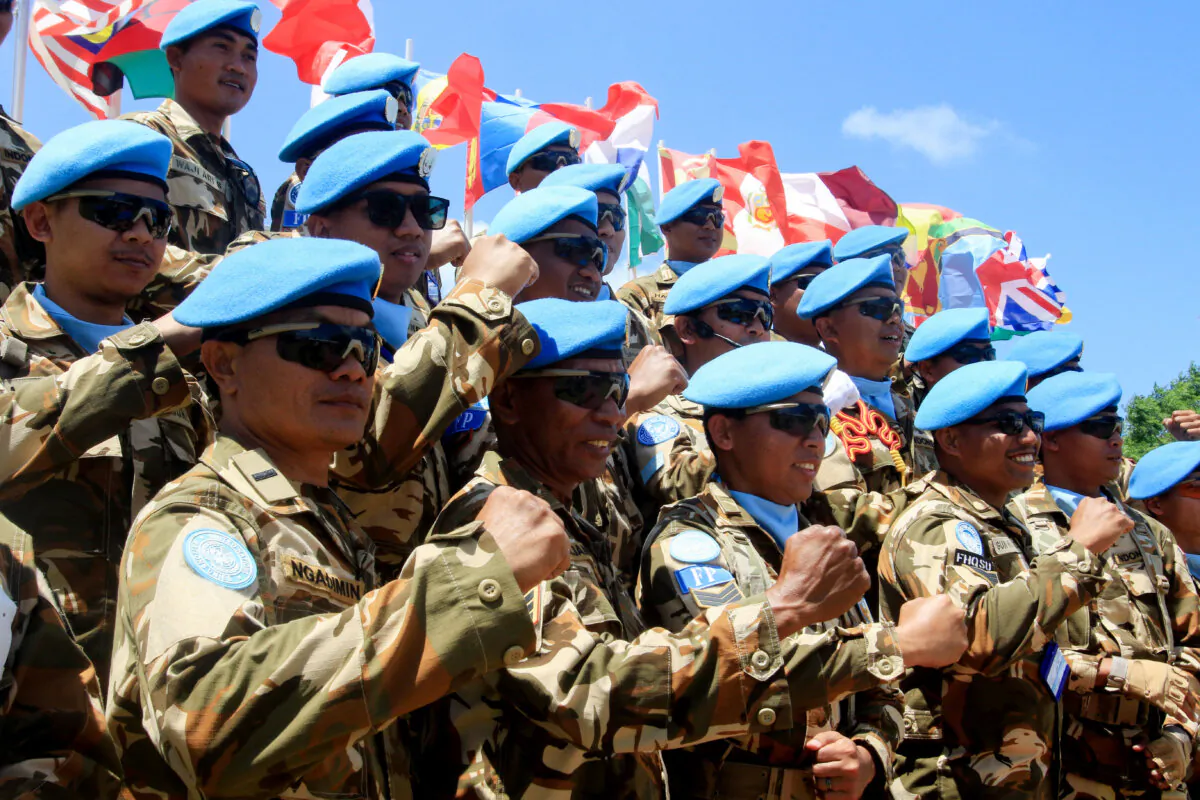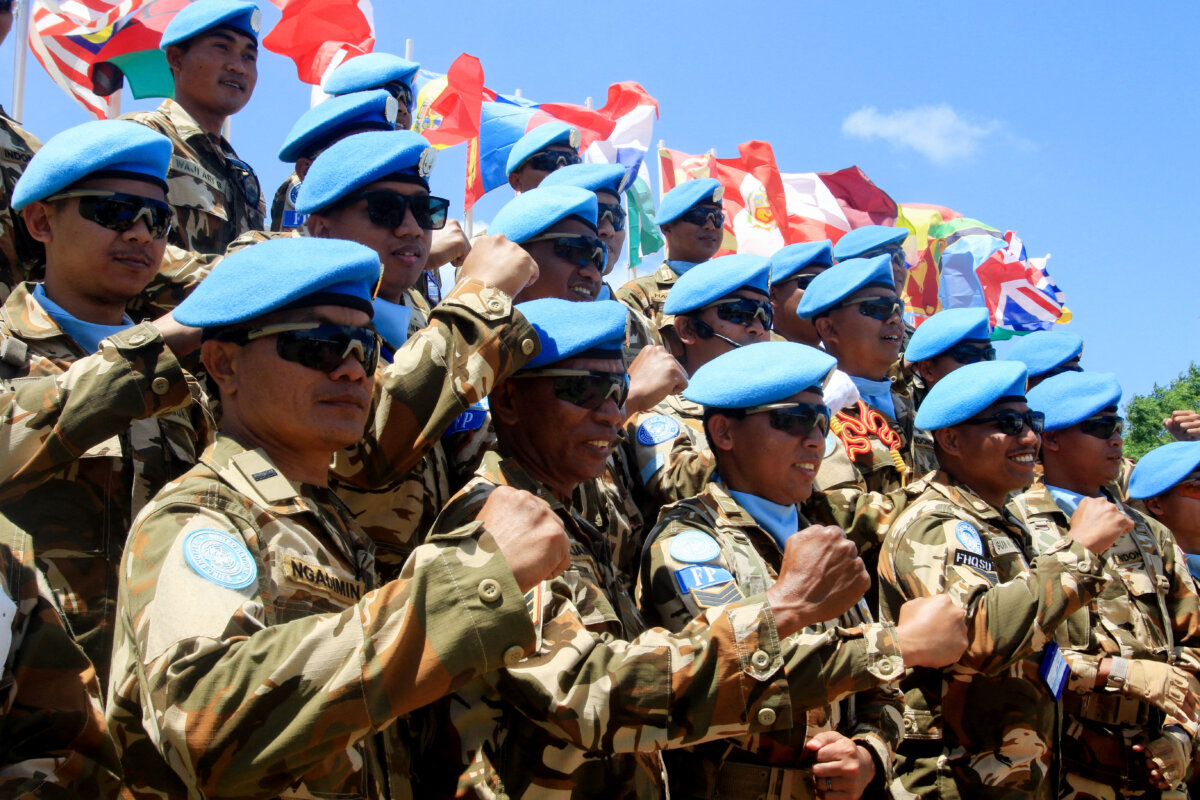

The United Nations Security Council has voted to extend its peacekeeping mission in southern Lebanon until the end of 2026, before terminating it in what the resolution described as an “orderly and safe drawdown and withdrawal” the following year.
On Thursday, the Security Council unanimously backed the decision, which had strong support from the United States. The resolution said that the pullout would take place in close consultation with the Lebanese government.
The U.N. Interim Force in Lebanon (UNIFIL), first established in 1978, has overseen security in the south for decades, including during the war between Israel and the terrorist group Hezbollah last year. Its mandate was expanded in 2006 to assist the Lebanese army in keeping the border region free of weapons or unauthorized armed groups.
Acting U.S. Ambassador Dorothy Shea said that “the security environment in Lebanon is radically different than just one year ago,” adding that this created the conditions for Beirut to take greater responsibility.
Shea praised the Lebanese Armed Forces’ (LAF’s) progress since the cease-fire went into effect and said Washington would continue working with the LAF to strengthen its capabilities.
She added that the United States recognized Israel’s “legitimate security needs and interests,” and that it remained committed to Resolution 1701, which calls for disarming Hezbollah and achieving a permanent end to fighting.
In a statement on X, Israel’s ambassador to the U.N., Danny Danon, said that “nearly a jubilee of years after the establishment of UNIFIL, and 19 years after its mandate was expanded at the end of the Second Lebanon War, the time has come to disband the force.”
Danon said the mission had failed to prevent Hezbollah’s rise and said responsibility now lay with Lebanon’s government.
Israeli officials remain cautious, citing past experiences. After the Israeli withdrawal from Lebanon in 2006, Hezbollah entrenched itself along the border, building a vast tunnel network. That infrastructure was seen as designed for a cross-border assault resembling Hamas’s Oct. 7, 2023, attack, which killed about 1,200 people, injured thousands more, and led to more than 250 abductions.
The United States is now pushing forward with a plan for Hezbollah’s disarmament, while Israel is weighing whether to withdraw from five military outposts in southern Lebanon, a move seen by analysts as unlikely in the short term given ongoing security concerns.
Israeli military strategist Elliot Chodoff, a retired Israel Defense Forces (IDF) major, previously told The Epoch Times that UNIFIL’s limitations make such plans difficult to enforce.
“They’re a peacekeeping force, not an enforcement force. They’re not going to take aggressive action to enforce an agreement,” he said.
The Lebanese army said on Thursday that two of its personnel were killed and two others wounded when an Israeli drone crashed and exploded in the Ras al-Naqoura area of southern Lebanon. The Israeli military expressed its regret for the “injury” of Lebanese soldiers.
The IDF Arabic spokesperson, Avichay Adraee, said on Friday that the raid came in response to Hezbollah’s attempts to rebuild terrorist infrastructure in violation of the understandings between Israel and Lebanon. He added that the IDF “did not target the soldiers of the Lebanese Army.”
Withdrawal Phase
During the withdrawal period after 2026, UNIFIL will continue to provide security and assistance to U.N. personnel. The force will also “maintain situational awareness” around its bases and outposts, contribute to the protection of civilians, and support the safe delivery of humanitarian aid.
The resolution further requests that the U.N. Secretary-General present options by June 1, 2026, for the future implementation of Resolution 1701, with the aim of establishing a permanent end to hostilities between Israel and terrorist groups in Lebanon.
Shea said this was the last time the United States would support the extension of the peacekeeping mission.
Lebanese Prime Minister Nawaf Salam welcomed the Council’s decision to keep UNIFIL until 2026, thanking “all friendly countries in this Council that expressed their understanding of Lebanon’s concerns.”
France, which acted as penholder in the negotiations, said that UNIFIL remained vital. Its representative warned that “any premature withdrawal could undermine or even weaken the efforts of the Lebanese Government” in the south.
Dan M. Berger contributed to this report.
 Friends Read Free
Copy
Facebook
Tweet
Friends Read Free
Copy
Facebook
Tweet