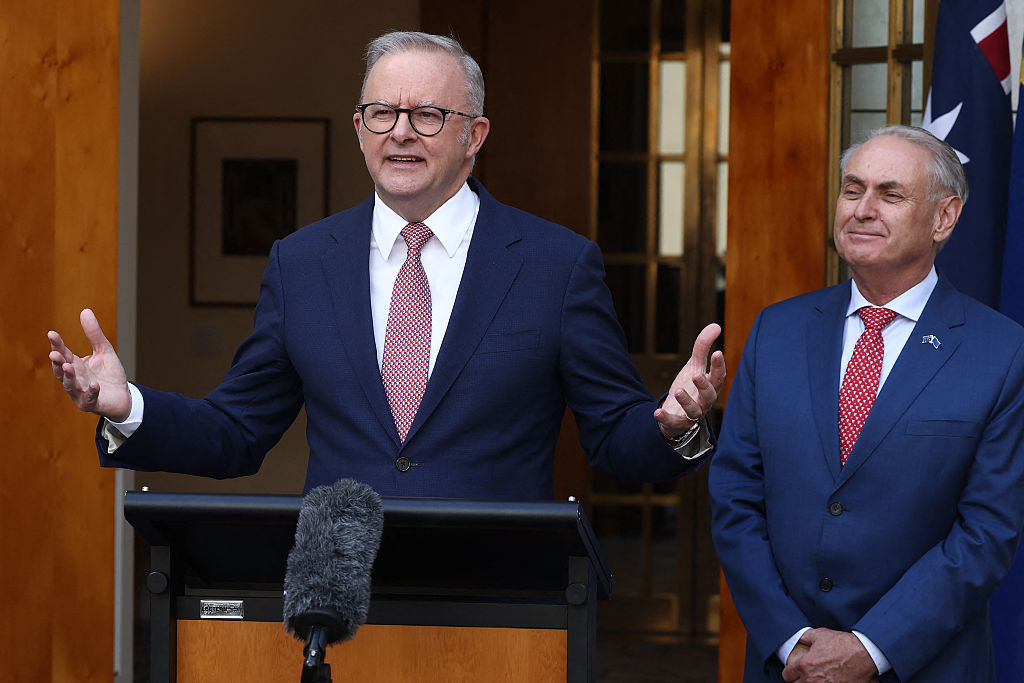

Prime Minister Anthony Albanese has confirmed that Australia is shifting away from traditional import routes, with the United States, Argentina, and Algeria emerging as more important sources of supply as the country seeks to boost energy security.
Following a National Cabinet meeting on April 23, the prime minister said the government was working to diversify fuel sources to secure the supplies Australia needed.
“The United States that traditionally has not been a big supplier, has supplied about 18 percent at the moment,” he said.
“Argentina, that was very small indeed, is now into double figures. And we’ve also been able to secure supply from Algeria.”
Albanese’s comments come as global oil giants including Exxon, BP, and Vitol reported shipping around 240,000 tonnes of fuel from the United States to Australia in March, a record in three decades.
Historically, the United States has not been a favourable source of supply for Australia due to long transport times, which can take 30–40 days. However, supply chain disruptions from the Iran conflict have prompted the country look beyond its traditional Asian suppliers.
Albanese said the country’s fuel outlook remained stable in the near term, with Australia operating at stage two of the national fuel security plan, meaning fuel supplies are under pressure but there is no immediate risk to overall supply.
However, he noted that a prolonged conflict in the Middle East will be detrimental to Australia and the global economy.
“The longer that the war goes on, the more significant the implications for Australia will be, just like it’s having an impact right around the world,” Albanese said.
The prime minister also warned that even if the Strait of Hormuz reopens immediately, supply chains will not recover quickly.
“It takes time to clear the strait to make it safe. It will take time for the ships have been stuck in the Gulf to reach their destination, to unload and then to travel back to receive more supply,” he said.
Meanwhile, Energy Minister Chris Bowen announced that Australia now holds 46 days of petrol—around 10 days more than when the crisis began.
“That is a good thing because it means that those Australians who are looking at the forward supply and making decisions can know that, as well as these things can be forecast, Australia is well placed,” he said.
Coalition Pushes for Domestic Fix
The Coalition has called for a shift toward domestic production as it criticises the government’s focus on short-term supply fixes.
Ahead of the National Cabinet meeting, Opposition Leader Angus Taylor said faster development of local oil and gas projects was urgently needed.
“Australia has everything it needs beneath our feet to power our homes, fuel our cars and create more jobs. We need to get Australia moving. Cut the delays. Back investment. Unlock more oil and gas projects. That’s why a Coalition government will dig, drill, and deliver,” he said on X.
However, Albanese ruled out immediate government support for expanding domestic refining capacity.
“What we are doing is continuing to concentrate on supply,” he said.
“We’re looking, of course, across the board. Anything that we can do, any constructive proposals, we’re open for dialogue—but what we are concentrating on at the moment isn’t something that is time-lengthy for obvious reasons.”
Albanese also took aim at the former Coalition government, saying it was a “pity” that four of Australia’s six refineries closed during its time in office.
 Friends Read Free
Copy
Facebook
Tweet
Friends Read Free
Copy
Facebook
Tweet