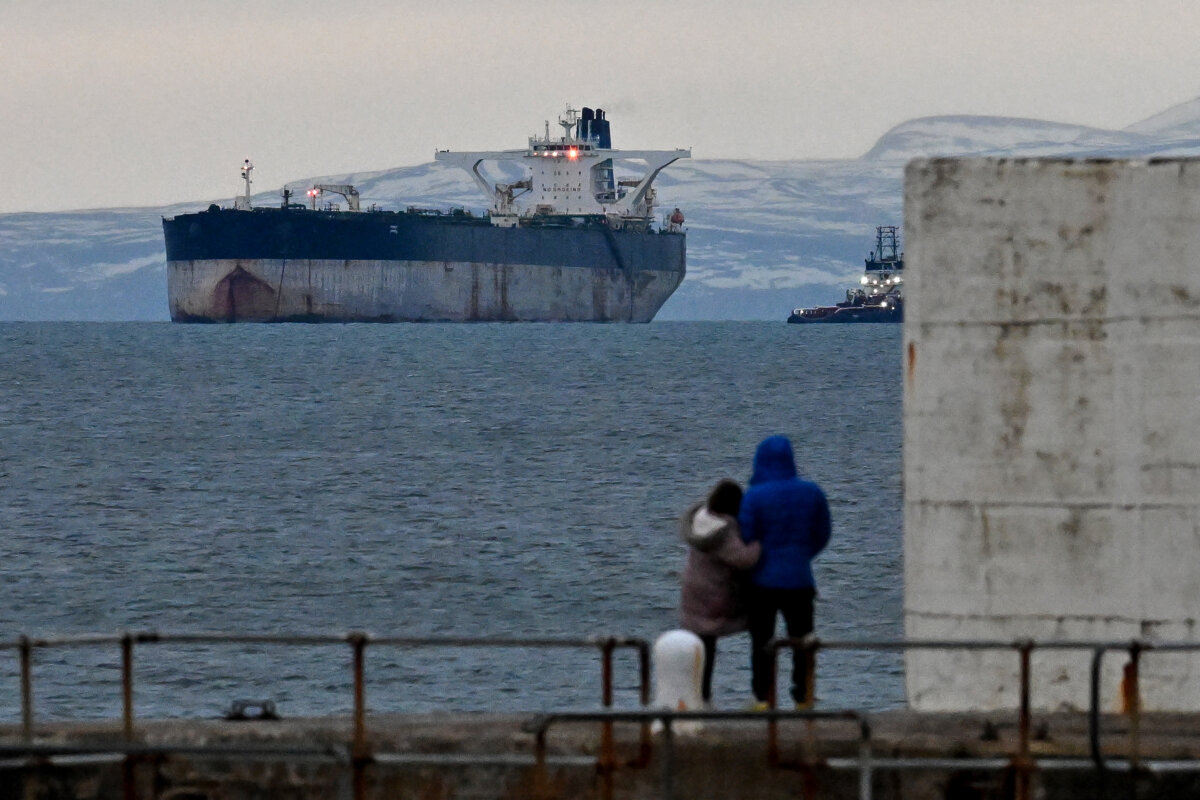

Treasury Secretary Scott Bessent announced on May 18 another 30-day sanctions waiver allowing the purchase of Russian seaborne oil to aid “energy-vulnerable” countries hit by the Iran war.
“This extension will provide additional flexibility, and we will work with these nations to provide specific licenses as needed,” Bessent wrote in a May 18 post on X.
“This general license will help stabilize the physical crude market and ensure oil reaches the most energy-vulnerable countries. It will also help reroute existing supply to countries most in need by reducing China’s ability to stockpile discounted oil.”
The move marked a reversal of Bessent’s previously stated position on another extension, after saying last month that no further extension of the Russian oil waiver was planned.
The treasury secretary said on April 24 that he “wouldn’t imagine that we’d have another extension,” saying he thought “the Russian oil on the water has been largely sucked up.”
This is the second time the Treasury has allowed the sanctions waiver to lapse and subsequently extended it, since the war with Iran began in February.
The previously issued waiver, which expired on May 16, allowed countries to purchase Russian oil and petroleum products loaded onto vessels between April 15 and May 16. It replaced an earlier 30-day exemption that expired on April 11.
Following Bessent’s announcement, a pair of Democratic senators, Jeanne Shaheen (D-N.H.), and Elizabeth Warren (D-Mass), criticized the move as an “indefensible gift” to Russian President Vladimir Putin.
“Every additional dollar the Kremlin earns from this license helps Putin finance his illegal war against Ukraine and kill innocent Ukrainians,” the senators said in a joint statement on May 18.
“With gas prices continuing to rise and inflation spiking, the Administration has not shown that this relief is lowering costs for American families or stabilizing global energy markets.”
The national average gas price in the United States increased from $3.18 per gallon on May 17, 2025, to $4.51 per gallon a year later, according to the American Automobile Association. On Feb. 19, the national average gas price was $2.92 per gallon.
Shaheen and Warren said that the Trump administration’s “stated concern for energy-vulnerable countries would be more credible had it not launched this war, or if it had used policy tools to limit the prices Russia could push on those countries.”
The waiver was introduced amid pressure on global energy markets from the Middle East conflict and disruptions at the Strait of Hormuz, one of the world’s most important oil shipping routes. An estimated 20 million barrels of crude and petroleum products traveled through that waterway each day before the U.S.–Israeli war on Iran.
India became one of the world’s biggest buyers of Russian oil after the United States and its allies imposed sanctions on Russia following its 2022 invasion of Ukraine.
India’s annual crude imports were about $2 billion prior to the war and had increased to nearly $53 billion by 2024.
The move also highlighted the challenge facing Washington as it has tried to sustain pressure on Russia while maintaining close ties with India, a major U.S. ally.
The Trump administration has pressured countries to stop buying oil from Russia, which helps fund its war.
Trump said at a press briefing in October 2025 that China should also stop buying Russian oil. The president visited China in mid-May and urged the Chinese regime to support U.S. efforts to keep the Strait of Hormuz open.
Tom Gantert and Emel Akan contributed to this report.
 Friends Read Free
Copy
Facebook
Tweet
Friends Read Free
Copy
Facebook
Tweet