The U.S. State Department has approved the sale of $373 million worth of glide bomb tail kits and other equipment to Ukraine that will be used on the frontline in the war with Russia.
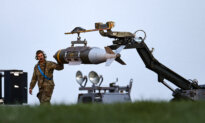
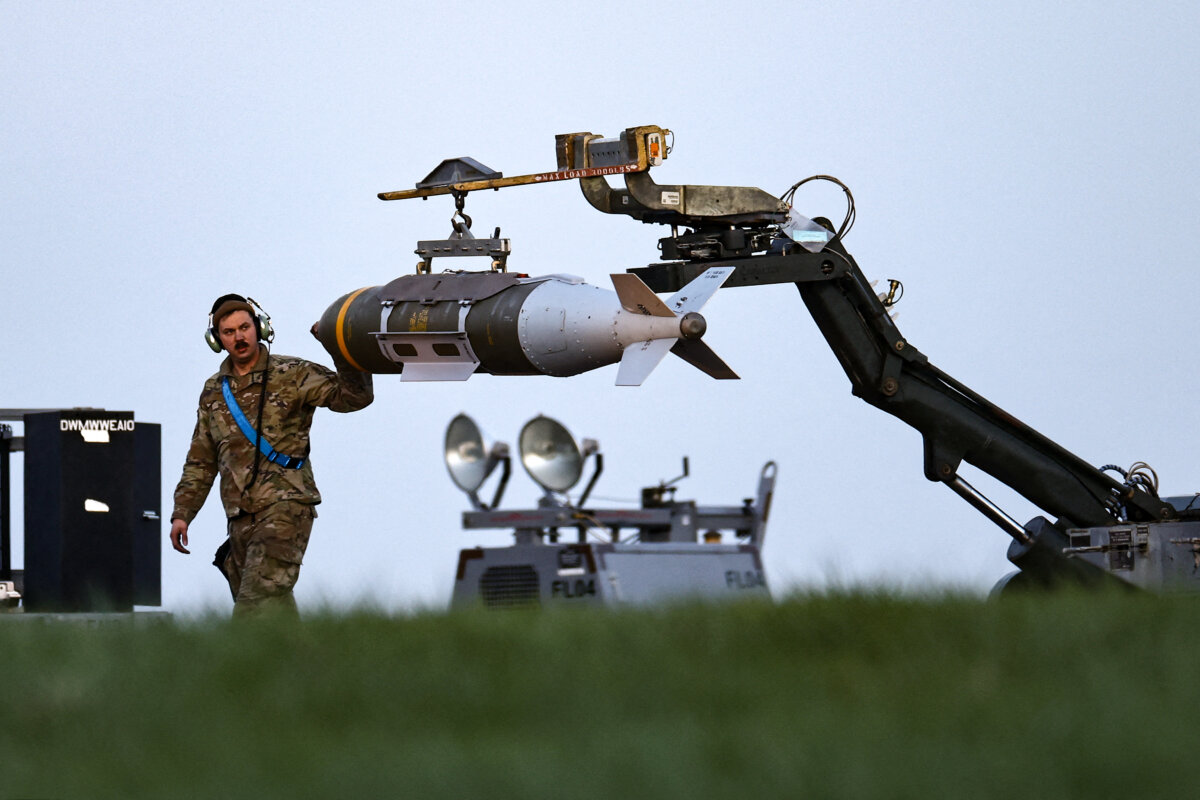
Kyiv has been given the green light to buy 1,532 Joint Direct Attack Munition-Extended Range (JDAM-ER) guidance tail kits. In a May 5 statement, the State Department said the principal contractor would be Boeing’s defense, space, and security wing, based in St. Louis.
The kits convert unguided free-fall munitions—sometimes known as dumb bombs—into smart bombs that can hit their targets even in bad weather.
The JDAMs will be used by Ukraine’s fleet of Lockheed Martin F-16 fighters, but they could also be fitted to Kyiv’s Russian-made Sukhoi Su-27 and MiG-29 jets.
Russia has used glide bombs with great success against Ukrainian frontline positions, and now Kyiv will be able to upgrade its munitions.
“The proposed sale will improve Ukraine’s capability to meet current and future threats by further equipping it to conduct self-defense and regional security missions with a more robust air defense capability,” the State Department said.
Ukrainian President Volodymyr Zelenskyy has been making efforts to improve relations with U.S. President Donald Trump since their public row in the White House in February 2025.
“This proposed sale will support the foreign policy and national security objectives of the United States by improving the security of a partner country that is a force for political stability and economic progress in Europe,” the State Department said.
When the United States and Israel launched Operation Epic Fury on Feb. 28, and Iran retaliated with drone attacks on Washington’s allies in the Gulf, Zelenskyy was quick to offer military help to countries like Saudi Arabia, Kuwait, and the United Arab Emirates.
Russia, on the other hand, has been cozying up to Tehran.
Iranian Foreign Minister Seyed Abbas Araghchi traveled to Russia on April 27 for talks with Russian President Vladimir Putin.
“As you can see, we have always had close consultations with Russia and have had continuous and bilateral consultations on a wide range of issues, especially regional issues,” Araghchi said in a Telegram post on April 27.
In February, Zelenskyy said the United States had given both Ukraine and Russia a June deadline to reach an agreement to end the war, which began four years ago.
“The Americans are proposing the parties end the war by the beginning of this summer,” Zelenskyy said on Feb. 7.
But peace talks between Russia and Ukraine have stalled in recent weeks.
In March, Zelenskyy suggested that in exchange for Ukraine’s support for the Gulf countries that were being attacked by Iran, Kyiv could be given more U.S.-made Patriot missile interceptors to defend against Russian attacks.
“Regarding weapons: we ourselves are at war. And I said, completely frankly, that we have a shortage of what they have,” Zelenskyy said on X on March 5, citing comments he gave in an interview with Italian network Rai Italia.
However, the United States also faces a diminished supply of Patriots after they were heavily utilized during Operation Epic Fury.
“The proposed sale of this equipment and support will not alter the basic military balance in the region,” the State Department said in its statement on the JDAM-ER sale.
“There will be no adverse impact on U.S. defense readiness as a result of this proposed sale.”
Russia announced a 48-hour ceasefire for May 8 and May 9 to coincide with Victory Day, the annual commemoration of the Soviet Union’s victory over Nazi Germany in World War II in 1945.
Ukraine then proposed its own open-ended ceasefire starting at midnight on May 5 and urged Russia to reciprocate.
But Kyiv said Russia had launched attacks overnight that killed one person and wounded three in frontline areas in the north and east of Ukraine.
In a post on X on May 6, Ukrainian Foreign Minister Andrii Sybiha said Russia violated this ceasefire by firing 108 drones and three missiles.
“This shows that Russia rejects peace and its fake calls for a ceasefire on May 9th have nothing to do with diplomacy,” he said.
Russian President Vladimir Putin “only cares about military parades, not human lives,” Sybiha said, a reference to the Victory Day parade in Moscow.
 Friends Read Free
Copy
Facebook
Tweet
Friends Read Free
Copy
Facebook
Tweet