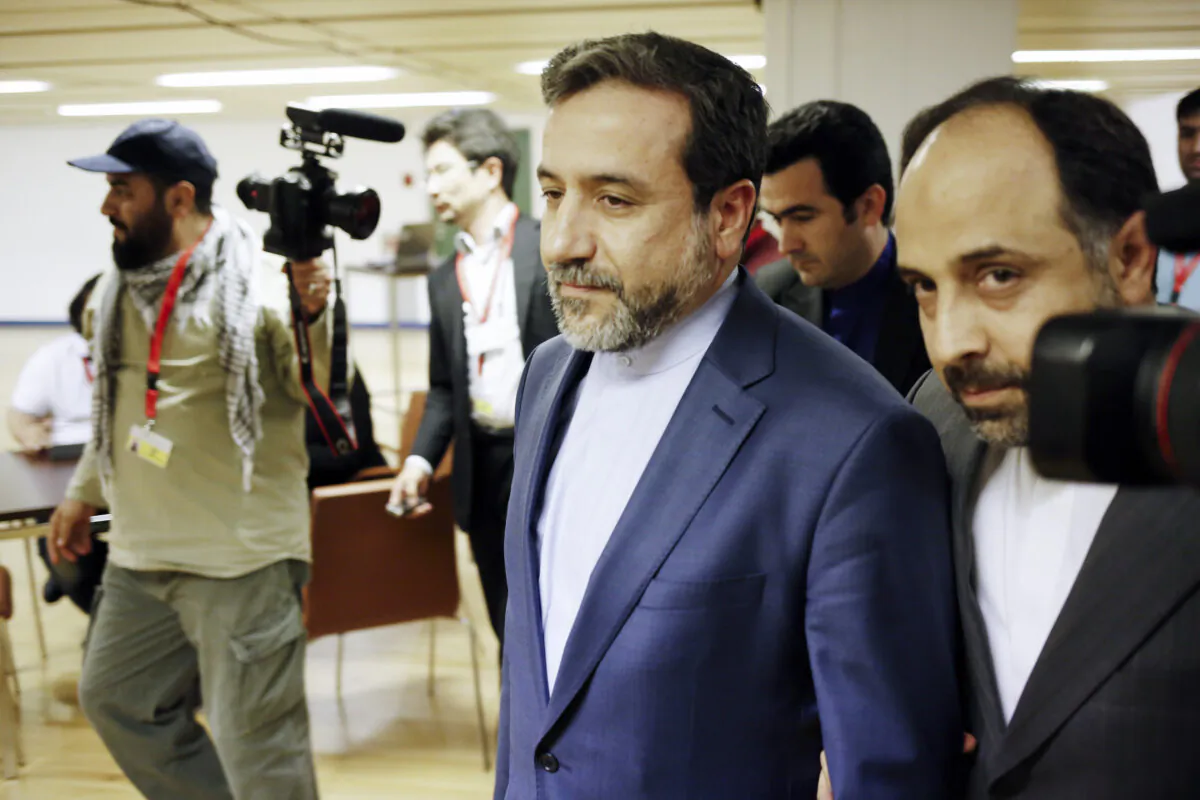
The Iranian foreign minister traveled to Russia on April 27 for talks with Russian President Vladimir Putin, as Tehran looks to shore up support amid stalled negotiations with the United States.
On April 25, U.S. President Donald Trump scrapped his envoys’ visit to Islamabad.
Iranian Foreign Minister Abbas Araghchi shuttled between the mediators, Pakistan and Oman, on April 26 before flying to Russia on April 27, after leaving Islamabad on April 25 without meeting U.S. negotiators.
Russia released a video on April 27 showing Araghchi’s arrival in St. Petersburg.
“As you can see, we have always had close consultations with Russia and have had continuous and bilateral consultations on a wide range of issues, especially regional issues,” Araghchi said in a Telegram post on April 27.
He said that his trip to Russia was arranged during his recent trips to Pakistan and Oman.
“This opportunity was provided to consult with our Russian friends about the developments related to the war during this period and the current situation, and to review the latest situation,” Araghchi said.
Araghchi said that there have been “developments in the negotiations, and the wrong approaches and excessive demands of the United States have prevented the previous round of negotiations from achieving their goals despite the progress.”
Iran’s envoy to Russia, Kazem Jalali, said in an April 27 post on X that Araghchi would meet Putin to continue “the diplomatic jihad to defend the country’s interests amid external threats.”
“The most important task of this trip is to coordinate cooperation and advance joint programs at the regional and international levels,” Jalali said. “Iran and Russia stand on the same side of the front against the campaign of totalitarian forces worldwide and in defense of independent and justice-seeking countries, as well as countries that wish to build a world free from unilateral actions and Western domination.”
Trump told “The Sunday Briefing” on Fox News on April 26, “We’re going to do it by telephone, so if they want, they can call us.”
“They know what has to be in the agreement,” he said, referring to Iran. “It’s very simple: They cannot have a nuclear weapon; otherwise, there’s no reason to meet.”
He also said that he had “great respect for Pakistan” and that “they’ll stay involved” in negotiations.
The White House had initially said that U.S. special envoy to the Middle East Steve Witkoff and Jared Kushner, Trump’s son-in-law, would travel to Islamabad for potential negotiations under a fragile ceasefire, citing signs of progress and a possible Iranian proposal addressing U.S. demands.
“I just canceled the trip of my representatives,” Trump wrote in an April 26 post on Truth Social.
“Too much time wasted on traveling, too much work! Besides which, there is tremendous infighting and confusion within their ‘leadership.’ Nobody knows who is in charge, including them.
“We have all the cards; they have none! If they want to talk, all they have to do is call.”
Talks in Islamabad on April 11 and April 12 failed to yield results.
The United States has imposed a naval blockade on ships visiting and leaving Iranian ports. Thirty-four vessels have been turned back since the United States imposed its blockade on April 13.
U.S. Secretary of War Pete Hegseth said on April 24 that the blockade is aimed at cutting off Tehran’s oil revenues and supply networks.
“The United States has imposed an ironclad blockade that grows more powerful by the day, from the Gulf of Oman to the open oceans,” Hegseth said.
“Our Navy is enforcing this blockade without hesitation or apology … every ship that the U.S. believes meets our criteria—either Iranian ships or [ships going] to and from Iranian ports—has been turned around.”
Reuters, Tom Ozimek, and Jackson Richman contributed to this report.
 Friends Read Free
Copy
Facebook
Tweet
Friends Read Free
Copy
Facebook
Tweet