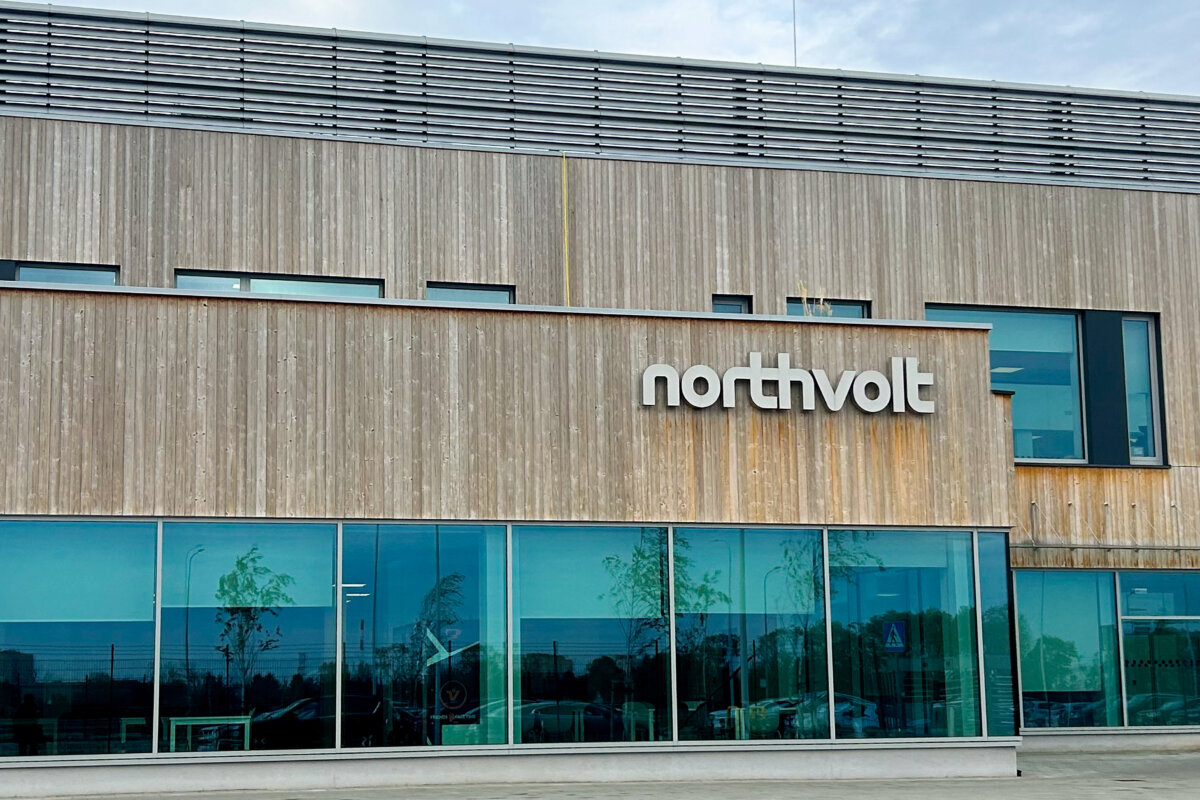
Silicon Valley startup Lyten will acquire Northvolt Dwa in Poland to expand its lithium-sulfur technology into Europe, as the continent seeks alternatives to Chinese-controlled supply chains.
Scandinavian electric vehicle (EV) battery cell manufacturer Northvolt AB, Northvolt Dwa’s parent company, filed for bankruptcy in March in one of the biggest bankruptcies in Swedish corporate history.
On June 1, Lyten said the Northvolt acquisition accelerates the expansion of its lithium-sulfur batteries into Europe and provides it with production capacity.
According to Northvolt AB’s 2023 annual report, the facility enables the production of energy storage systems at a scale previously unheard of in Europe. Europe is mainly dependent on China for its batteries, from materials to production.
Over the past three decades, Beijing has maintained a grip on the production and manufacturing of every component of battery cells, the current lithium-ion batteries that are integral to modern society.
U.S.-based Lyten, which develops lithium-sulfur technology, has a battery that it says eliminates the need for foreign-sourced critical minerals such as nickel and cobalt, which are dominated by Chinese supply chains.
“We plan to immediately restart operations in Poland and deliver on existing and new customer orders,” Dan Cook, Lyten CEO and cofounder, said in a statement.
The European Union had tried to break its reliance on China and pinned its hopes on battery manufacturer Northvolt to light the way.
Founded by former Tesla executives, Northvolt aimed to be a European-owned gigafactory, producing lithium-ion cells at scale, and to capture 25 percent of Europe’s battery market by 2030.
Lithium-ion batteries, used in a huge range of electronic devices, from smartphones to laptops, are also the dominant power source for EVs, because of their high energy density, lightweight design, and ability to be recharged.
However, the capital-intensive process of assembling them proved too complex in Europe.
On March 12, Northvolt AB announced that after an “exhaustive effort to explore all available means to secure a viable financial and operational future,” it had filed for bankruptcy in Sweden.
This followed a Chapter 11 bankruptcy filing by Northvolt’s U.S. subsidiary in California in August 2024, which cited mounting losses and persistent production issues.
Under the European Green Deal, starting in 2035, new cars on the market cannot emit carbon dioxide, making it illegal to sell new fossil fuel-powered vehicles in the bloc, part of a push to electrify transport and meet climate goals.
The European Battery Alliance, launched in 2017 by the European Commission, has the political objective of ensuring that European manufacturers produce 90 percent of the EU’s annual battery deployment needs in 2030.
Keith Norman, chief sustainability officer at Lyten, previously told The Epoch Times that raw materials for lithium-sulfur batteries have the potential to be sourced and produced locally in North America or Europe.
He also said at the time that Lyten acquired some of Northvolt’s assets in California after Northvolt filed for Chapter 11 bankruptcy.
He said that although start-ups such as his could not compete with China in terms of lithium batteries, they could create their own game by making entirely new kinds of technology.
“[The United States and Europe] are not going to win and create a position for ourselves as the global player of batteries by trying to recreate what China did on lithium-ion batteries,” he said.
Responsible Battery Coalition Executive Director Steve Christensen previously told The Epoch Times that while the battery business is a tough one to be in, the wider issue has more to do with what Beijing is doing “to restrict access to the materials than it has to do with any single company or groups of companies that might fail.”
He said that if he were advising the EU, he would tell the bloc to designate all materials for all batteries as critical “because of how critical batteries are.”
“We see it as a national security issue,” he said.
Christensen said Beijing has restricted the export of battery materials to the West because it doesn’t want other countries to manufacture them; it wants to sell the finished products instead.
 Friends Read Free
Copy
Facebook
Tweet
Friends Read Free
Copy
Facebook
Tweet