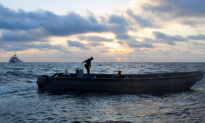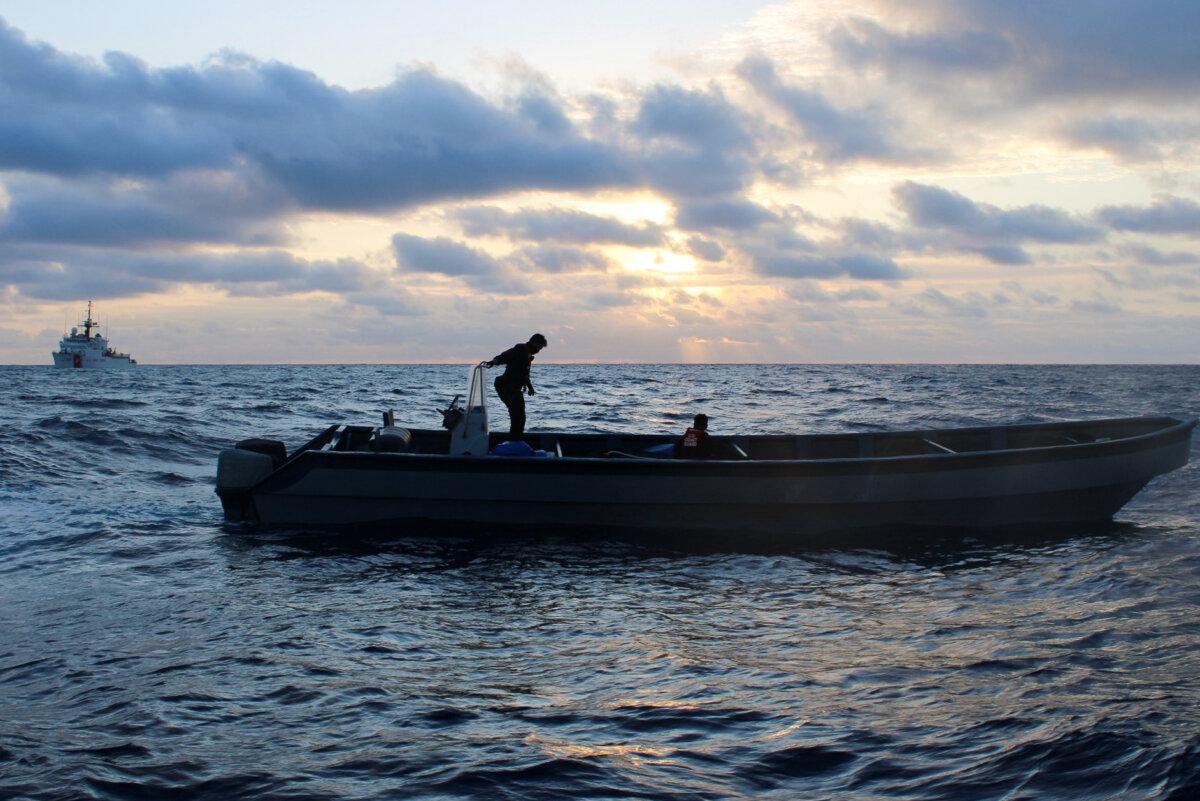

The U.S. Coast Guard (USCG) detained three suspected narco-terrorists in the eastern Pacific Ocean, northwest of Ecuador, preventing more than $33 million in illicit drugs from reaching U.S. borders, the agency said in a Jan. 30 post on X.
The arrests were made earlier last week by the crew of Coast Guard Cutter Seneca as part of Operation Pacific Viper. The operation directs U.S. forces to the Eastern Pacific Region to counter cartel and criminal groups, essentially cutting off drug and human smuggling activities before they hit U.S. shores, the Department of Homeland Security (DHS) said in an Aug. 20, 2025, statement. At the time, DHS Secretary Kristy Noem said that “80 percent of illicit drug seizures occur at sea.”
In the recent incident, Cutter Seneca “interdicted a go-fast vessel northwest of Ecuador after our Helicopter Interdiction Tactical Squadron disabled the vessel from the air,” the USCG said in a Jan. 30 post on Facebook. “These efforts led to the apprehension of three suspected smugglers and seized more than 4,400 pounds of cocaine.”
Operation Pacific Viper “continues to surge assets to the Eastern Pacific, where significant transport of illicit narcotics continues from South and Central America. Every interdiction like this disrupts narco-terrorists, cuts off illicit revenue streams, and keeps deadly drugs from reaching our communities,” the USCG added.
The USCG said in a Dec. 9, 2025, statement that it had seized more than 150,000 pounds of cocaine in the eastern Pacific Ocean since the launch of Operation Pacific Viper, enough to create more than “57 million potentially lethal doses.”
Operation Pacific Viper is one of the initiatives introduced by the Trump administration to crack down on drug operations at sea.
In November 2025, Operation Southern Spear was launched with the aim of undermining narco-terror activities in the Western Hemisphere.
A legal challenge was filed on Jan. 27 against the United States, alleging that two Trinidadians were wrongfully killed in a U.S. strike on a boat in the Caribbean Sea in October 2025. The lawsuit was filed by family members. The Trinidadians were among the six occupants aboard the vessel.
The boat was destroyed, along with its occupants, by U.S. forces as part of a campaign against suspected drug runners. The families claim that the people killed in the October strike were innocent travelers.
“These killings were wrongful because they took place outside of armed conflict and in circumstances in which Mr. [Chad] Joseph and Mr. [Rishi] Samaroo were not engaged in activities that presented a concrete, specific, and imminent threat of death or serious physical injury, and where there were means other than lethal force that could have reasonably been employed to neutralize any such threat,” the lawsuit reads.
White House spokeswoman Anna Kelly said in a statement to The Epoch Times that the October strike was “conducted against designated narco-terrorists bringing deadly poison to our shores.”
“President Trump used his lawful authority to take decisive action against the scourge of illicit narcotics that has resulted in the needless deaths of innocent Americans,” she said.
Since Sept. 2, 2025, U.S. forces have carried out strikes on at least 36 boats in the Caribbean and eastern Pacific as part of targeting drug trafficking, which has led to the deaths of at least 116 individuals.
In addition to drugs, authorities are confiscating unreported currencies flowing into the United States via sea routes.
On Jan. 30, Customs and Border Protection (CBP) announced the seizure of unreported currency in Baltimore from a vessel owned by COSCO Shipping Lines, whose parent company is China’s state-owned COSCO Shipping.
Ships entering and exiting the United States are required to report any amounts exceeding $10,000 that they carry to the Financial Crimes Enforcement Network. According to CBP, they found more than $70,000 in unreported currency in the purser’s safe.
“It is alarming criminal behavior that we expect by an adversarial nation that repeatedly uses commercial port calls at United States seaports to collect military intelligence and steal proprietary business information,” CBP Baltimore Field Office Acting Director Matthew Suarez said.
“CBP will continue to scrutinize the bad actors operating merchant vessels that are both flagged and operated by adversarial nations. We remain committed to protecting our nation’s security and economic vitality.”
Ryan Morgan contributed to this report.
 Friends Read Free
Copy
Facebook
Tweet
Friends Read Free
Copy
Facebook
Tweet