
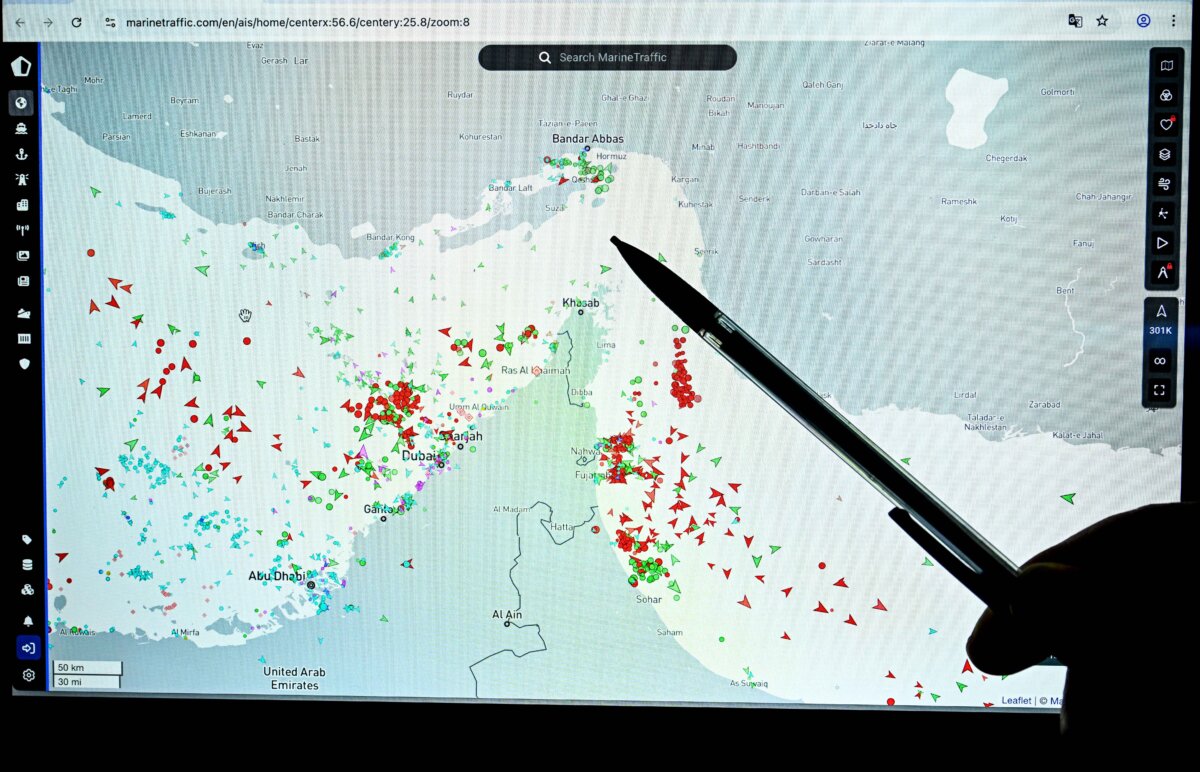

The U.S. military command operating in the Middle East warned citizens to “immediately” avoid any ports that may be used by the Iranian military and said that Iran is using civilian ports along the Strait of Hormuz to launch operations.
“This dangerous action risks the lives of innocent people,” said Central Command (CENTCOM) in a statement Wednesday, referring to the Iranian military’s use of the ports. “Civilian ports used for military purposes lose protected status and become legitimate military targets under international law.”
The warning comes as the U.S.—Israeli airstrike campaign targeting Iran surpassed its 10th day earlier this week, leaving top leaders of the regime dead, including former leader Ayatollah Ali Khamenei. Iran has responded by firing drones and missiles at nearby countries, and the regime has warned it would take action against commercial vessels in the Strait of Hormuz.
CENTCOM warned civilians in Iran to “immediately avoid all port facilities” that are also being used by Iran’s military or naval forces. That includes Iranian civilian dockworkers, administrators, commercial vessel crews, and others, it said.
Further, CENTCOM said civilians should avoid any Iranian navy vessels or military equipment.
“Iranian naval forces have positioned military vessels and equipment within civilian ports serving commercial maritime traffic,” said the military statement. “Although the U.S. military also cannot guarantee civilian safety in or near facilities used by the Iranian regime for military purposes, American forces will continue taking every feasible precaution to minimize harm to civilians.”
The Strait of Hormuz, a strategic waterway that greatly impacts the world’s oil and natural gas supply, connects the Persian Gulf and the Gulf of Oman, located in the Indian Ocean.
Since the conflict started on Feb. 28, traffic through the strait has significantly slowed and has placed significant price pressures on oil and gas.
Iran’s Islamic Revolutionary Guard Corps (IRGC) said it conducted strikes on two commercial vessels in the strait, claiming one ignored warnings from the military, and said that every vessel entering the waterway must seek permission from Iran, according to state-run media. It claimed that an oil tanker owned by Israel and another, a commercial vessel, were struck by its forces.
“We will not allow even a single liter of oil to pass through the Strait of Hormuz for the benefit of America and its friends,” the spokesman said through Iran’s PressTV.
The spokesperson added that “any vessel, itself or its oil cargo belonging” to Israel or the United States or their partners will be deemed a “legitimate target” for Iran.
A day earlier, Chairman of the Joint Chiefs Gen. Dan Caine and Department of War Secretary Pete Hegseth said at a news conference that the U.S. military is working to get maritime traffic moving through the strait.
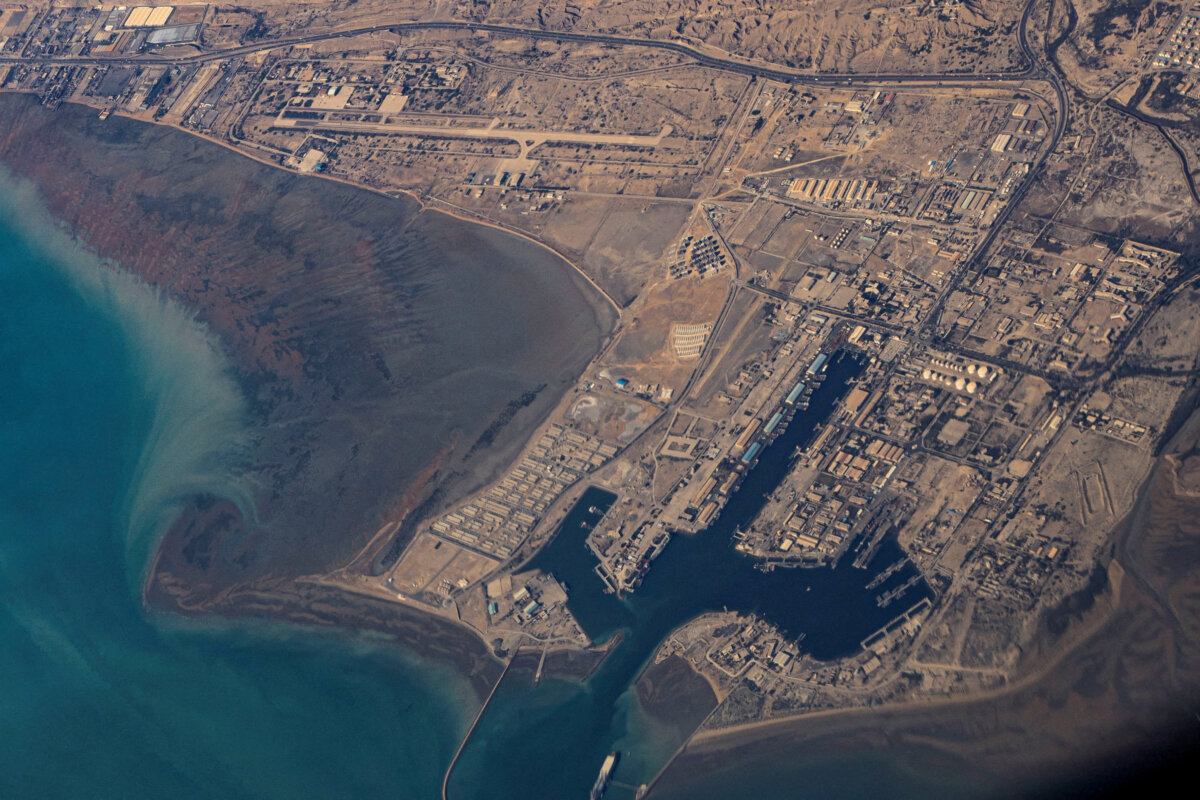
As oil prices have surged, the International Energy Agency has agreed to release the largest volume of emergency oil reserves in its history, a total of 400 million barrels, in a bid to counter the war’s effects on energy markets.
Oil prices remained well below Monday’s peaks, but the price of Brent crude, the international standard, was still up some 20 percent Wednesday from when the war began, and consumers around the world are already feeling the pain at the pump.
The Associated Press contributed to this report.
 Friends Read Free
Copy
Facebook
Tweet
Friends Read Free
Copy
Facebook
Tweet



























