
The United States is supporting the Ampasindava rare earths project in Madagascar as part of a broader effort to reduce dependence on rival nations for critical mineral supplies, according to the U.S. State Department.
The initiative reflects Washington’s strategy to diversify sources of essential minerals currently dominated by China.
The project exemplifies a changing field in Africa’s critical minerals industry, where Chinese firms have historically led investments in resources such as copper, cobalt, and lithium. Now, several major rare earth projects across Africa are attracting financial and strategic backing from the United States and other Western partners.
Harena Rare Earths, the London-listed company developing the roughly $150 million Ampasindava project, announced last week that the U.S. International Development Finance Corporation (DFC) has committed up to $4.84 million to fund pilot plant operations, laboratory testing, and environmental initiatives. The investment is expected to position the project for additional financial support in the future.
A State Department spokesperson said that the United States seeks to expand investment in Africa’s mining sector, which has long been influenced by what the Trump administration describes as nontransparent and predatory investments by geopolitical competitors.
“Madagascar fits within that strategy, and we see opportunities throughout the country to increase U.S. and U.S.-aligned investment in the critical mineral sector,” the spokesperson said.
China, the dominant actor in the global rare earth mining and processing sector, has asserted its outsized influence through export restrictions in recent years. These minerals are essential for a wide range of technologies including electronics, industrial and medical applications, advanced manufacturing, and military equipment.
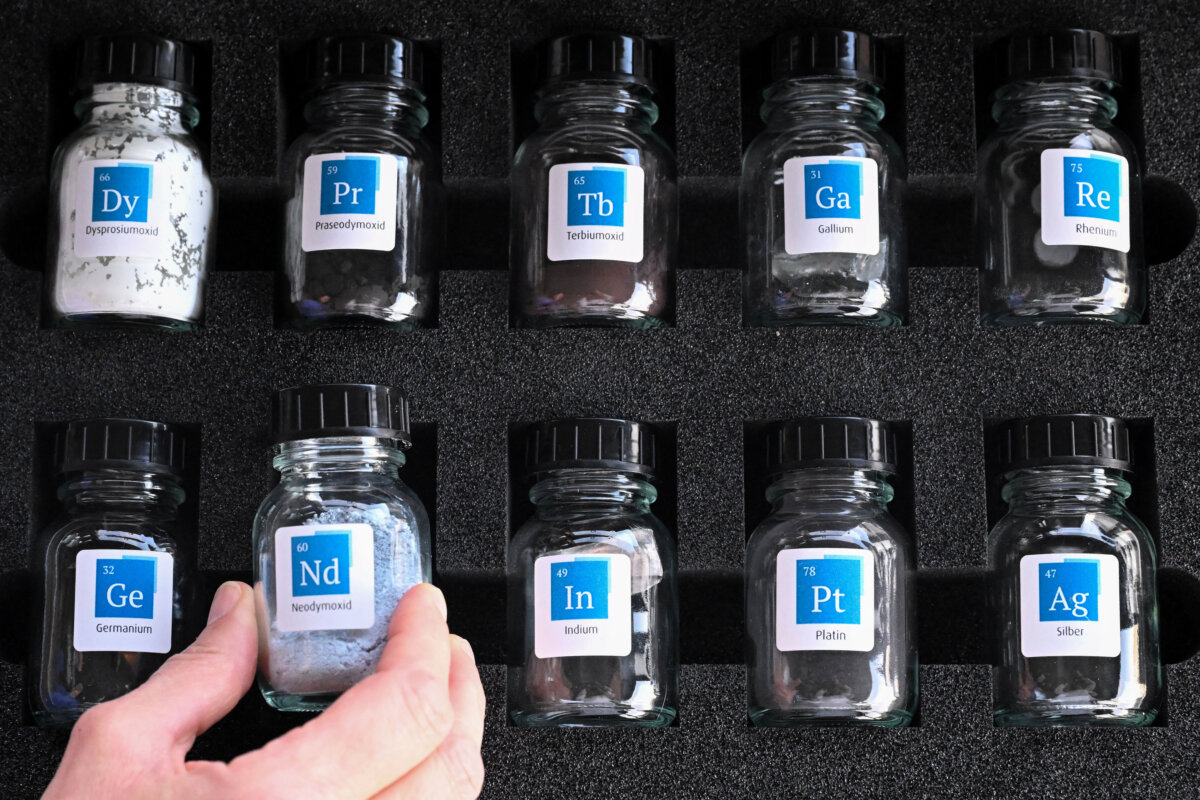
The Ampasindava deposit contains significant quantities of neodymium, praseodymium, dysprosium, and terbium—rare earth elements that are crucial for manufacturing high-performance permanent magnets used in advanced defense systems including precision-guided missiles and fighter aircraft.
Harena expects the mine to produce roughly 4,000 metric tons of rare earth oxides each year, including about 1,700 metric tons of the high-value magnet materials NdPr and DyTb.
Harena Executive Chairman Ivan Murphy said that the company has applied for an exploitation permit and expects approval within weeks.
Harena plans to begin production by mid-2028 and is exploring processing partnerships in the United States and Europe, with companies including MP Materials, USA Rare Earths, and Solvay under consideration.
While the DFC commitment is small, Murphy said it could lead to greater U.S. backing as the approximately $150 million project heads toward construction.
A DFC official said the agency might consider additional assistance for the project, subject to due diligence and approvals, but declined to discuss possible investment.
Reuters contributed to this report.
 Friends Read Free
Copy
Facebook
Tweet
Friends Read Free
Copy
Facebook
Tweet