
Members of the U.S. Coast Guard on Dec. 20 intercepted an oil tanker that last docked in Venezuela, U.S. Homeland Security Secretary Kristi Noem announced.
“In a pre-dawn action early this morning on Dec. 20, the U.S. Coast Guard with the support of the Department of War apprehended an oil tanker that was last docked in Venezuela,” Noem said in an X post on the afternoon of Dec. 20.
“The United States will continue to pursue the illicit movement of sanctioned oil that is used to fund narco terrorism in the region. We will find you, and we will stop you.”
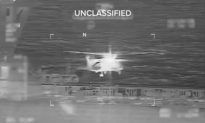
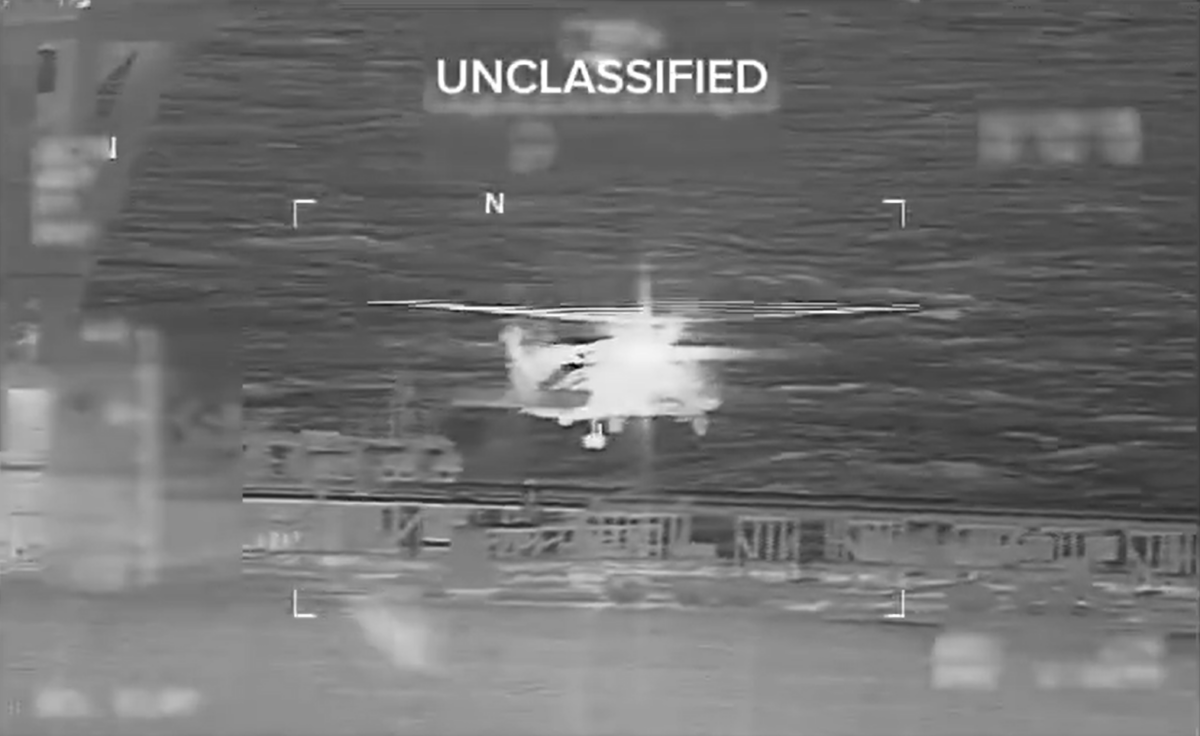
In her social media post, Noem shared a compilation of footage showing a military helicopter approaching and hovering over the deck of the tanker, with at least one person lowering from a rope onto the vessel.
In a separate X post, the Department of Homeland Security identified the seized ship as the motor tanker Centuries.
Publicly available commercial ship data indicate that the Centuries has operated under the flag of Panama.
White House spokeswoman Anna Kelly said the tanker was “operating as part of the Venezuelan shadow fleet to traffic stolen oil and fund” the Venezuelan government under Venezuelan President Nicolás Maduro.
The Dec. 20 boarding operation comes after U.S. President Donald Trump announced on Truth Social on Dec. 16 “a total and complete blockade of all sanctioned oil tankers going into, and out of, Venezuela.”
Venezuelan foreign affairs minister Yván Gil Pinto wrote in a statement on Threads on Dec. 20 that Caracas denounces the U.S. action and considers the “theft” of Venezuelan oil a “serious illegal international piracy,” according to a translation.
The boarding operation on Dec. 20 is the second time this month that the U.S. government has intercepted an oil tanker after it departed from Venezuela.
On Dec. 10, the U.S. government seized an oil tanker called the Skipper in an interagency effort involving the U.S. military, Coast Guard, Homeland Security Investigations, and the FBI. Guyana’s maritime authority said the supertanker was flying the Guyanese flag without authorization, while carrying Venezuelan oil.
Pinto alleged on social media that the Dec. 10 seizure was an act of “blatant theft” and “international piracy.”
The tanker blockade that Trump announced on Dec. 16 is part of a growing U.S. pressure campaign against Maduro, whom the U.S. president accused of drug trafficking and corruption that harm U.S. interests. Maduro has denied the allegations.
Since August, the United States has amassed an armada of warships in the Caribbean Sea, along with a Marine Expeditionary Unit and amphibious landing ships. Coast Guard vessels have also gathered in the region, while additional U.S. military aircraft have rotated to Puerto Rico.
“Venezuela is completely surrounded by the largest Armada ever assembled in the History of South America. It will only get bigger, and the shock to them will be like nothing they have ever seen before,” Trump wrote in his Dec. 16 social media post.
Trump accused Venezuela of having stolen oil, land, and other assets from the United States and used these assets to finance “drug terrorism, human trafficking, murder, and kidnapping.”
Since September, U.S. forces have attacked numerous alleged drug boats operating in the Caribbean and in the eastern Pacific.
In November, the U.S. State Department designated the Cartel de los Soles—an alleged criminal enterprise that the United States believes is grafted into the Venezuelan government, including Maduro—as a foreign terrorist organization.
 Friends Read Free
Copy
Facebook
Tweet
Friends Read Free
Copy
Facebook
Tweet