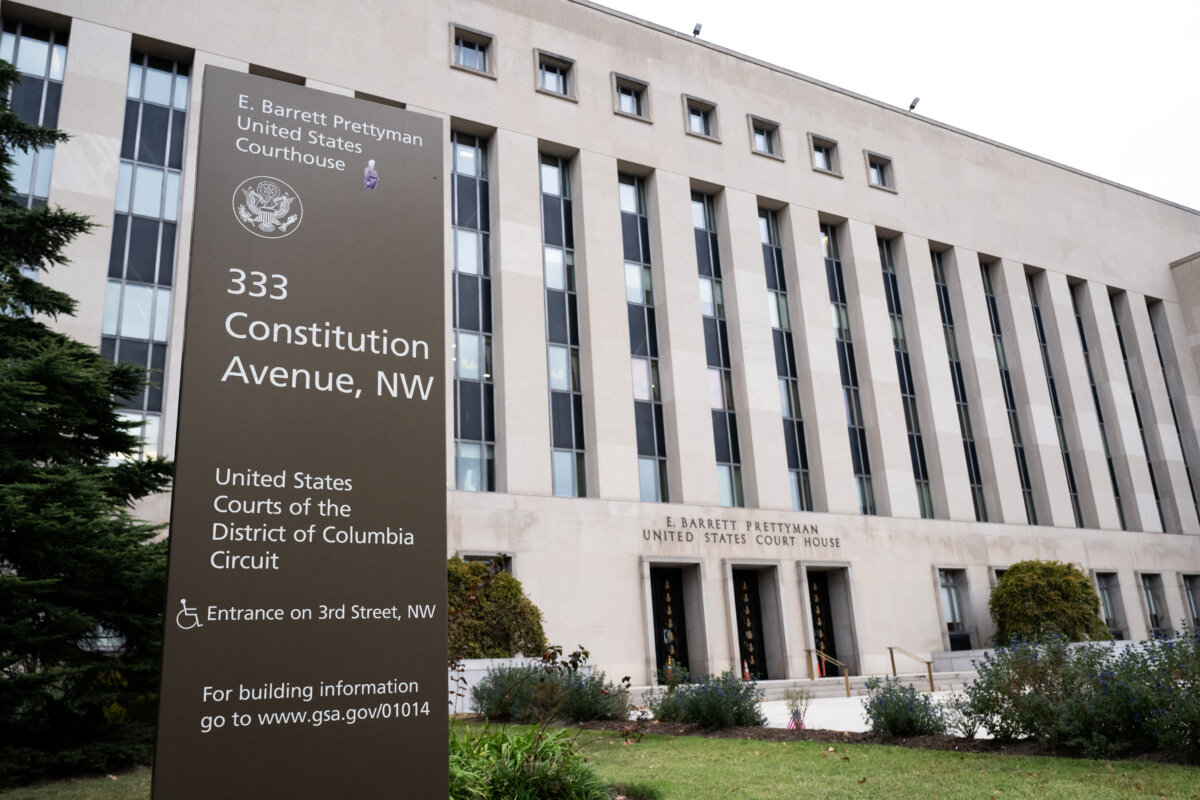

A U.S. district court has sentenced a 39-year-old Australian man to seven years and three months in prison for selling his employer’s trade secrets to a Russian cyber-tools broker.
Peter Williams, the former general manager of Trenchant—the cybersecurity division of U.S. defense contractor L3Harris—was accused of betraying the United States by using his position to steal cyber tools known as “exploits for zero-day vulnerabilities” and transferring them to adversary Russia.
These tools are essentially hacking methods that exploit a security flaw in software or hardware unknown to the vendor at the time of the attack. Often, antivirus signatures are unable to detect the exploit, leaving hackers with open access to the target’s IT systems.
Their technical term derives from the fact that the exploits have “zero days” of remediation time—because the vendor does not know about them yet and there is no official defence against the tools.
One of the most well-known zero-day exploits is Stuxnet, which was deployed against Iran’s nuclear enrichment facility around 2007. It later leveraged vulnerabilities in the Windows operating system to destroy thousands of machines, including uranium centrifuges.
Apart from the 87-month prison term, U.S. District Court Judge AliKhan for the District of Columbia (DC) also ordered Williams to serve three years of supervised release with special conditions, and to forfeit US$1.3 million (A$1.83 million) in cash, cryptocurrency and property, including a house, and luxury items such as watches and jewellery.
Williams may also have to pay damages to Trenchant and those affected by the illegal use of the tools after a restitution hearing in May.
A National Security Crime
Assistant Attorney General for National Security John A. Eisenberg said Williams had used his senior position at Trenchant to enrich himself at the expense of the United States and his employer.
“The tools he compromised were intended to protect this nation; instead, he auctioned them off to a Russian bidder,” he said.
The Assistant Director of the FBI’s Counterintelligence and Espionage Division Roman Rozhavsky said Williams’ actions had put U.S. national security at risk, as the broker’s clients included the Russian government.
“The FBI and our partners remain unwavering in our commitment to protecting America’s critical technologies, and we will ensure any who attempt to profit at our nation’s expense face the full weight of the criminal justice system,” he said.
“Let this be a clear warning to all who consider placing greed over country: If you betray your position of trust and sell sensitive American technology to our foreign adversaries, the FBI will not rest until you’re brought to justice.”
Prosecutors alleged that the former general manager had made up to US$4 million in cryptocurrency from the sale of the tools, which would have allowed Russia to access millions of digital devices.
“Williams’ crime is not only one of theft, it is a crime of national security,” said U.S. Attorney for the District of Columbia Jeanine Pirro. “Our nation’s defence capabilities are not commodities to be auctioned off.”
In October 2025, Williams pleaded guilty to two counts of trade secret theft and admitted to causing the government contractor a financial loss of US$35 million.
As part of his plea agreement, he confessed to stealing eight cyber-exploit components from Trenchant over a three-year period. The software was intended to be sold exclusively to the U.S. government and select allies.
Luxury Vacations and Jewellery
Regarding his ill-gotten gains, Williams said he had used the cryptocurrency to buy valuable items, including luxury vacations, jewellery, watches, clothing, and properties.
Williams and the Russian broker signed multiple written contracts, which involved payment for the initial sale and additional periodic instalments for ongoing support.
Announcing Williams’ sentence, Judge AliKhan said: “Theft of trade secrets from a company that sells national security-focused cyber and intelligence software to the U.S. government and allied governments necessarily implicates national security, and Mr. Williams indeed acknowledges that his actions caused harm to the intelligence communities, both in the United States and Australia.”
Before becoming the general manager of Trenchant, Williams had worked for the Australian Signals Directorate.
 Friends Read Free
Copy
Facebook
Tweet
Friends Read Free
Copy
Facebook
Tweet