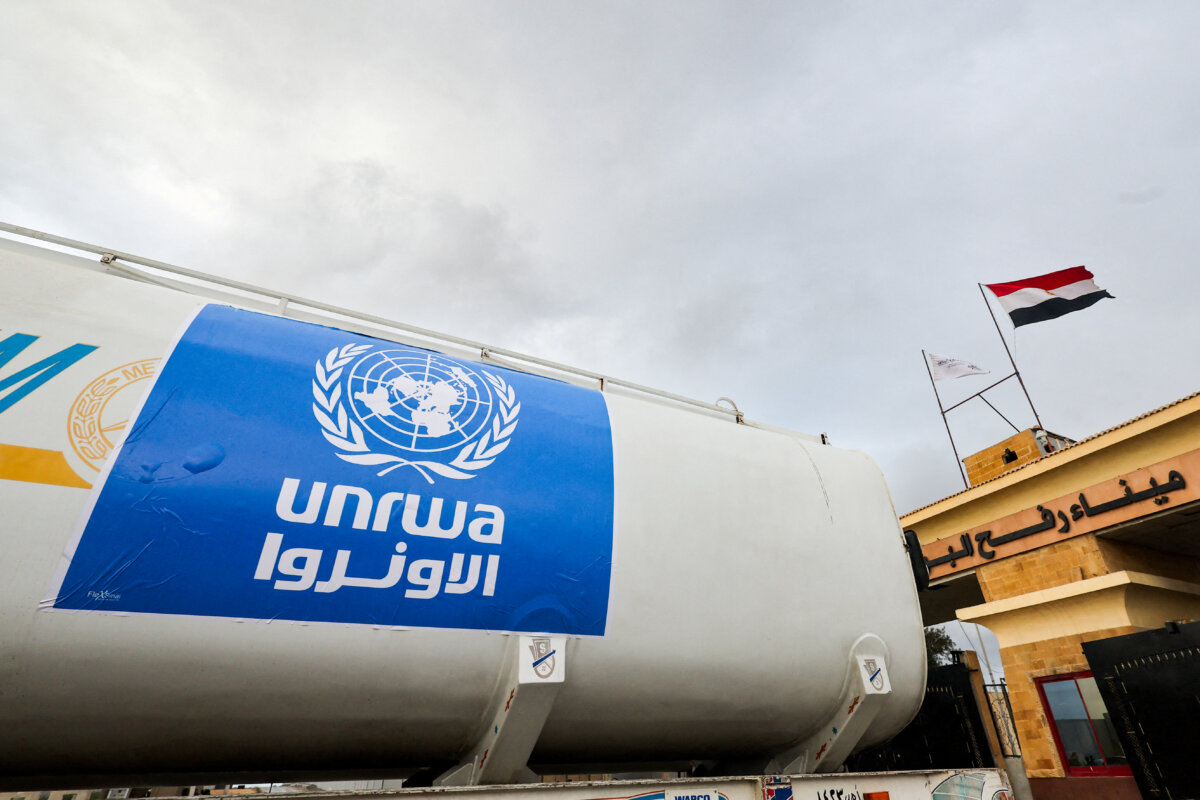

The U.S. State Department has condemned an advisory opinion by the International Court of Justice (ICJ) that says Israel has a legal obligation to allow United Nations agencies, other international organizations, and third states to deliver aid to Palestinian territories.
In the advisory, the U.N.’s top court said that Israel is required to fulfil its obligations under international humanitarian law and unanimously agreed that this includes ensuring that Gaza’s civilian population has access to “essential supplies of daily life, including food, water, clothing, bedding, shelter, fuel, medical supplies and services.”
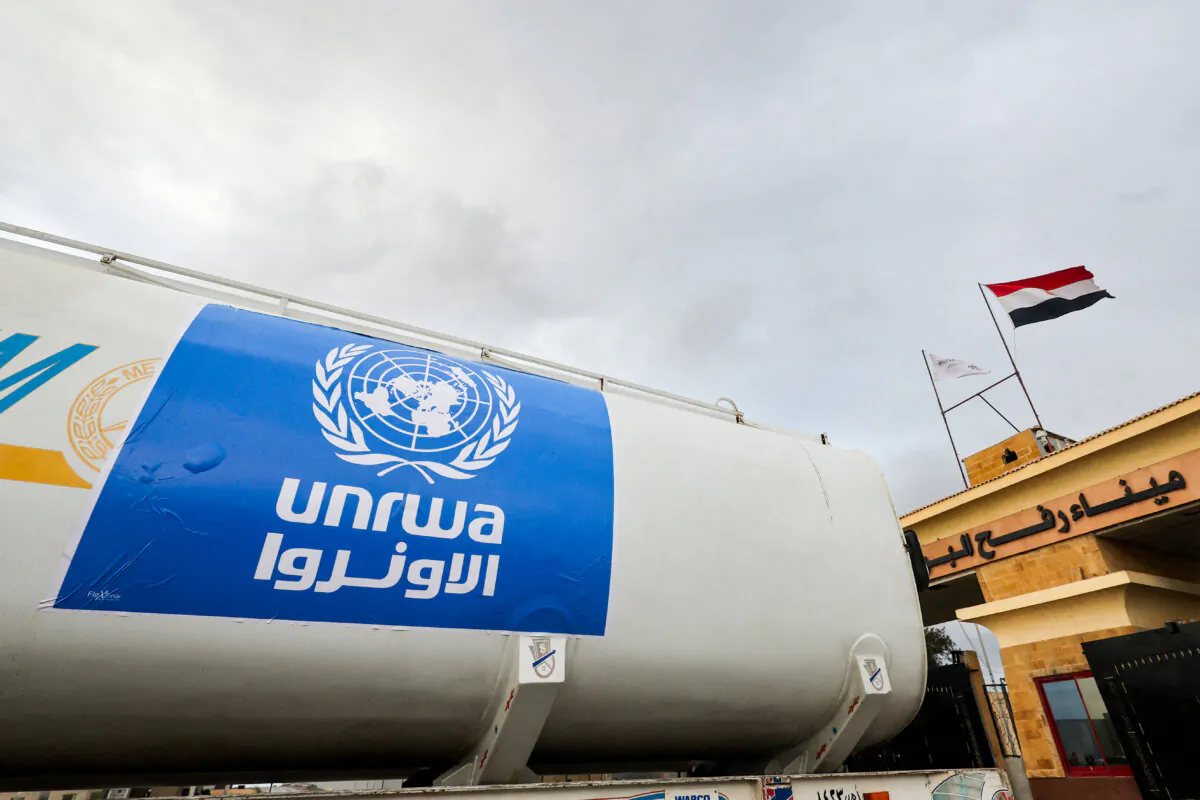
In a 10–1 vote, the court found that Israel should agree to and facilitate “by all means at its disposal relief schemes on behalf of the population” of Gaza including “relief provided by the United Nations and its entities, in particular the United Nations Relief and Works Agency [UNRWA] for Palestine Refugees in the Near East, other international organizations and third States.”
In a post on X, the U.S. Department of State described the decision as “another corrupt ruling,” voiced support for U.S. efforts to bring peace to the region, and reiterated allegations that UNRWA is connected to the terrorist group Hamas.
“As President Trump and Secretary Rubio work tirelessly to bring peace to the region, this so-called ‘court’ issues a nakedly politicized non-binding ‘advisory opinion’ unfairly bashes Israel and gives UNRWA a free pass for its deep entanglement with and material support for Hamas terrorism,” the State Department said.
The United States and Israel are both members of the United Nations and automatically parties to the ICJ Statute, but neither recognizes the court’s compulsory jurisdiction.
While advisory opinions from the ICJ carry legal and political weight, they are not binding and cannot be enforced.
The State Department said the ICJ’s action demonstrated “ongoing abuse of its advisory opinion discretion” and suggested that the court had become “a partisan political tool, which can be weaponized against Americans.”
In April, the United States told the ICJ that Israel must provide aid to Gaza, but the country does not have to work with UNRWA.
Josh Simmons, a legal adviser from the State Department, told The Hague-based court, “In sum, there is no legal requirement that an occupying power permit a specific third state or international organization to conduct activity in occupied territory that would compromise its security interests.”
Simmons suggested at the time that other organizations could fulfill UNRWA’s mission.
On Wednesday, the Israeli Foreign Ministry rejected the advisory opinion, calling it “another political attempt to impose measures against Israel under the guise of ‘international law,’” adding that Israel fully upholds its obligations under international law.
Israel’s Restrictions on UNRWA
The ICJ’s advisory opinion stemmed from a request by the U.N. General Assembly last year, after Israel passed laws in October 2024 barring UNRWA from operating within its territory.
In an Oct. 22 statement, UNRWA said the restrictions, in force since March, had limited its ability to “fulfil its mandate during a time of huge humanitarian need.”
The agency said the laws obstructed its efforts to deliver “food, medicine, shelter and educational materials” to Gaza and the West Bank.
Israel has accused Hamas of diverting or seizing humanitarian aid entering Gaza. Hamas denied the allegations, blaming Israel for shortages and humanitarian suffering in the enclave.
The dispute over UNRWA’s credibility intensified after Israeli officials alleged that members of the agency’s staff had participated in or supported the attack by the Hamas-led terrorists against Israel on Oct. 7, 2023, which left about 1,200 Israelis dead.
Following those claims, UNRWA investigated 19 staff. Nine were dismissed over possible links. One person was cleared of wrongdoing, and nine cases lacked evidence, according to the agency.
In January 2024, when the allegations first surfaced, the U.S. State Department suspended funding for UNRWA.
At the time, department spokesperson Matthew Miller said the United States was “extremely troubled” by reports that a dozen UNRWA employees might have been involved in the Hamas-led assault on Israel.
In a statement posted on X on Tuesday, Israel Defense Forces spokesperson Lt. Col. Nadav Shoshani questioned the court’s decision to find Israel “guilty” of not cooperating with UNRWA while failing to hold the agency accountable for cooperating with a terrorist organization responsible for the murder and abduction of civilians.
The Israeli Foreign Ministry said that “to this day, UNRWA still employs more than 1,400 Hamas operatives.”
“Israel will not cooperate with an organization that is infested with terror activities,” the ministry said.
The Epoch Times contacted UNRWA for comment, but did not receive a response by publication time.
The ICJ’s advisory opinion follows the U.S.-brokered cease-fire agreement between Israel and Hamas, reached earlier this month. The agreement requires the return of all Israeli hostages held in the Gaza Strip since the Oct. 7, 2023, attack, the disarmament of Hamas, the release of Palestinian prisoners, and a major surge of humanitarian aid into Gaza.
 Friends Read Free
Copy
Facebook
Tweet
Friends Read Free
Copy
Facebook
Tweet