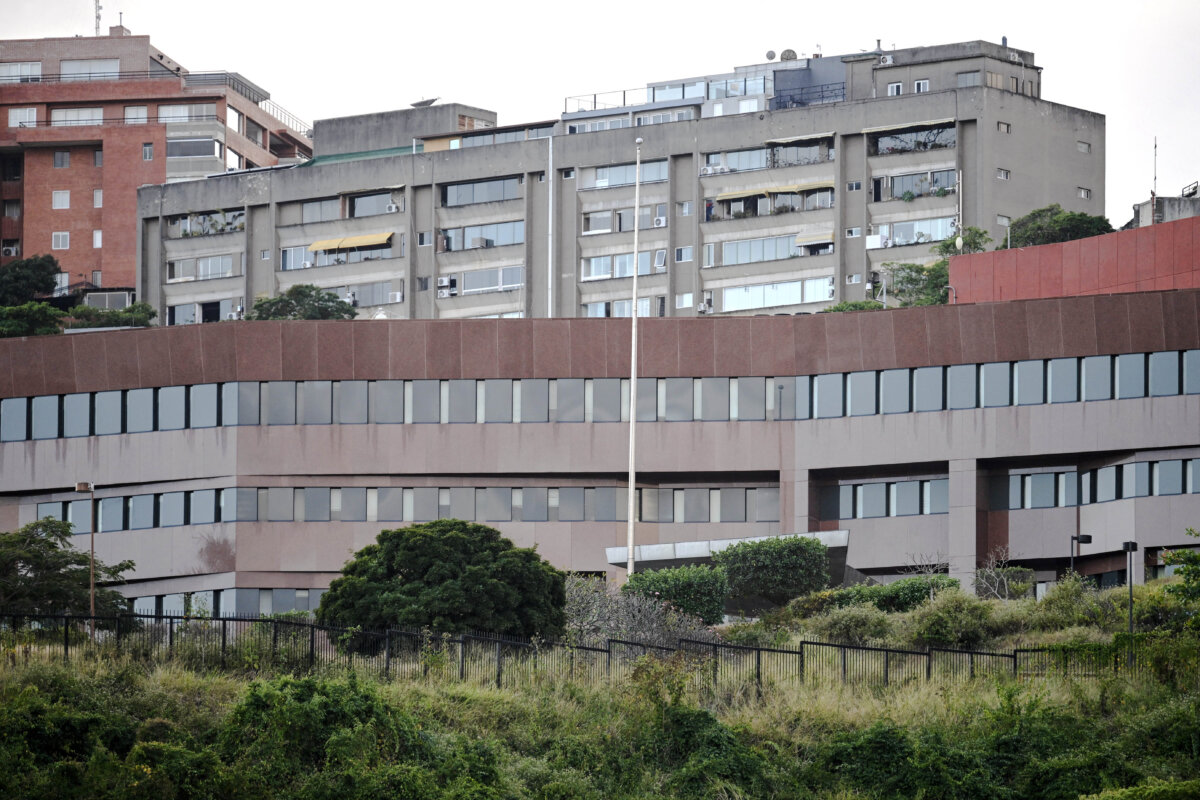
A U.S. envoy landed in Venezuela on Jan. 31 to resume diplomatic engagement in the country after a seven-year pause.
In social media posts on Jan. 31, the U.S. Embassy in Venezuela shared photos from Laura F. Dogu—the chargé d’affaires to the Venezuela Affairs Unit—disembarking a plane and walking across a tarmac.
“I just arrived in Venezuela. My team and I are ready to work,” Dogu said in a statement shared by the embassy.
Dogu’s visit comes nearly a month after President Donald Trump ordered a U.S. military operation to capture wanted Venezuelan leader Nicolás Maduro and bring him back to the United States to face federal criminal charges related to drug trafficking.
Formal diplomatic relations between the United States and Venezuela collapsed in early 2019. Maduro initiated the split in January 2019, after the first Trump administration refused to recognize him as the legitimately elected president of Venezuela and instead recognized Juan Guaidó as the interim president of the country.
Citing the deteriorating relations in Venezuela under Maduro, Secretary of State Mike Pompeo announced the withdrawal of U.S. embassy personnel in Venezuela in March 2019.
Since capturing Maduro on Jan. 3, the U.S. government has increasingly engaged with Maduro’s deputy and political ally, Delcy Rodríguez, who is now serving as the acting president of Venezuela.
In a statement on Telegram, Venezuelan Foreign Minister Yván Gil confirmed Dogu’s arrival in Caracas. He said the agenda for the visit is focused on “setting a roadmap for work on matters of bilateral interest, as well as addressing and resolving existing differences through diplomatic dialogue and on the basis of mutual respect and International Law.”
Earlier this month, Venezuelan Interior Minister Diosdado Cabello said reopening the U.S. embassy would also give the interim Venezuelan authorities an additional channel to oversee Maduro’s treatment in U.S. custody.
Following Maduro’s capture, Trump announced the United States would manage Venezuela through a transitional period. Secretary of State Marco Rubio has since described this transitional process as a three-part plan that entails transfers of Venezuelan oil under a U.S.-managed mechanism and the opening of the South American country to international business ventures. Rubio said the transition plan also includes a reconciliation process for Venezuela’s anti-Maduro opposition movement.
Venezuela’s interim authorities have already released hundreds of prisoners from the opposition movement. This week, Rodríguez announced plans to grant amnesty for convictions “from 1999 to the present,” excluding those convicted of murder, drug trafficking, corruption, or human rights violations.
Testifying before the Senate on Jan. 28, Rubio reported that Venezuela’s post-Maduro transitional period was making notable progress.
“I’m not here to claim to you this is going to be easy or simple. I am saying that in 3 1/2, almost four, weeks, we are much further along on this project than we thought we would be,” he said.
Aldgra Fredly, Reuters, and The Associated Press contributed to this report.
 Friends Read Free
Copy
Facebook
Tweet
Friends Read Free
Copy
Facebook
Tweet