
The United States has announced it is expanding trade investigations to 60 countries, including Canada, weeks after the Supreme Court ruled against many of the Trump administration’s tariffs.
The Office of the United States Trade Representative announced on March 13 that it was launching investigations into whether the acts, policies, and practices of each of the 60 economies—specifically their failure to impose and effectively enforce bans on the importation of goods produced with forced labour—are “unreasonable or discriminatory” and whether they “burden or restrict U.S. commerce.”
“These investigations will determine whether foreign governments have taken sufficient steps to prohibit the importation of goods produced with forced labour and how the failure to eradicate these abhorrent practices impacts U.S. workers and businesses,” U.S. Trade Representative Jamieson Greer said in a statement.
Greer added that despite an “international consensus against forced labour,” numerous governments had failed to impose and enforce measures that ban these goods from entering their markets.
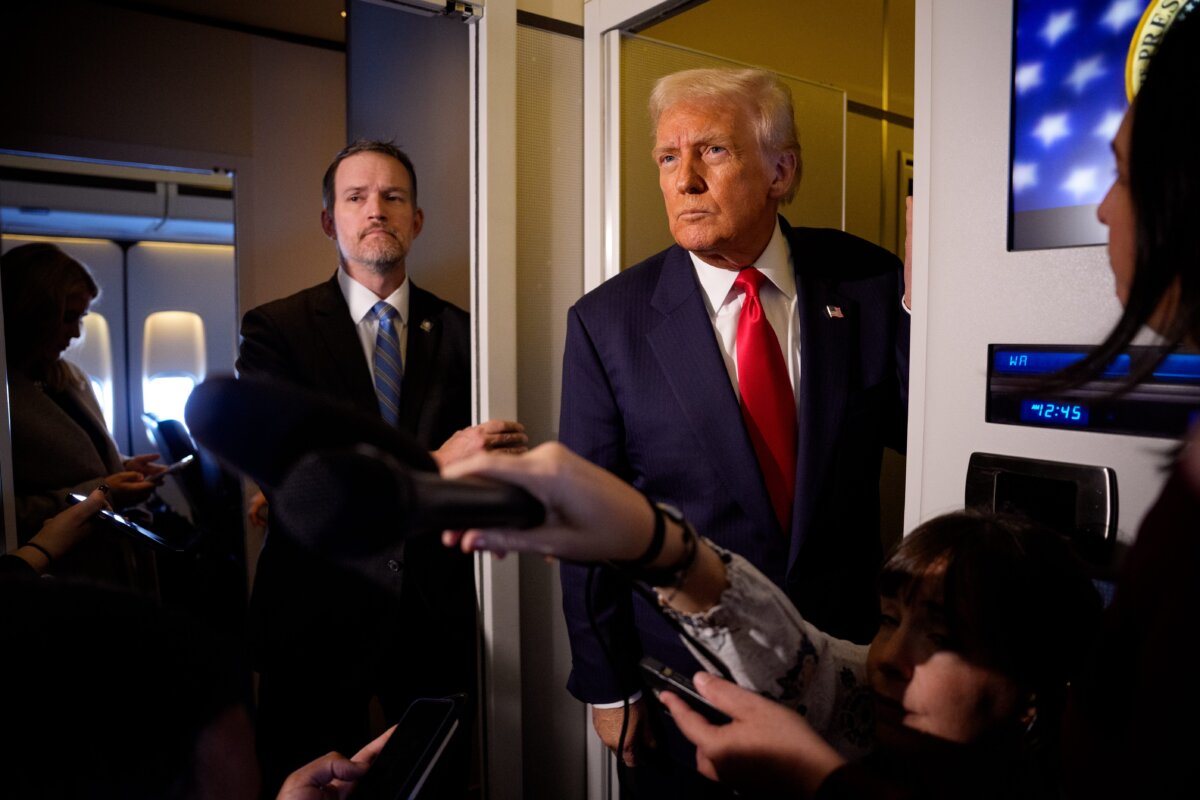
The investigations could give U.S. President Donald Trump a legal basis to introduce new tariffs.
On Feb. 20, the U.S. Supreme Court struck down numerous tariffs imposed under the International Emergency Economic Powers Act, ruling that Trump exceeded his authority in implementing them.
Following the court’s decision, Trump announced a new 10 percent worldwide tariff and said he would use Section 122 under the Trade Act of 1974 to impose it. Those tariffs do not apply to goods compliant with the U.S.-Mexico-Canada Agreement (USMCA) on trade.
Trump has imposed several rounds of tariffs on specific Canadian industries under Section 232, covering products such as steel, aluminum, and automobiles.
Speaking to reporters in Norway on March 13, Prime Minister Mark Carney said he welcomed “the fact that the United States cares about labour practices in other countries.” He said Canada has a “comprehensive legal framework” around preventing products made using forced labour to enter the country.
“Yes, there are provisions in USMCA related to labour standards, but there are stronger provisions in Canadian law against forced labour. We expect those to be followed, and when they’re not, they are prosecuted,” Carney said.
The trade investigations come as Canada, the United States, and Mexico are preparing for the upcoming USMCA review in July. Canada-U.S. Trade Minister Dominic LeBlanc has said he is “not pessimistic” about the prospect of the agreement being renewed as a trilateral deal.
An agreement by the three countries to renew USMCA would lead to it remaining in force until 2032. If the renewal is denied or delayed, the agreement could enter into a period of annual reviews, or the countries could make bilateral agreements with each other.
Noé Chartier contributed to this report.
 Friends Read Free
Copy
Facebook
Tweet
Friends Read Free
Copy
Facebook
Tweet