An Iraqi national and Iranian-backed commander charged in the United States with terrorism-related offences has been linked to the shooting that took place outside the U.S. Consulate in Toronto in March.
According to a U.S. criminal complaint released May 15 in a federal court in New York, Mohammad Baqer Saad Dawood Al-Saadi and others were allegedly behind two attacks in Canada, including the Toronto Consulate attack and an attack on a synagogue.
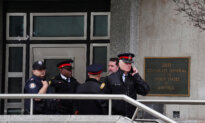
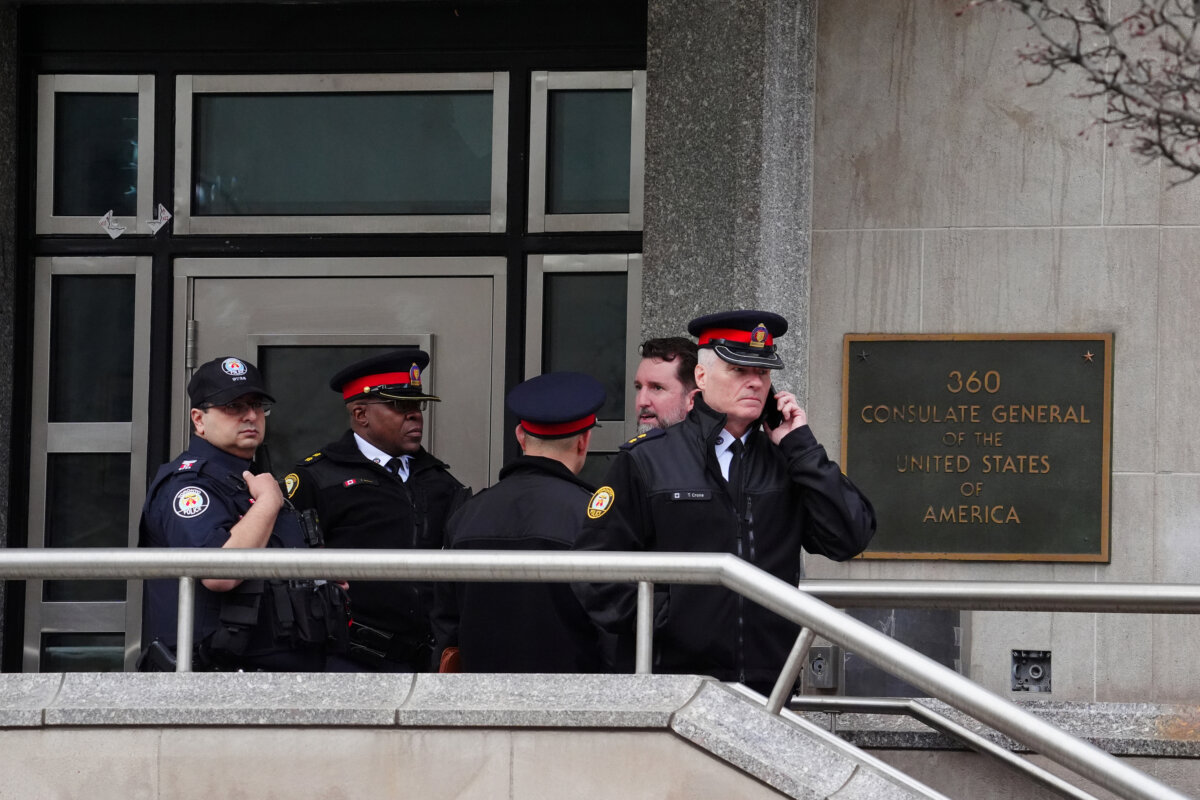
In the days following the onset of the conflict in Iran, multiple shootings took place at synagogues in the Toronto area, including one on March 2 and two different shootings on March 7. The U.S. Consulate in Toronto was also shot at during the early morning hours of March 10, and law enforcement officials described the attack as a “national security incident.”
Al-Saadi, a senior member of Kata’ib Hizballah, is facing six terrorism-related charges for his involvement in coordinating nearly 20 attacks and attempted attacks throughout Europe and the United States, the U.S. Department of Justice (DOJ) said in a May 15 press release. Kata’ib Hizballah is a U.S. designated foreign terrorist organization closely aligned with Iran’s Islamic Revolutionary Guard Corps (IRGC), according to the DOJ.
Al-Saadi, 32, of Iraq, appeared in Manhattan federal court on May 15 and was ordered detained pending trial, the DOJ said.
“Thanks to the dedication and vigilance of law enforcement, this alleged terrorist commander is now in U.S. custody,” Acting Attorney General Todd Blanche said in the release.
The complaint alleges Al-Saadi and others “planned, coordinated, and claimed responsibility for” at least 18 terrorist attacks in Europe, as well as “two additional attacks” in Canada, in the name of Harakat Ashab al-Yamin al-Islamiya, a component of Kata’ib Hizballah.
He also allegedly “directed others and attempted to coordinate” terrorist attacks in the United States, including in New York, on behalf of Kata’ib Hizballah and the IRGC, according to the court filing.
The complaint specifically refers to the March 10 shooting at the U.S. Consulate in Toronto, in which police found evidence of gunfire and damage to the building after responding to reports of the shooting at 5:29 a.m., roughly one hour after the gunfire occurred.
Police also collected evidence from witnesses that showed a white Honda CRV stopped in front of the consulate and two men climbed out of the vehicle and used what appeared to be a handgun to shoot at the front of the building before getting back into the vehicle and driving away.
No one was injured during the shooting, but police confirmed there were people in the building when the shots were fired.
‘High-Value Target’
FBI investigators allege in the complaint that Al-Saadi discussed the consulate attack on a recorded call on March 20 with a confidential source, who recorded the call, and confirmed that “our people” were behind the attacks in Canada against “the consulate and the Knesset,” which investigators believe refers to the March 10 U.S. Consulate attack as well as an attack on a synagogue.
The complaint also alleges Al-Saadi told the source he was “running multiple teams” and asked the source to help him carry out additional attacks in the United States and in Canada.
Al-Saadi allegedly said he would give the source the “targets,” such as “Jewish synagogues” and “Zionist headquarters,” and noted he “do[es] not have a problem with killing, neither do I have a problem with terrifying [the targets],” according to the court filing.
The document says Al-Saadi explained he did not need help carrying out attacks in Europe because “things are working for us here in Europe,” but said it would be “very, very important,” if the source could help “do anything” in Canada or the United States.
The complaint also describes various attacks in Belgium, the Netherlands, France, and the United Kingdom involving explosives, arsons, and stabbings targeting individuals, synagogues, Jewish schools, pro-Israel organizations, Jewish neighbourhoods, U.S. financial institutions, Jewish ambulances, and Israeli embassies.
FBI Director Kash Patel described Al-Saadi as a “high-value target responsible for mass global terrorism” and said the arrest was the result of a “righteous mission executed brilliantly” by FBI agents and law enforcement partners.
Al-Saadi’s lawyer, Andrew Dalack, called Al-Saadi a political prisoner and a prisoner of war, and said the United States is persecuting him for his relationship with Qasem Soleimani, an IRGC leader who was killed in a U.S. drone strike in 2020.
Dalack said Al-Saadi was arrested in Turkey and turned over to U.S. authorities. He also said Al-Saadi has been kept in solitary confinement since arriving at a federal jail in Brooklyn, N.Y., on the evening of May 14, and argued that the treatment was “unusual given the nature of charges in the complaint.”
Jennifer Cowan and The Associated Press contributed to this report.
 Friends Read Free
Copy
Facebook
Tweet
Friends Read Free
Copy
Facebook
Tweet